Refuge from madness, then and now (March 2026)

Today is the fourth anniversary of my mother’s death. I created this blog to share my yard with my mother, so now…. this blog seems pointless? Or can she read this blog “from wherever she is,” as she used to say? I like to think she can, but on the other hand if there are blogs and the internet “wherever she is,” I would feel disappointed that death does not actually bring peace. With the internet comes access to both real and fake news, both of which are usually equally bad.

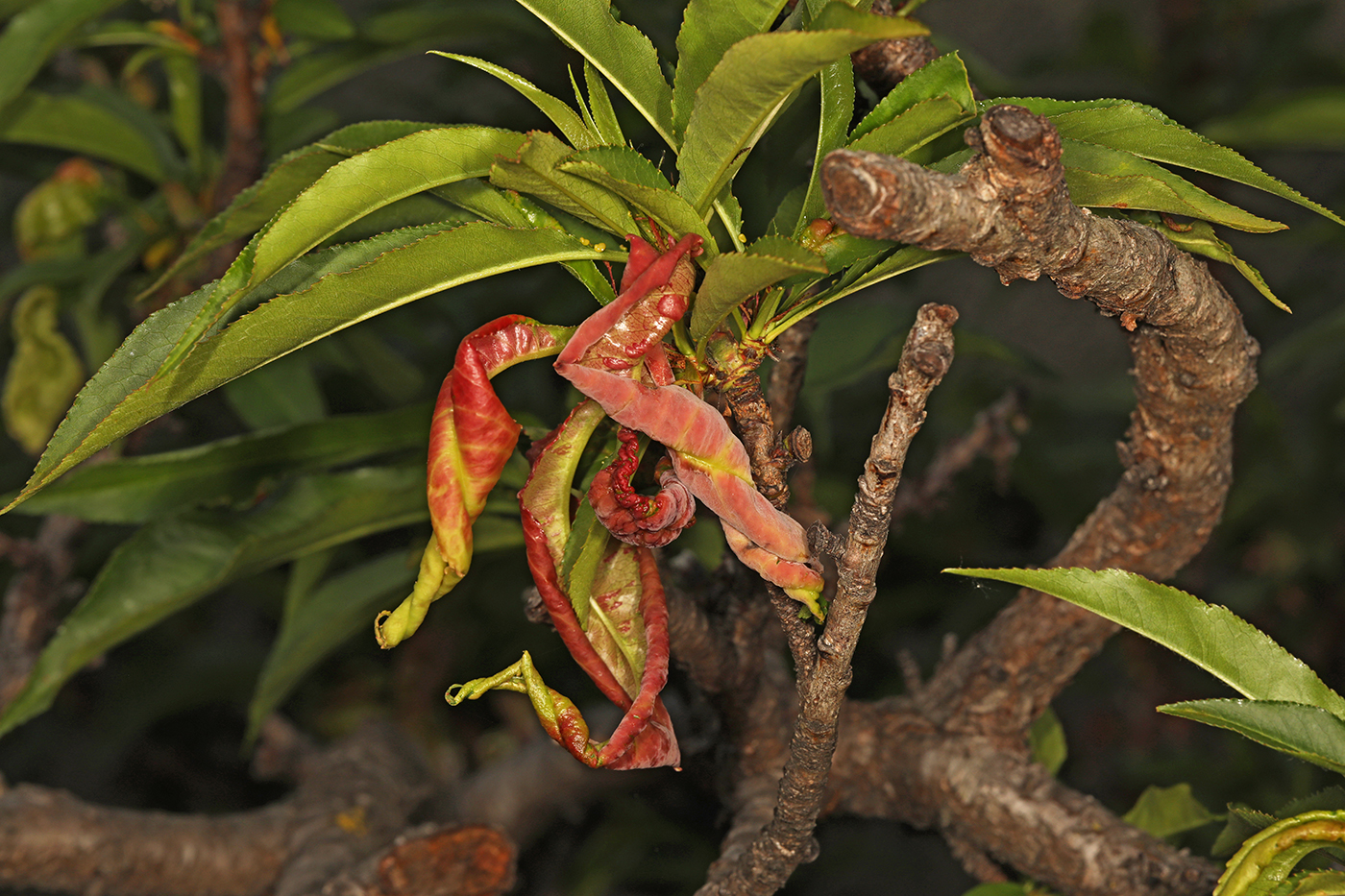
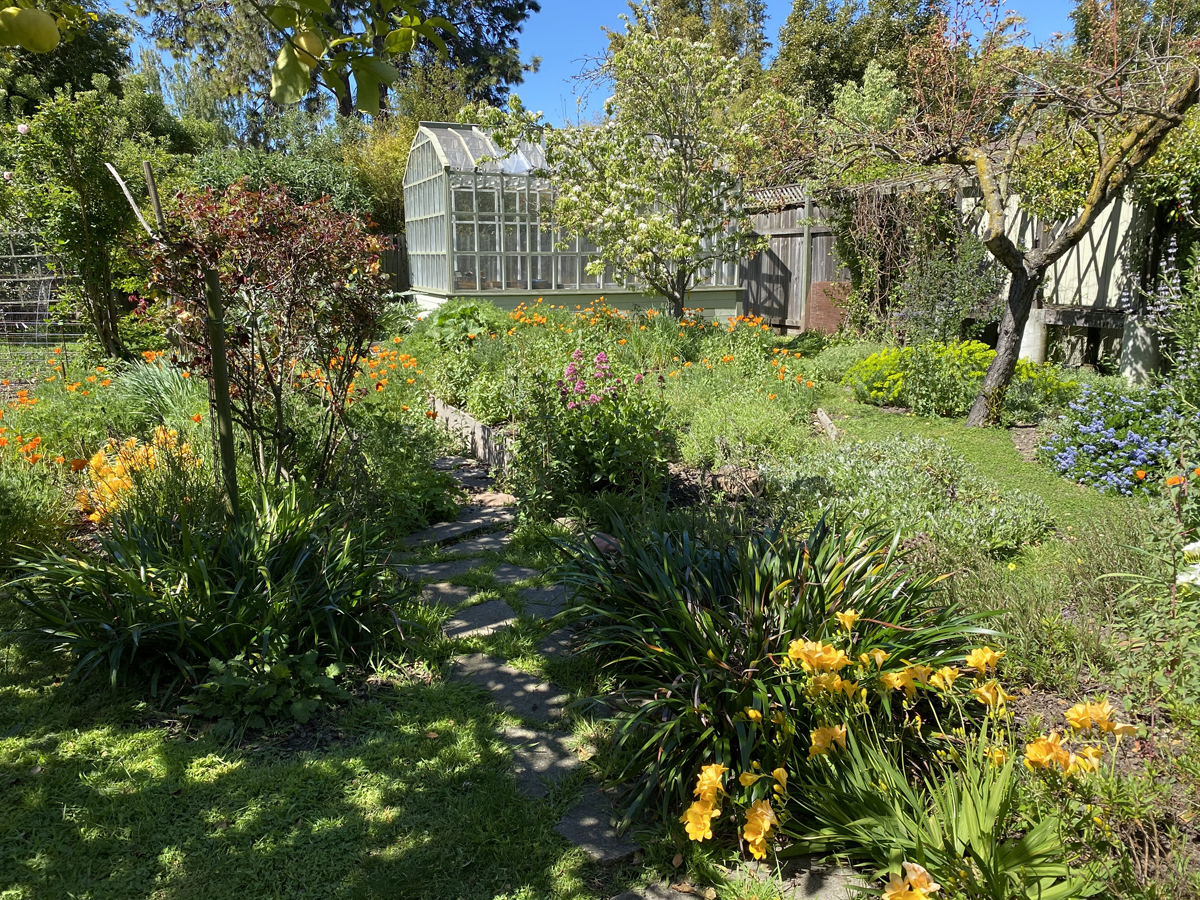
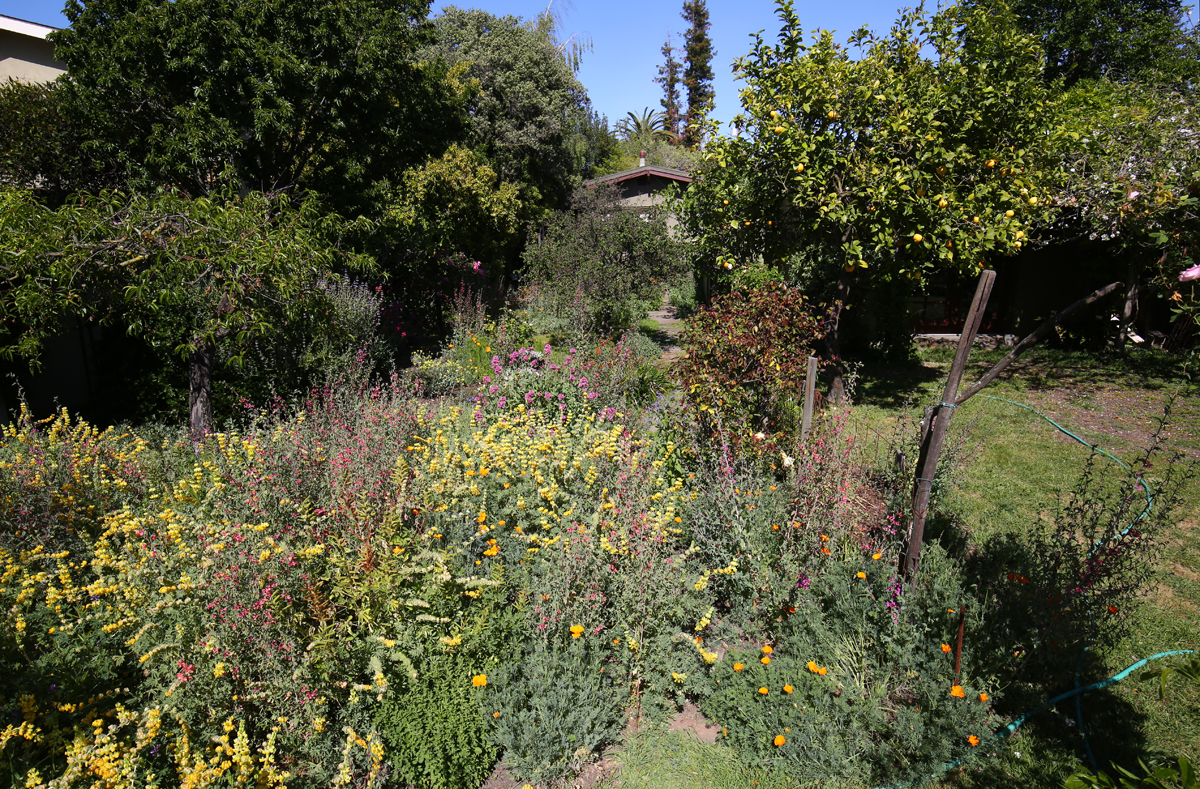
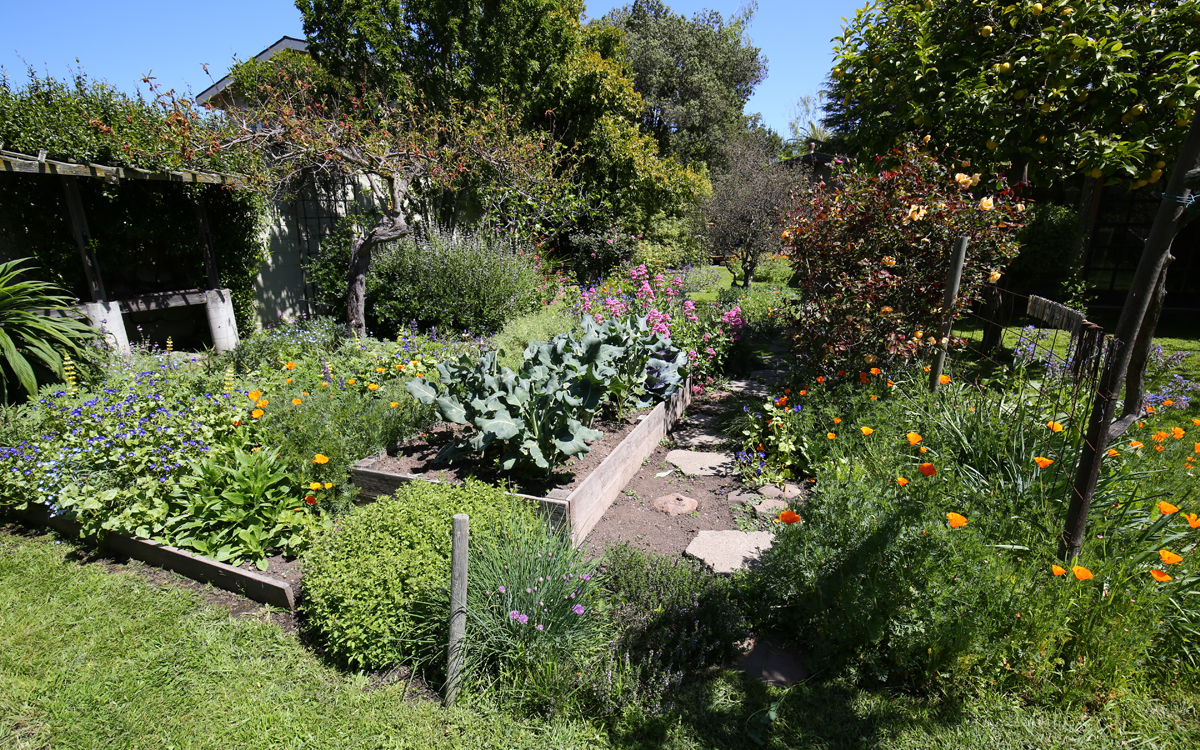
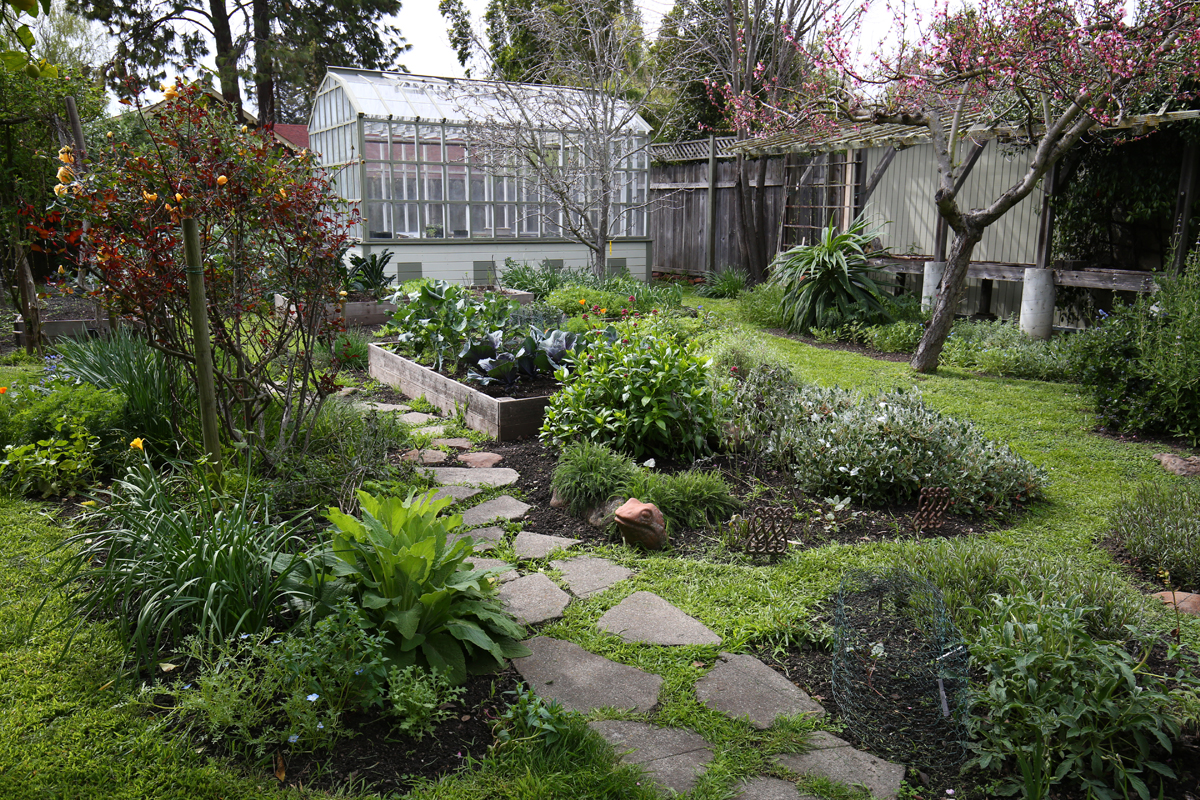
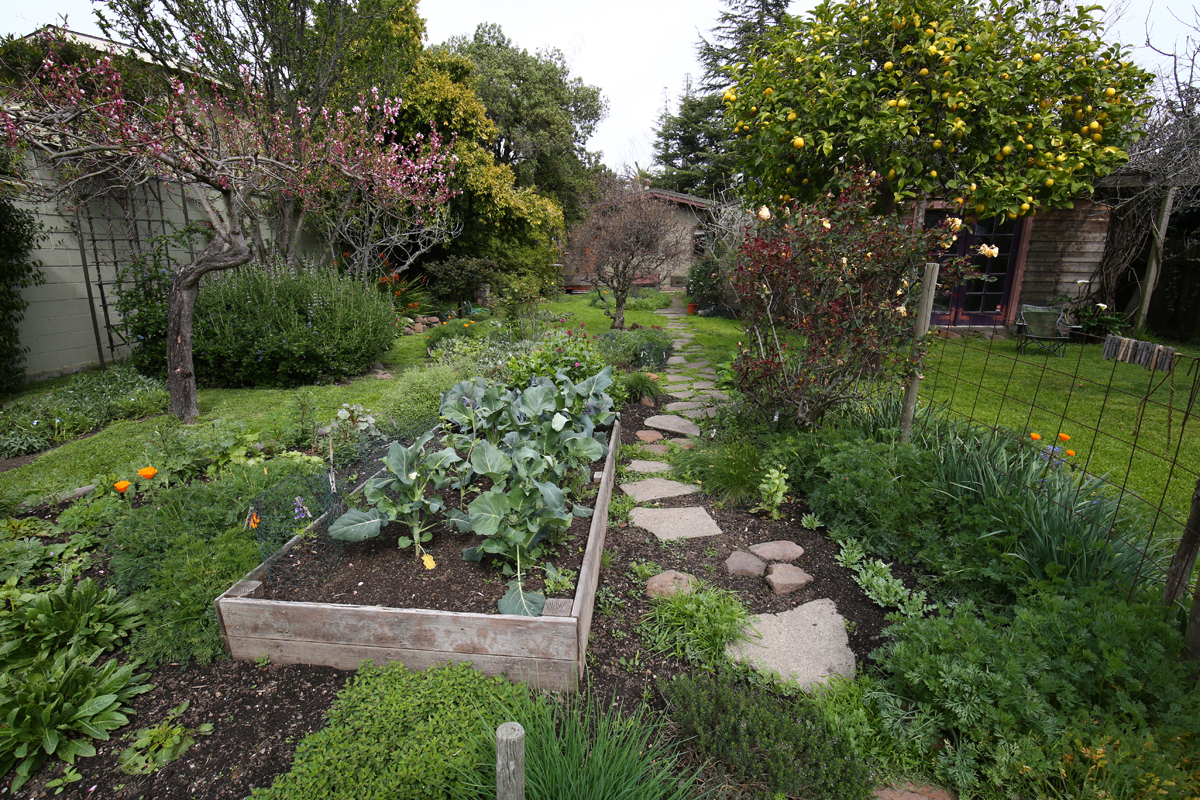
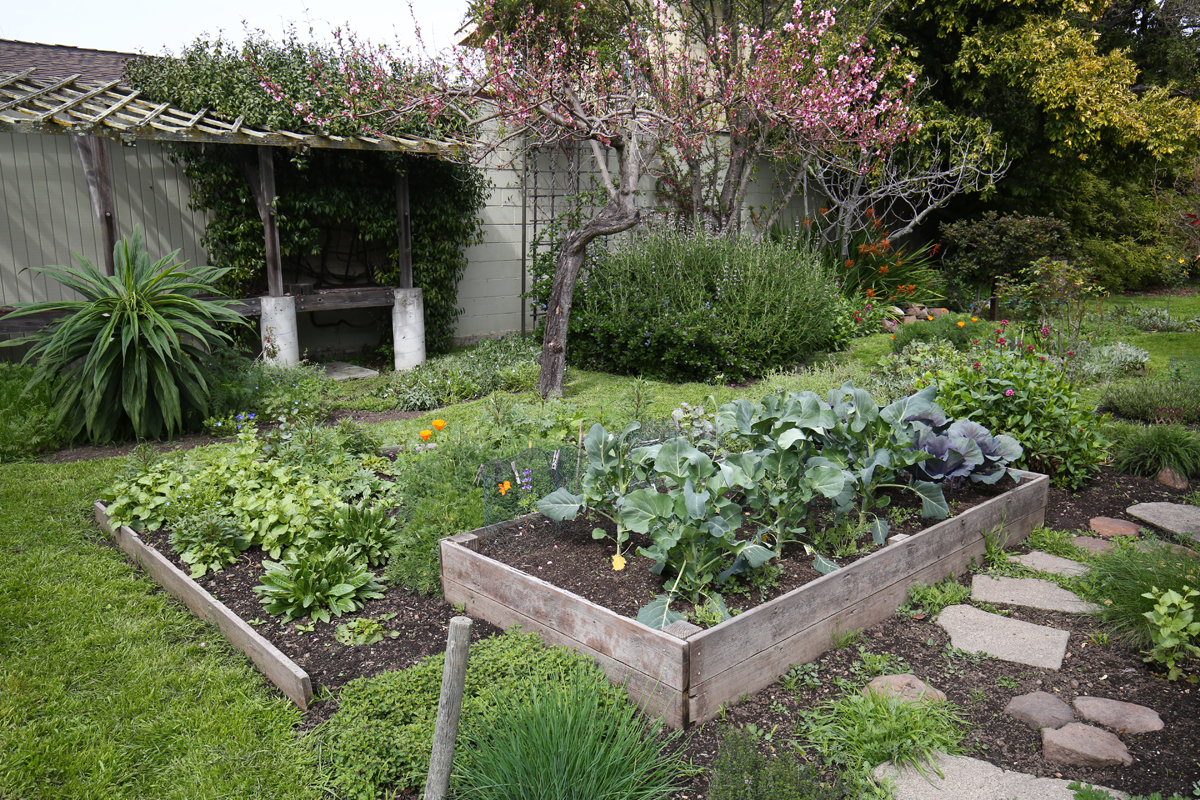
My garden remains a small oasis in the midst of world chaos, a psychopathic US president, wars (luckily not here, yet), work stress, and health management challenges. In most ways not a lot has changed in the yard. A disappointing loss, though, was the nectarine tree that had beautiful early spring blooms. It succumbed to peach leaf curl, a fungal disease caused by Taphrina deformans.

peach leaf curl Taphrina deformans
The fungus Taphrina deformans infects nectarine and peach trees, causing “peach leaf curl.” Here it’s on my peach tree. I hope the peach tree withstands the fungus better than the nectarine tree did.

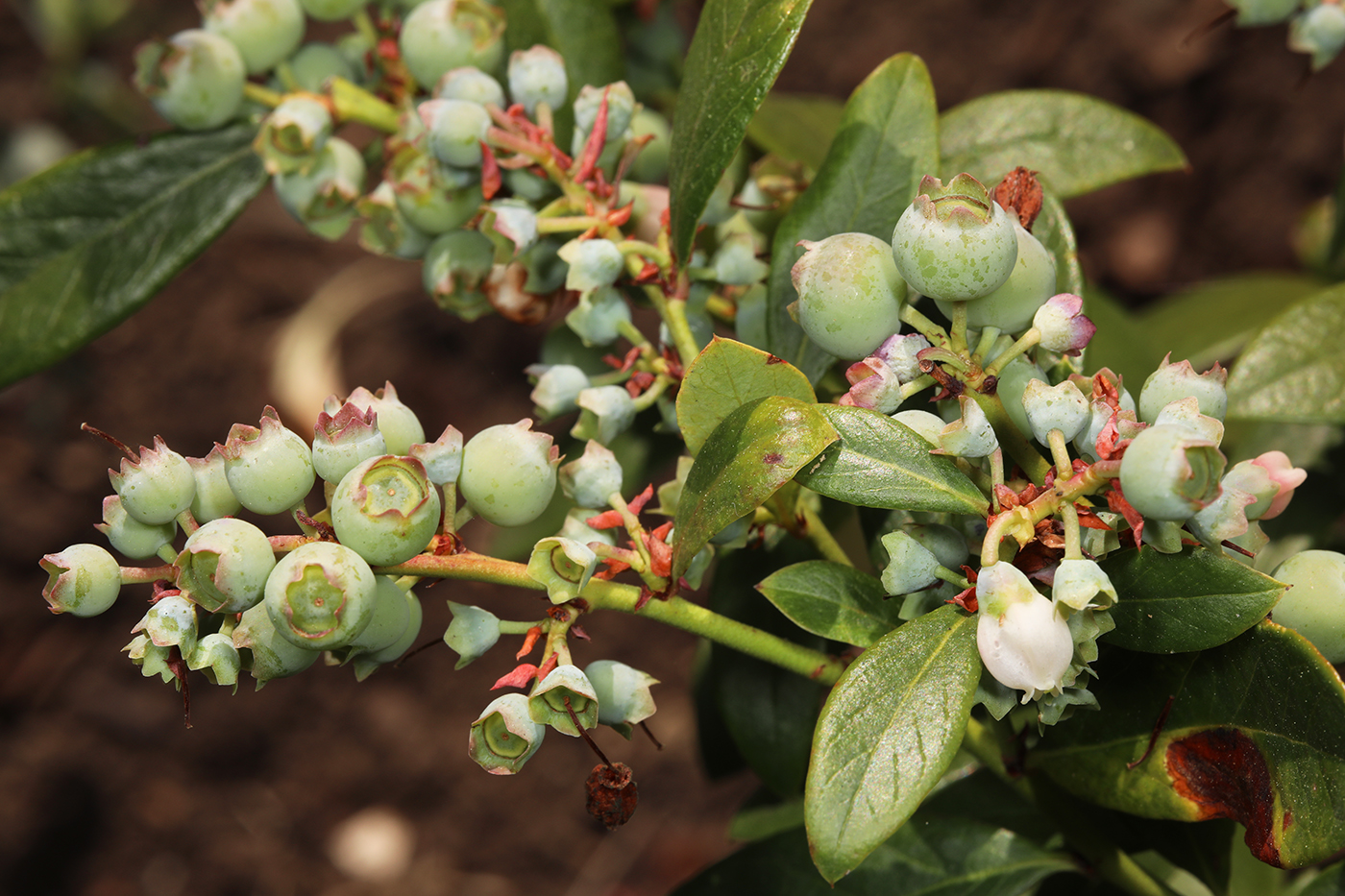
Unripe blueberries on one of my new blueberry bushes.

My mother especially liked to see plants I hadn’t already shown her. I have two blueberry bushes now, purchased despite my having mixed feelings about their need to be watered (more than native California plants). I can’t wait to try the blueberries, though.

I have an oak tree in the front yard now, planted in part to replace the magnificent Deodar cedar that was growing right next to the house. The oak is already taller than I am. I look forward to finding oak galls on it someday.

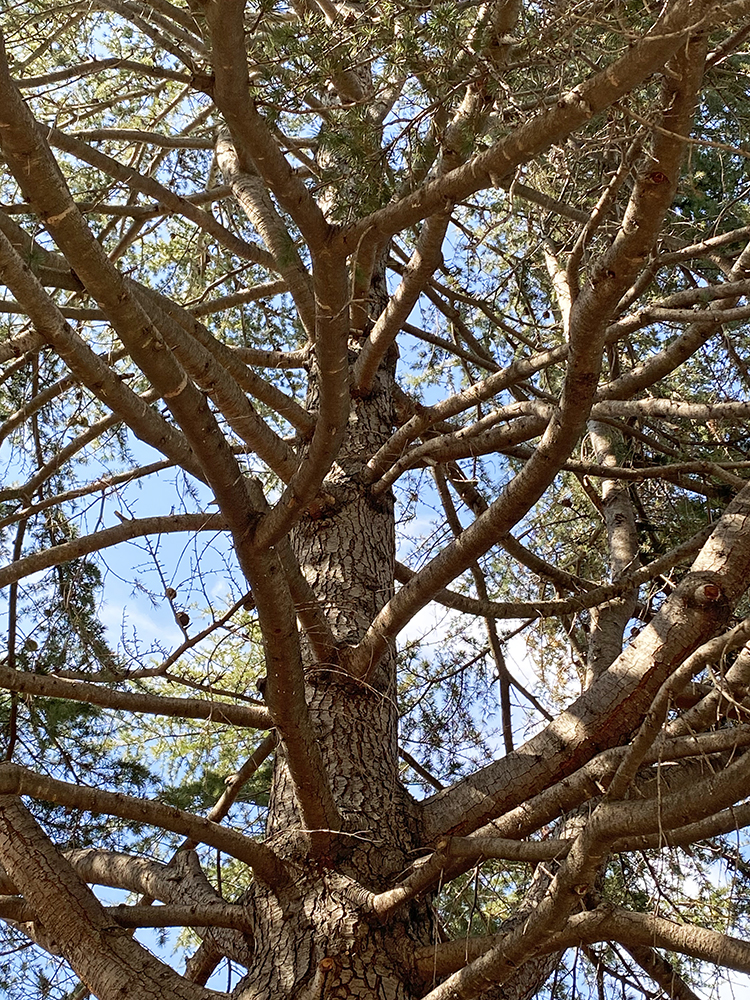
deodar cedar
The magnificent deodar cedar (Cedrus deodara) in 2021. It was growing about a foot away from the house, leaning towards my neighbor’s bedroom, and dropping impossible-to-remove sap on any cars parked in the driveway.

coast live oak, Quercus agrifolia
New coast live oak (Quercus agrifolia) in the front yard. The tree is taller than I am. It will be a while before it’s as large as the cedar was. I look forward to being able to watch oak galls develop on it.

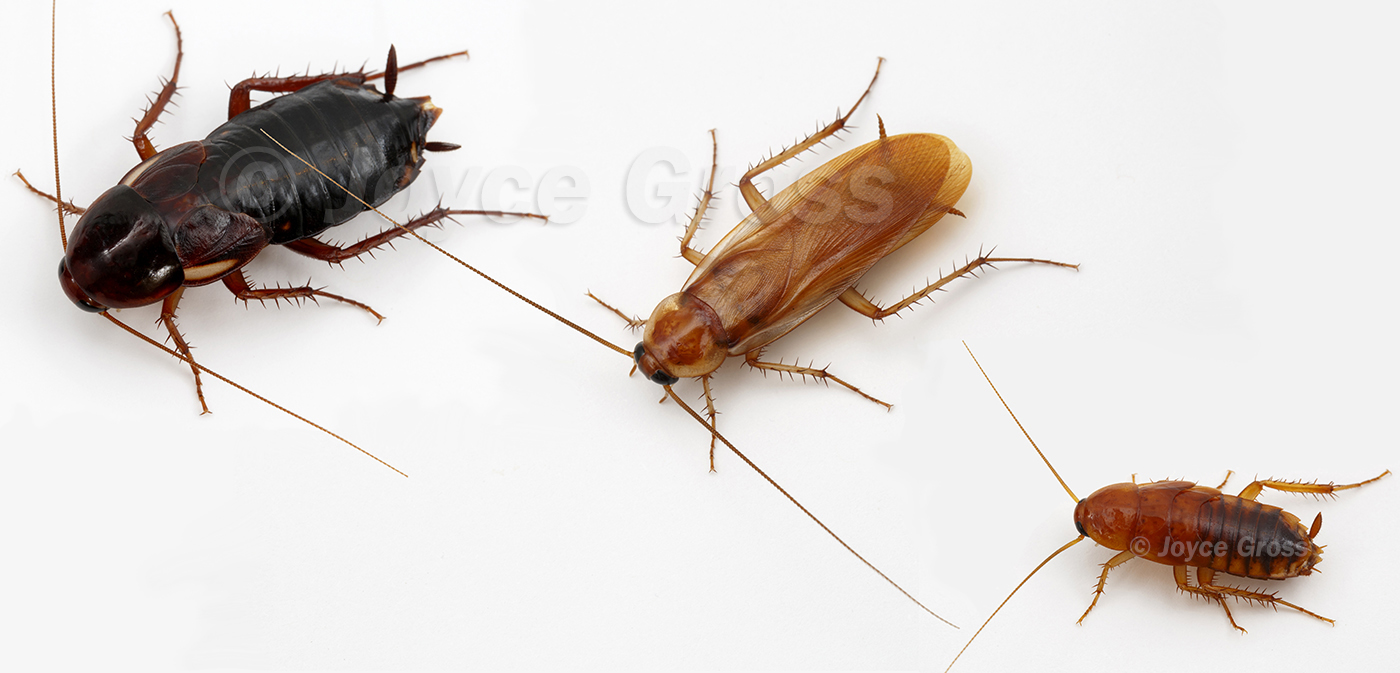
There’s a new-to-the-neighborhood insect here, the Turkestan roach. Having already survived the dinosaur extinction, cockroaches belong to a group of insects that’s most likely to survive human extinction. The Turkestan roach likes to hang out in water meter and light control boxes next to city sidewalks. They come out at night and spread out across my yard and sometimes walk up the exterior walls of my house. These roaches are, like some quirks of my mother’s personality, the result of war. It’s thought they were transported from the Middle East and Central Asia to the United States as stowaways in military equipment.
 

Turkestan roaches (Shelfordella lateralis)
Turkestan roaches (Shelfordella lateralis, aka Blatta lateralis). Adult female on left; adult male in middle; nymph on right.


The spread of these roaches more recently in the US has been assisted by pet stores that sell them as food for frogs and reptiles. I’ve never purchased Turkestan roaches (they’re available for free in my yard), but I did start rearing frogs last year. A neighbor reared Pacific Chorus Frogs (Pseudacris regilla) for many years until he died. These native frogs hadn’t lived in my neighborhood for decades because of an overabundance of concrete and traffic. When I hear the frogs’ spring choruses, I like to pretend I’m somewhere remote. I hear a chorus right now, 80 feet from my desk.

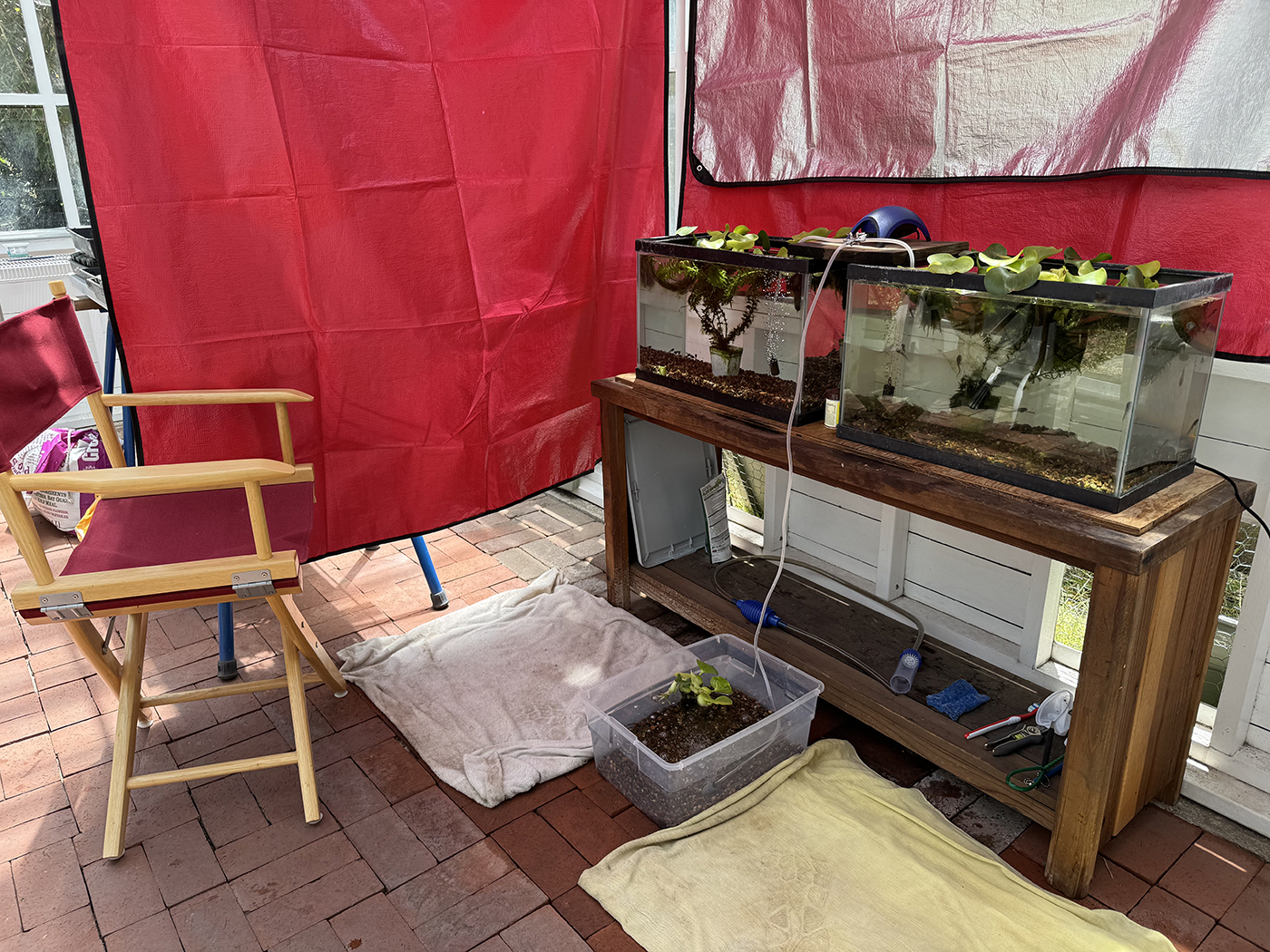
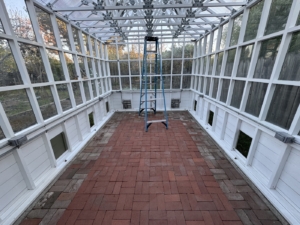
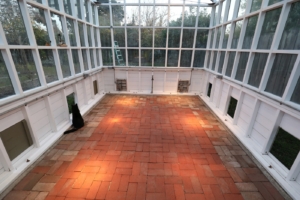
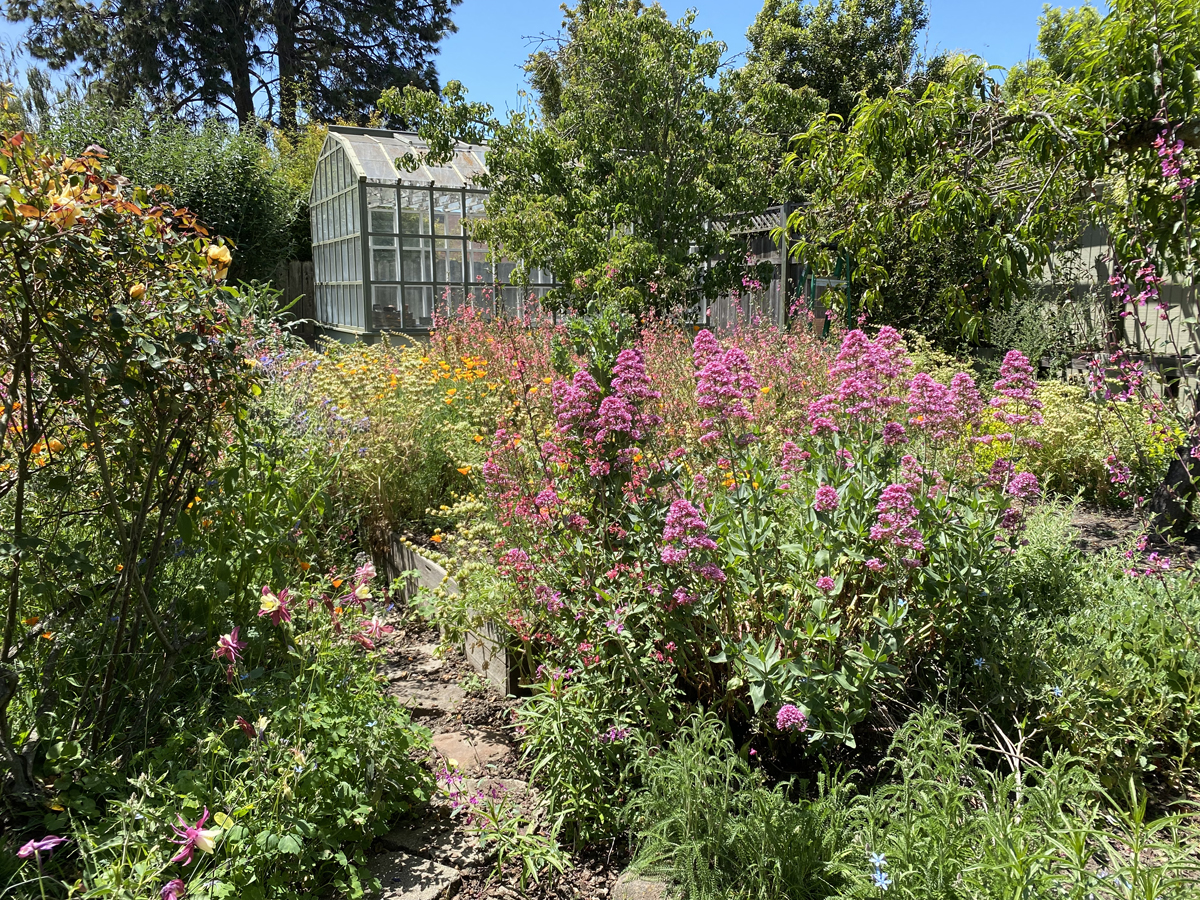
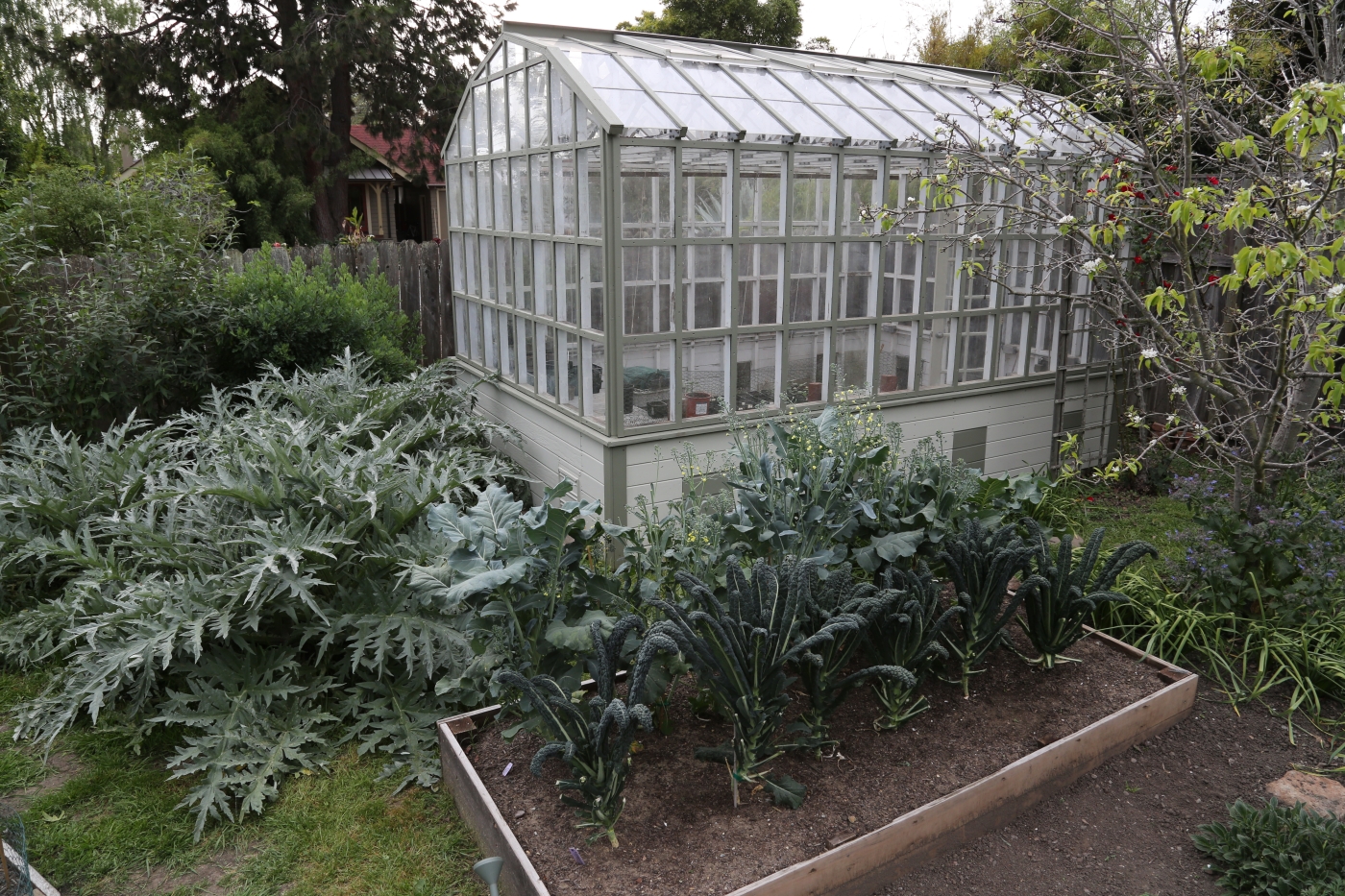
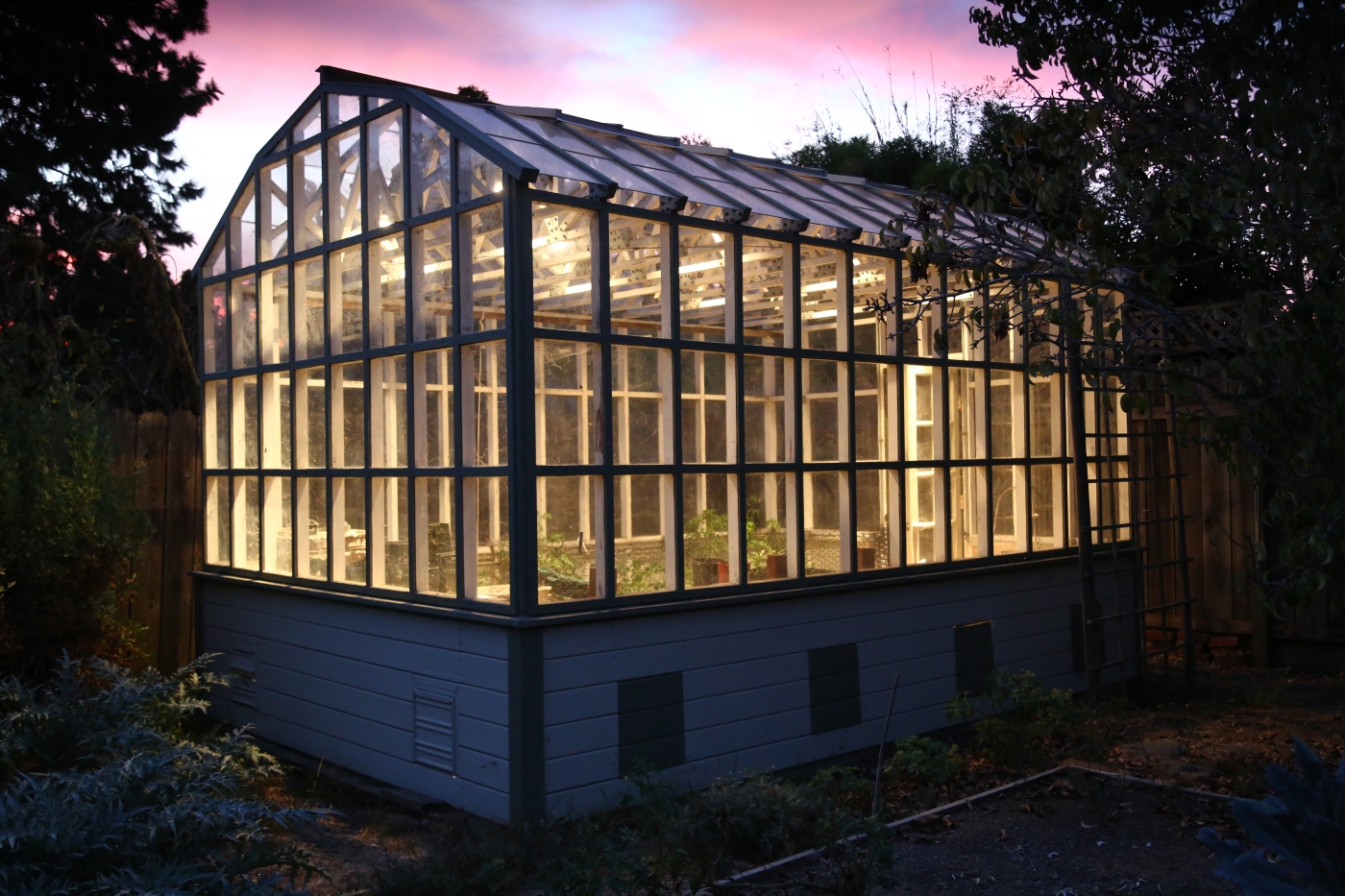
I only assist with the breeding, egg and tadpole stages. Providing a habitat for them to grow as tadpoles is significant work. There are no natural ponds near my house, not even any nice big puddles in which they can breed. The tadpoles develop in aquariums in my greenhouse.

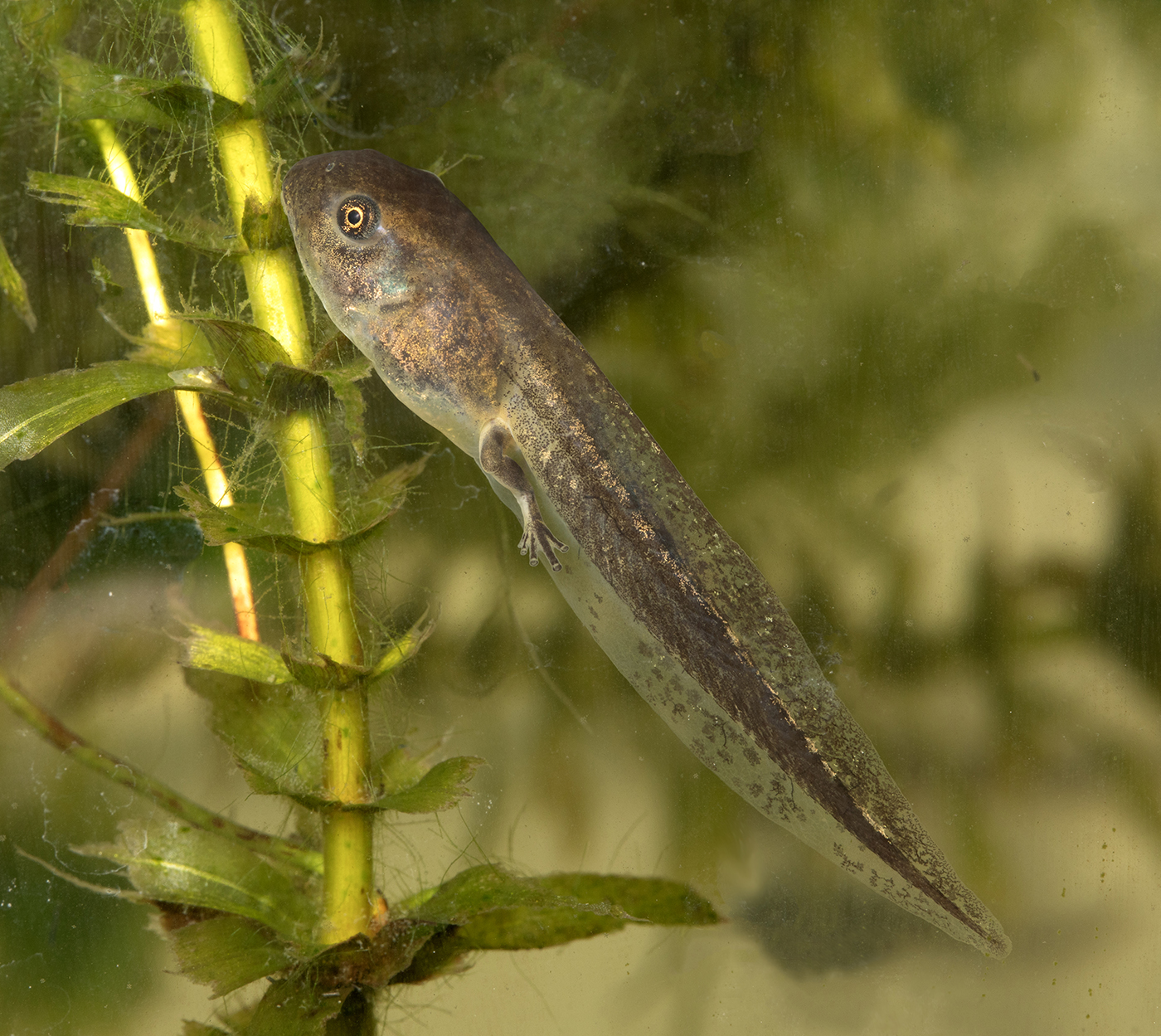
Tadpole
Pacific Chorus Frog (Pseudacris regilla) tadpole.

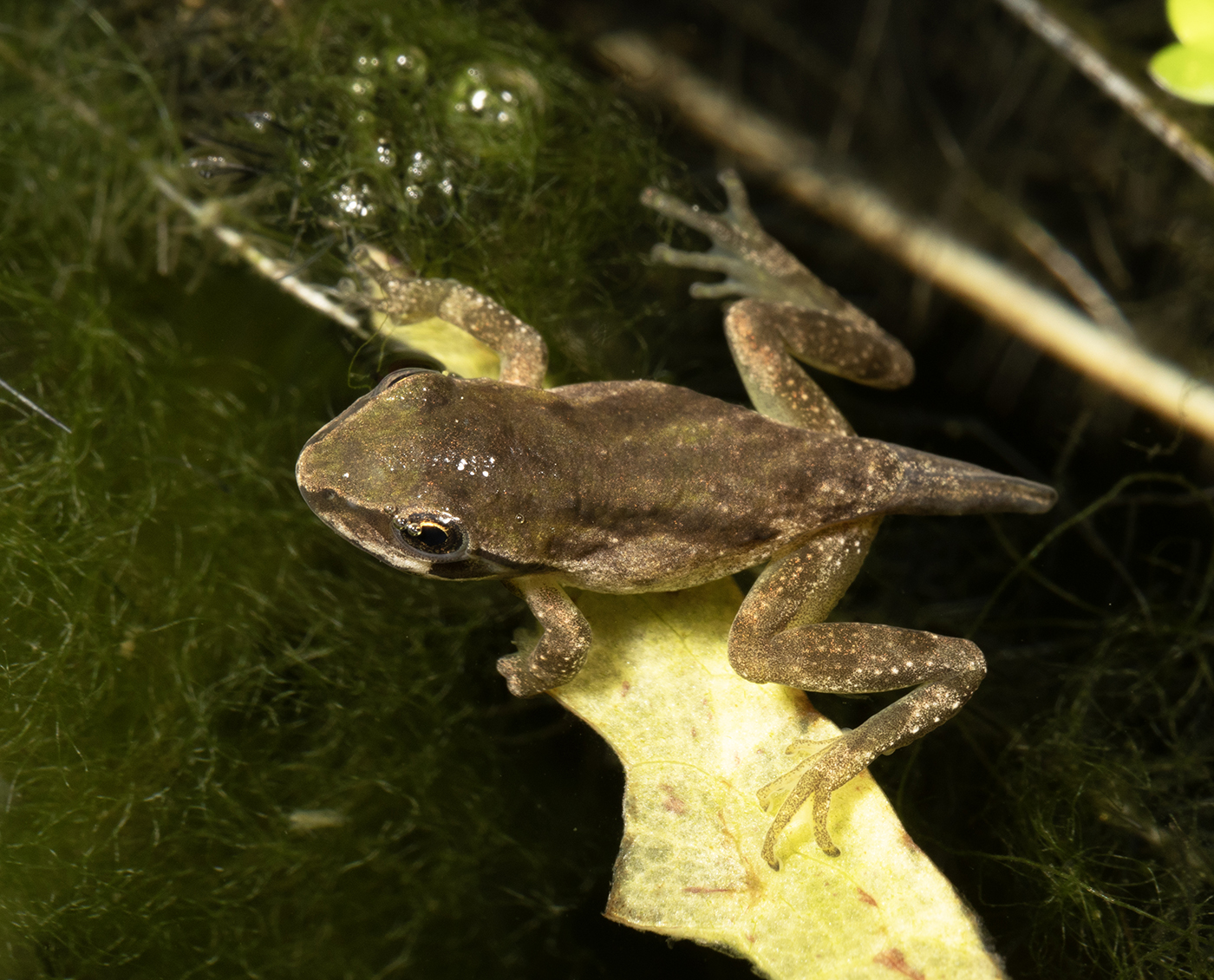
Pacific Chorus Frog (Pseudacris regilla
Pacific Chorus Frog (Pseudacris regilla), still with a bit of a tail.

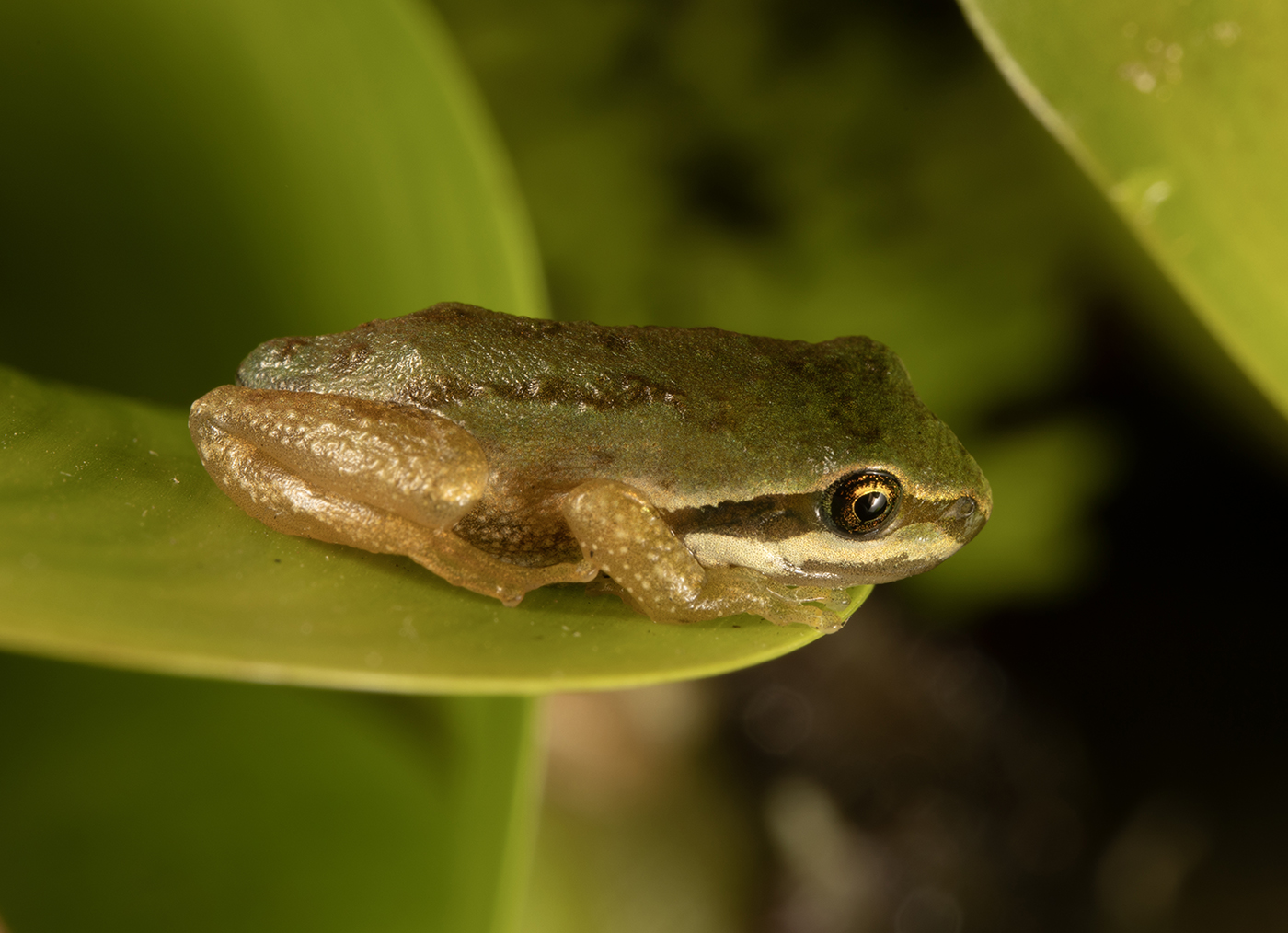
Pacific Chorus Frog (Pseudacris regilla
Pacific Chorus Frog (Pseudacris regilla), newly metamorphosed.

frog rearing in greenhouse
Frog rearing in the greenhouse.


A note directly to my mother…

I saved the biggest news for last, because, when you hear it, you might get upset. Any negative reactions you may have about my news would be unjustified, though. Everything I’m about to tell you was done 100% with your permission. So, now that you’re lulled into the best mood possible by cockroaches, blueberry bushes, and frogs, I’m letting you know that your stories revolving around your life in Europe (1931-1949) have been published this year by the University of Rochester Press in a book titled On the Run in Occupied Poland: Tales of a Refugee Childhood.

On the Run in Occupied Poland cover
Cover of On the Run in Occupied Poland: Tales of a Refuge Childhood.

Your friend Irene Kacandes edited the stories – not only the ones you already worked on with her, but additional stories I found on your computer. Following your stories are three essays: one by me which I am sure you won’t want to read (I broke the rule of daughters not being allowed to question their mothers), one by Aleksandra (Ola) Szczepan, and one by Irene. I wish you could have met Ola. She knows an incredible amount of Polish history, and, by chance, knows well all the places you used to wander in Kraków during the war.

Thank you for giving me the opportunity to work with Irene and Ola. They are amazing scholars and humans, and working with them on this project was the best thing that has unexpectedly happened in my life.
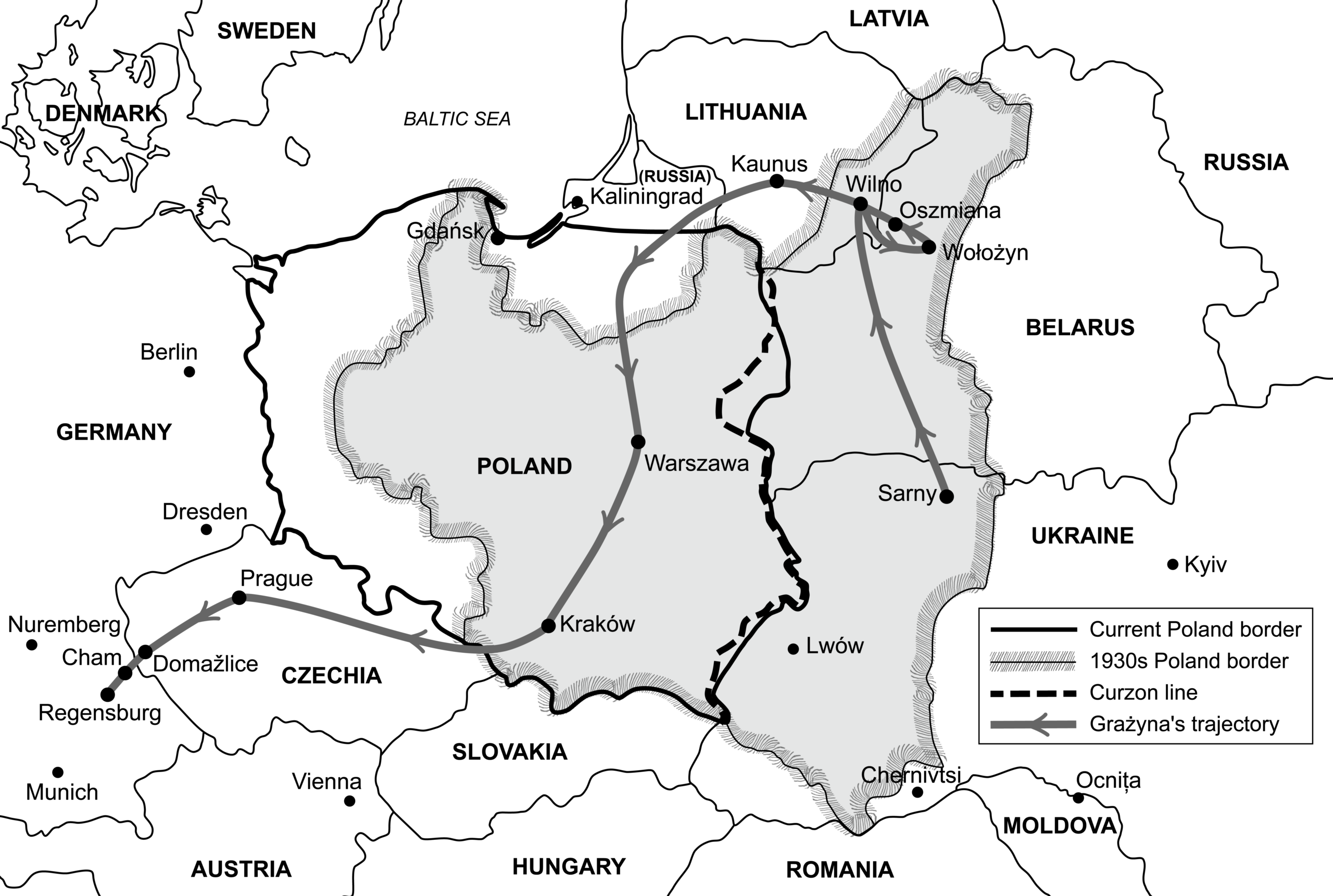
Trajectory of Grażyna Gross through eastern Europe.
Trajectory of Grażyna Połtowicz (married name Gross) through eastern Europe between 1931 and 1949. The shaded area shows the Polish borders between World Wars I and II. The rest of the country borders are the current ones (2026).

I hope you’ve gotten this far – that your contrariness has not caused you to lash out with some unwarranted negative commentary. My best hope is that you’ve been rendered speechless, at least until I finish what I have to say. Maybe in the end you could spare a small smile? Your stories deserve to be read by more than just one or two people.

I miss you. It’s hard to believe you’re not still in your own backyard refuge in Ellis Hollow — a refuge that was mine for many years as well — walking your dogs, feeding the chickens, nursing along a delicate Clematis, preparing for a dog show or tracking test, trying to get some peace and quiet to read, and thinking about what you lost or left behind in Poland. A strange thing now, after reading your stories, is that I feel I knew you when you lived in Europe, and so I also miss the Grażyna who was a child in towns that are now in Belarus and Lithuania, the Grażyna who was a young teenager in Kraków, and the Grażyna who was an older teenager in Germany, observing the complicated wartime and post-wartime social fabric, navigating life around your mother’s lies, and watching the colors change on the Vistula and Danube Rivers. You loved the rivers so much that you named one of your dogs, half a century after you left Poland, after the Vistula River.

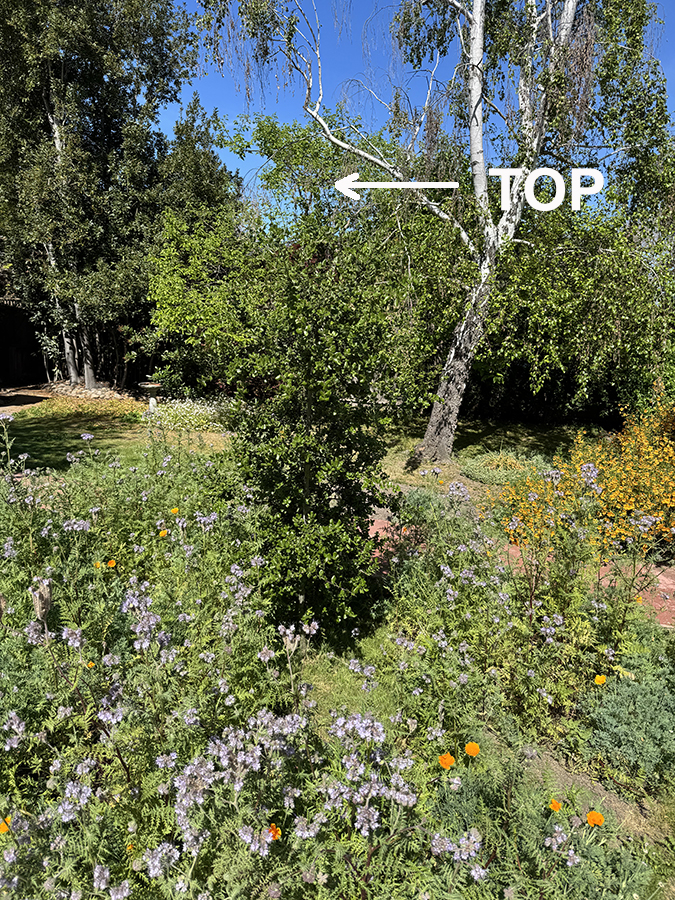
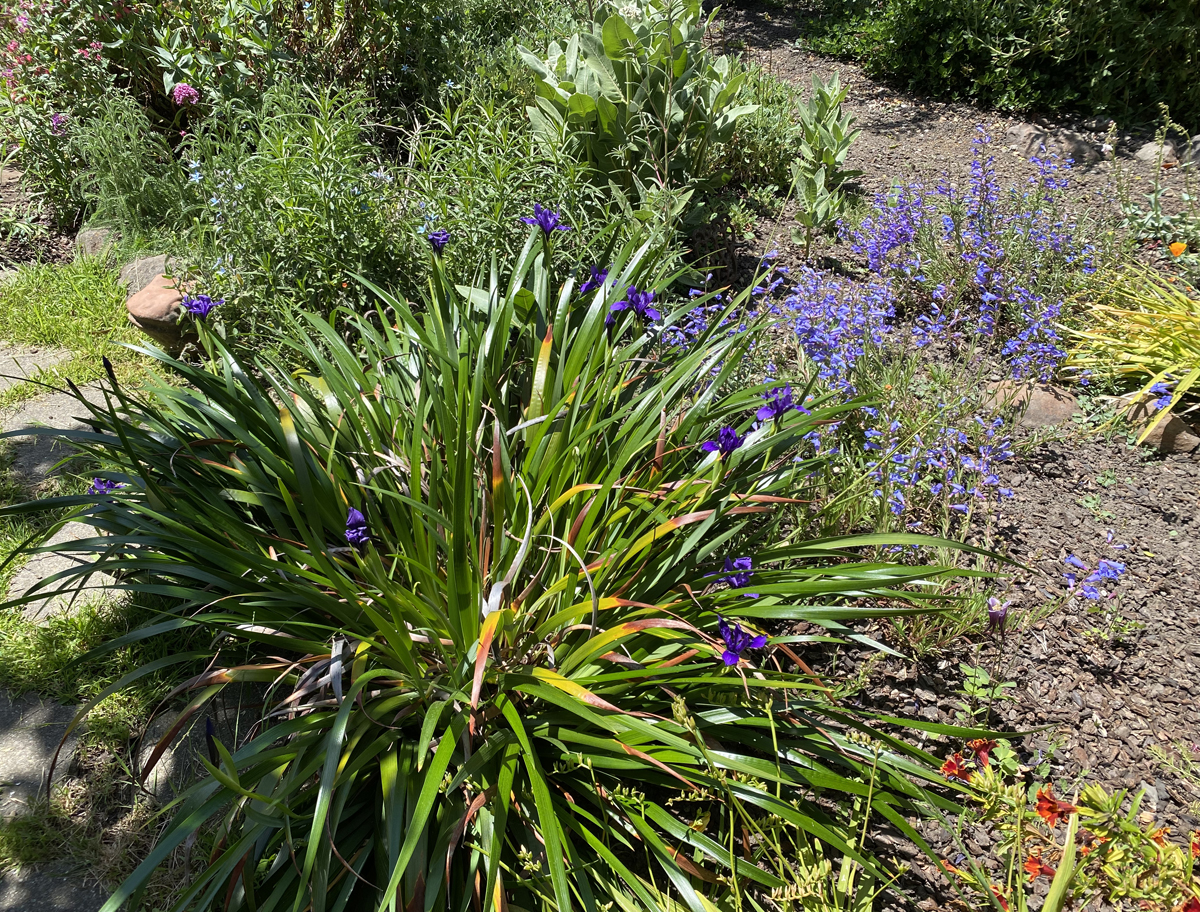
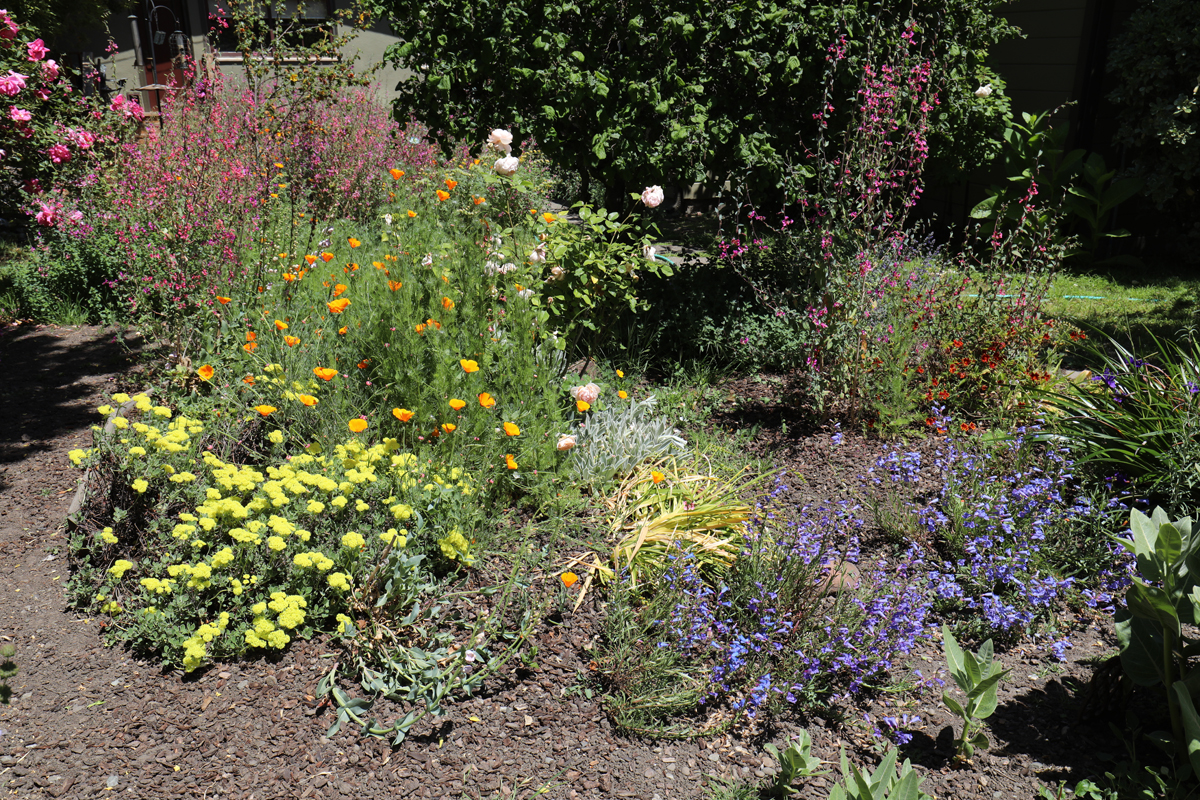
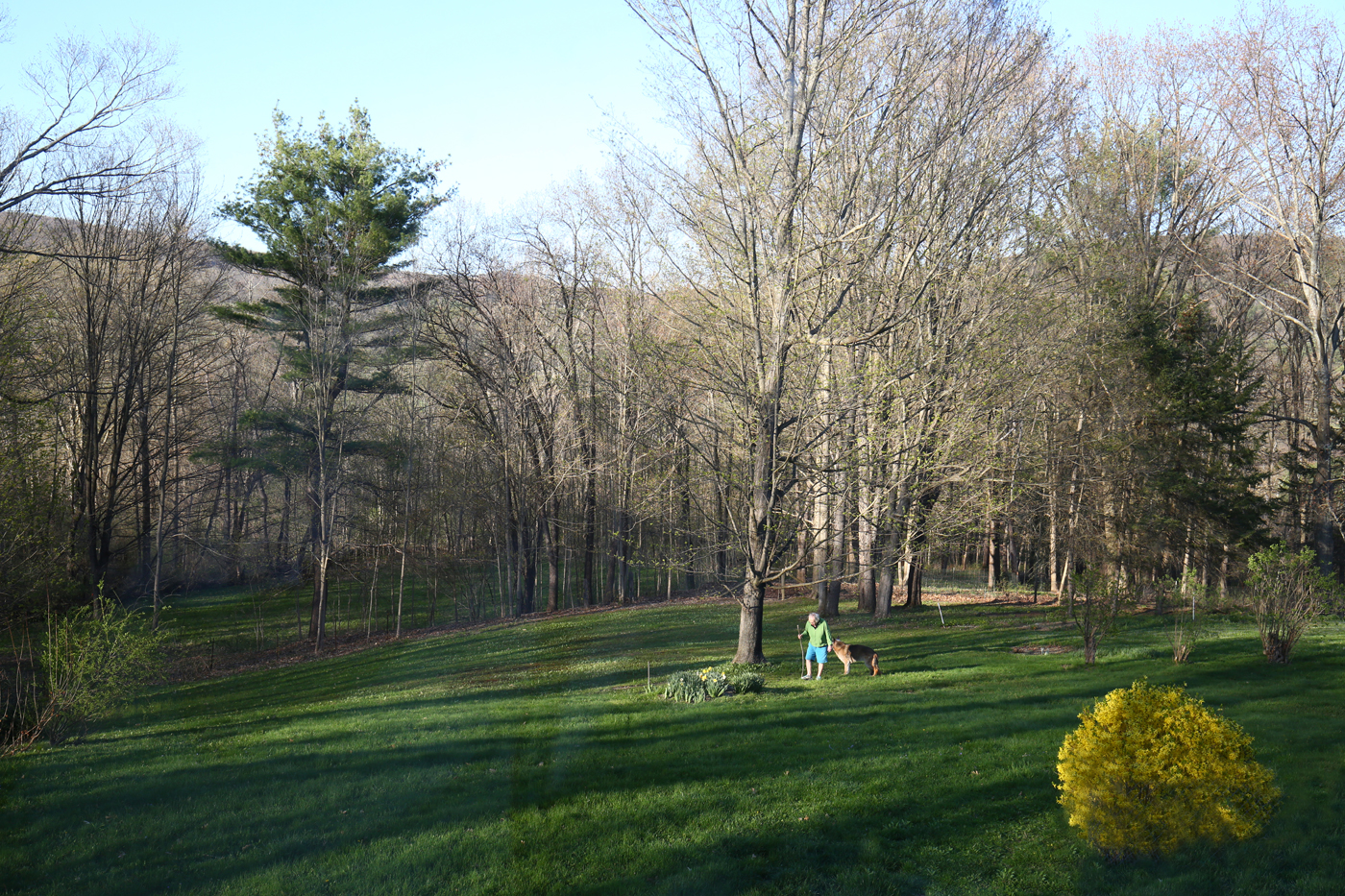
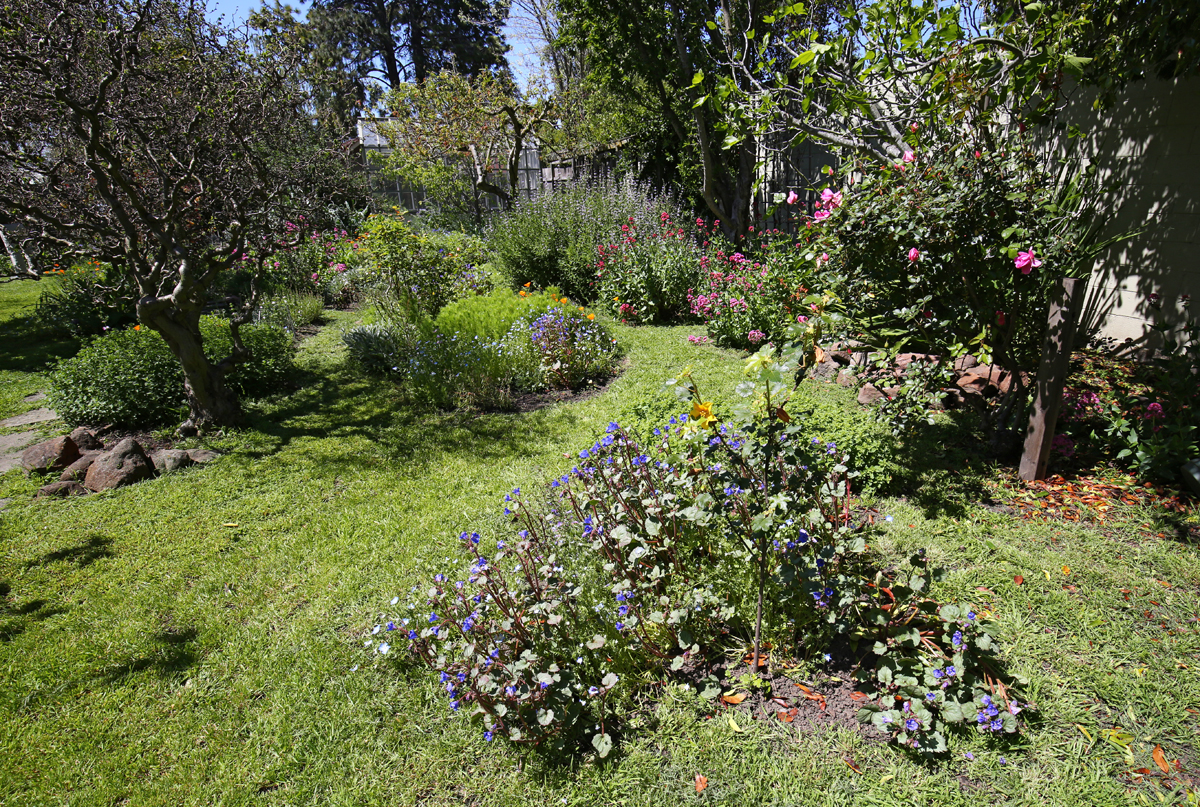
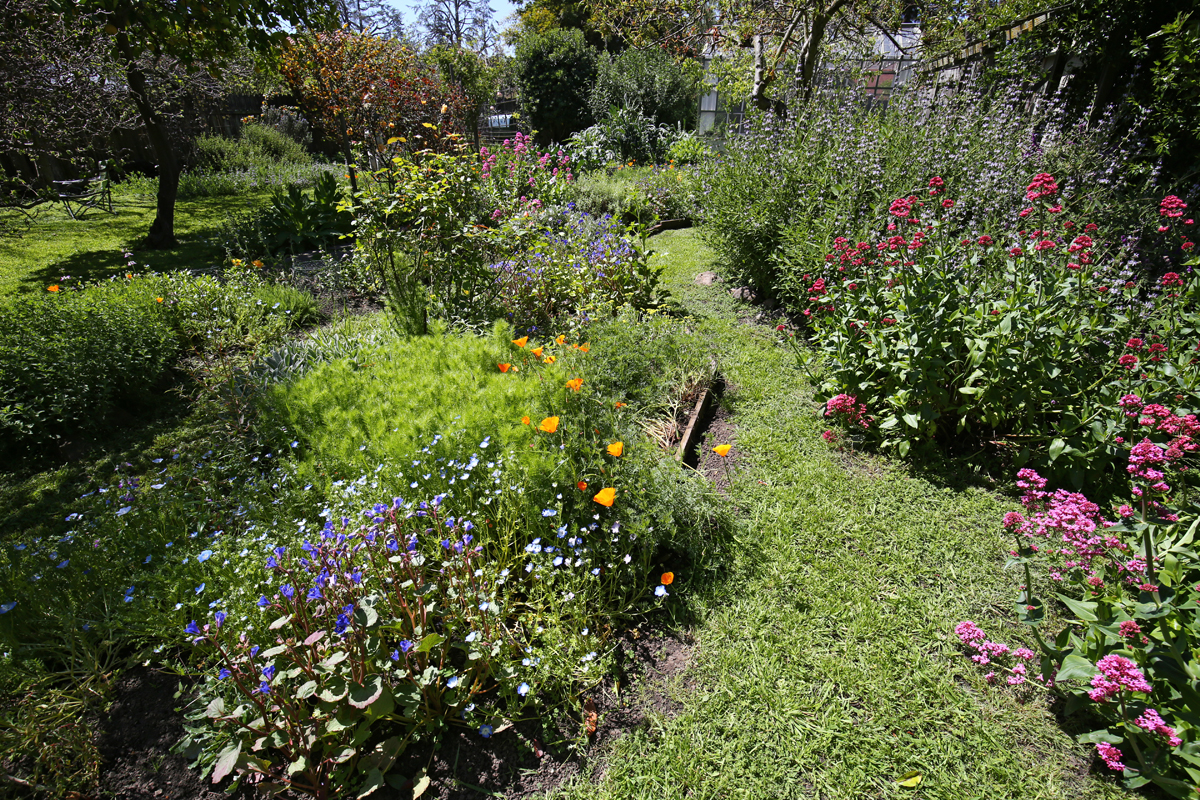
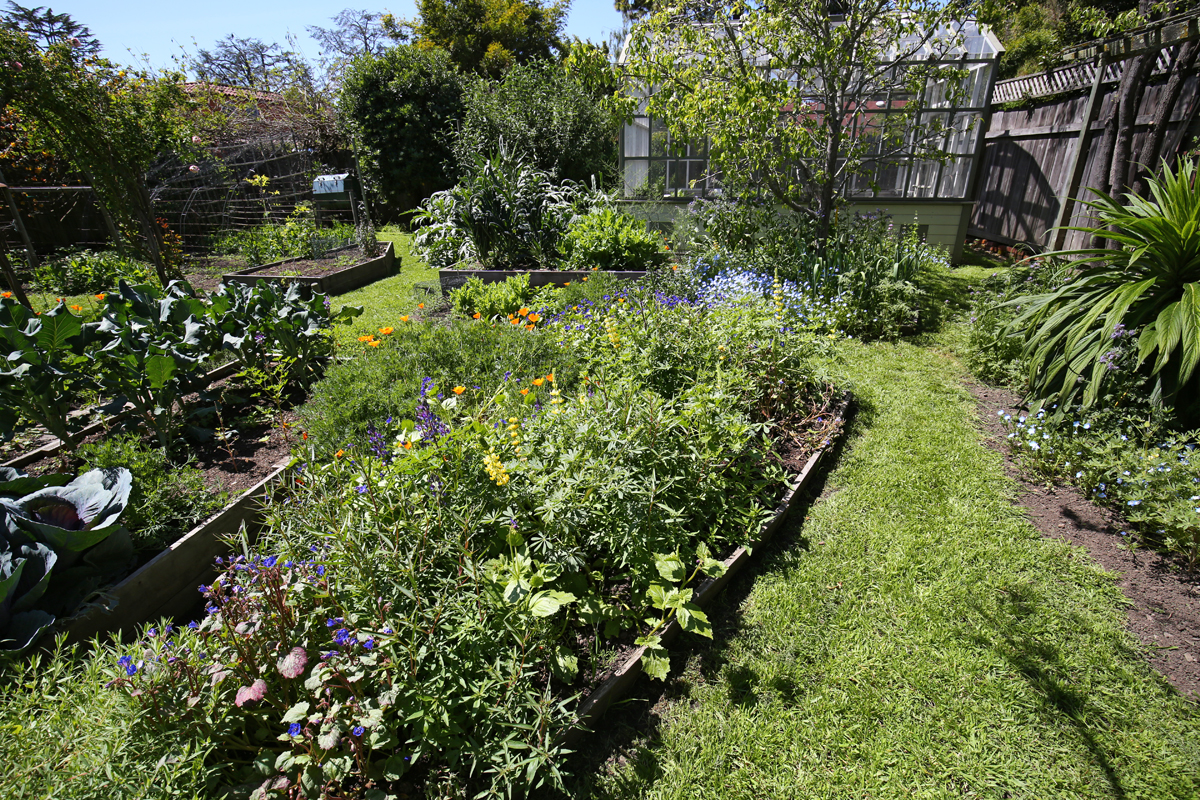
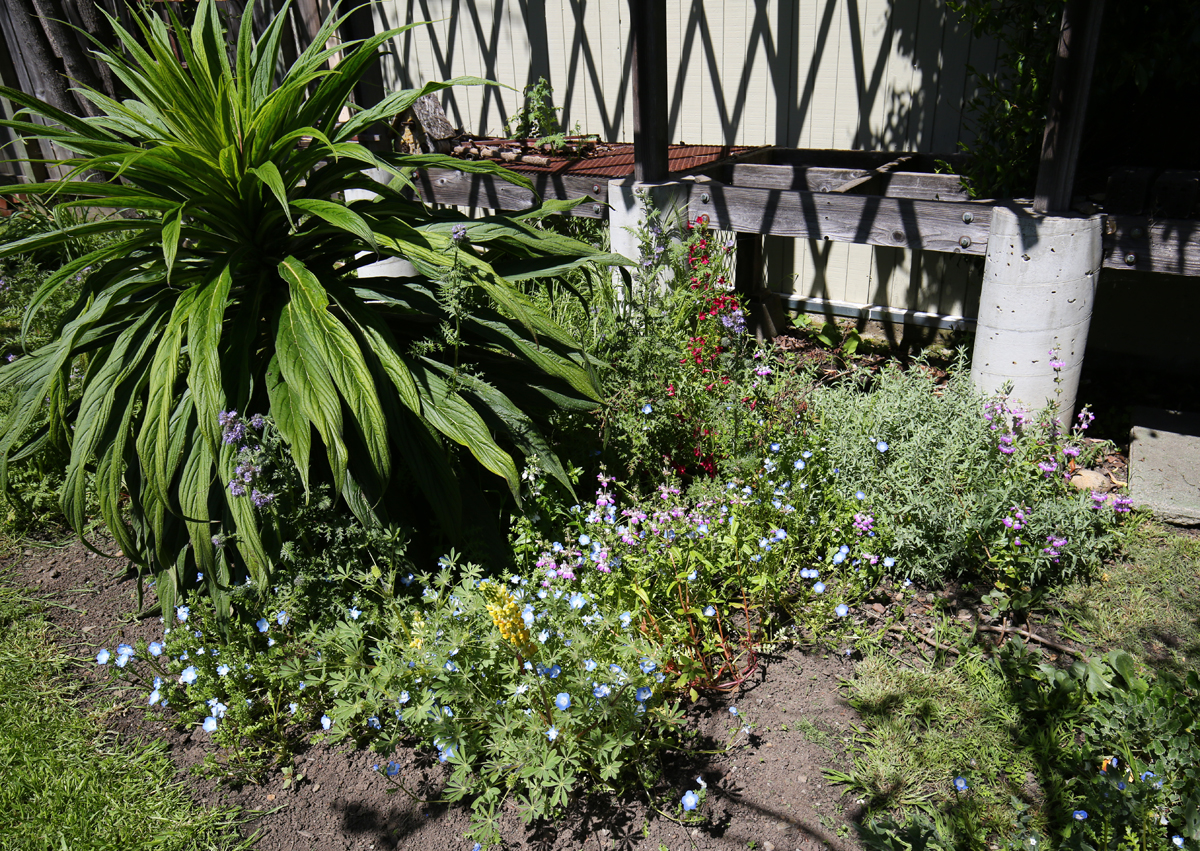
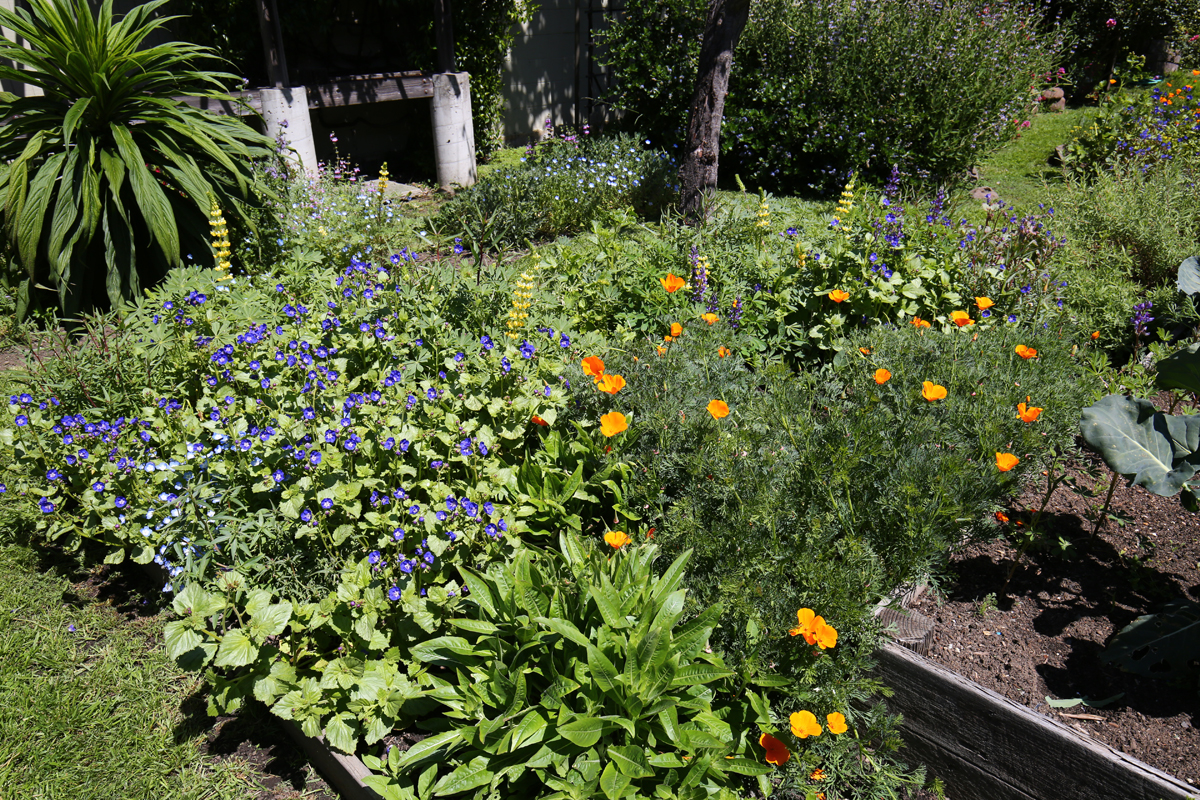
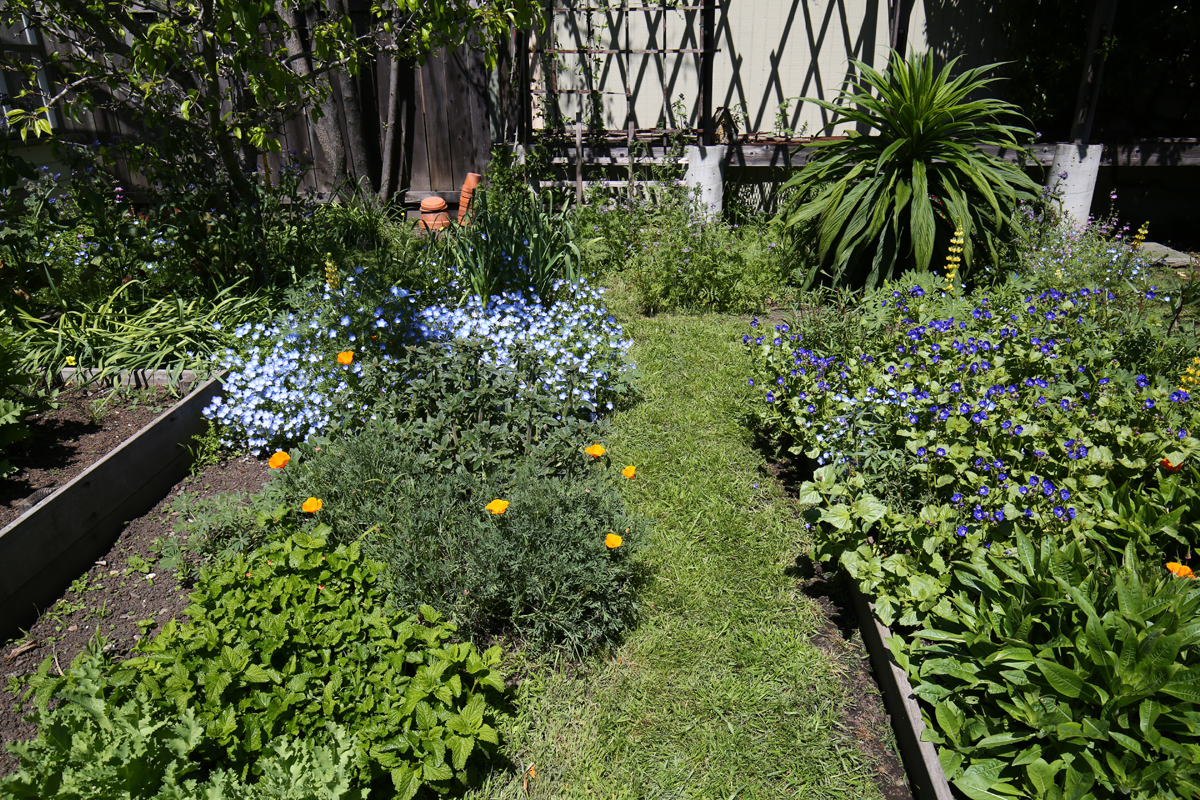
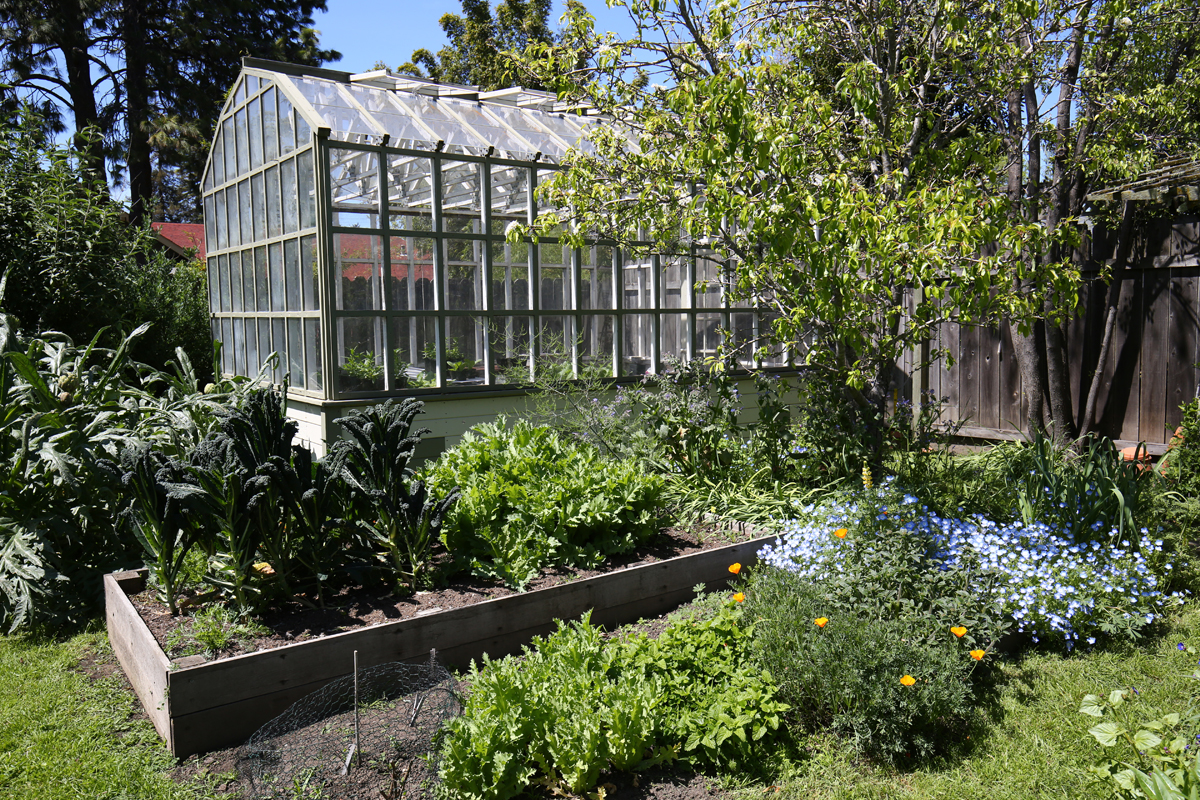
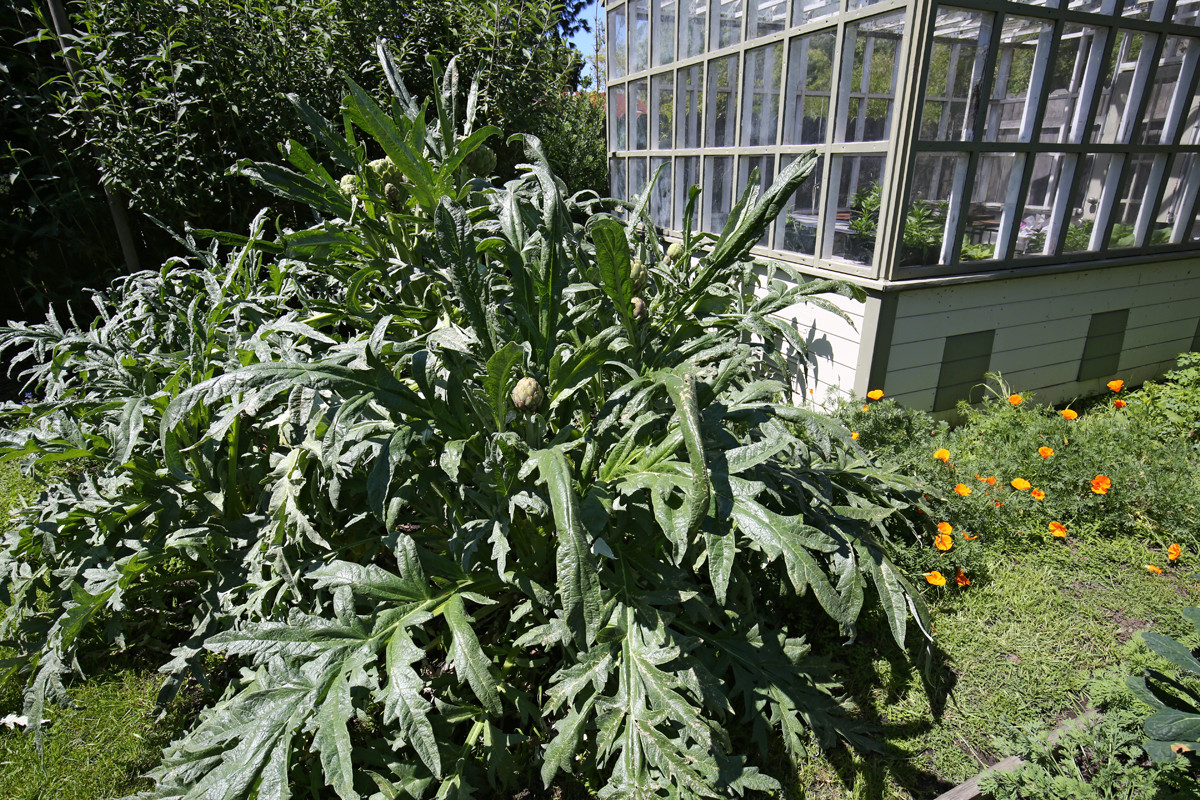
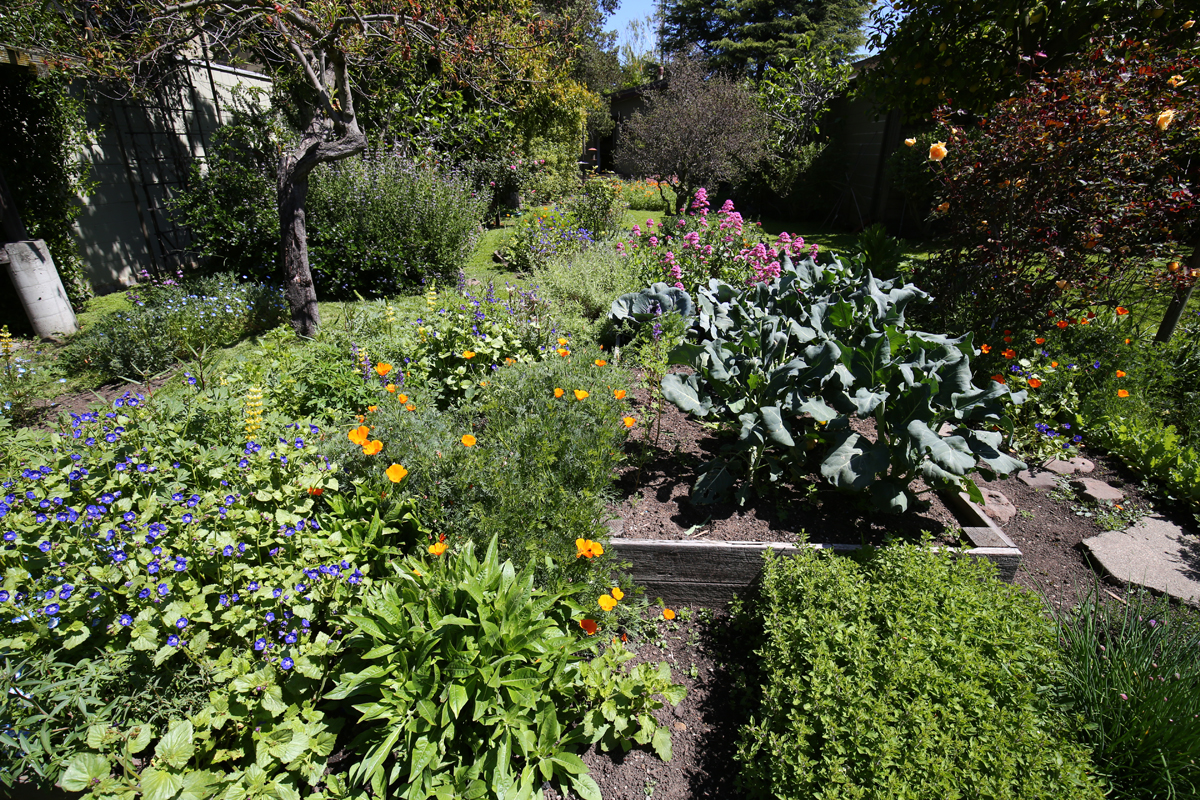
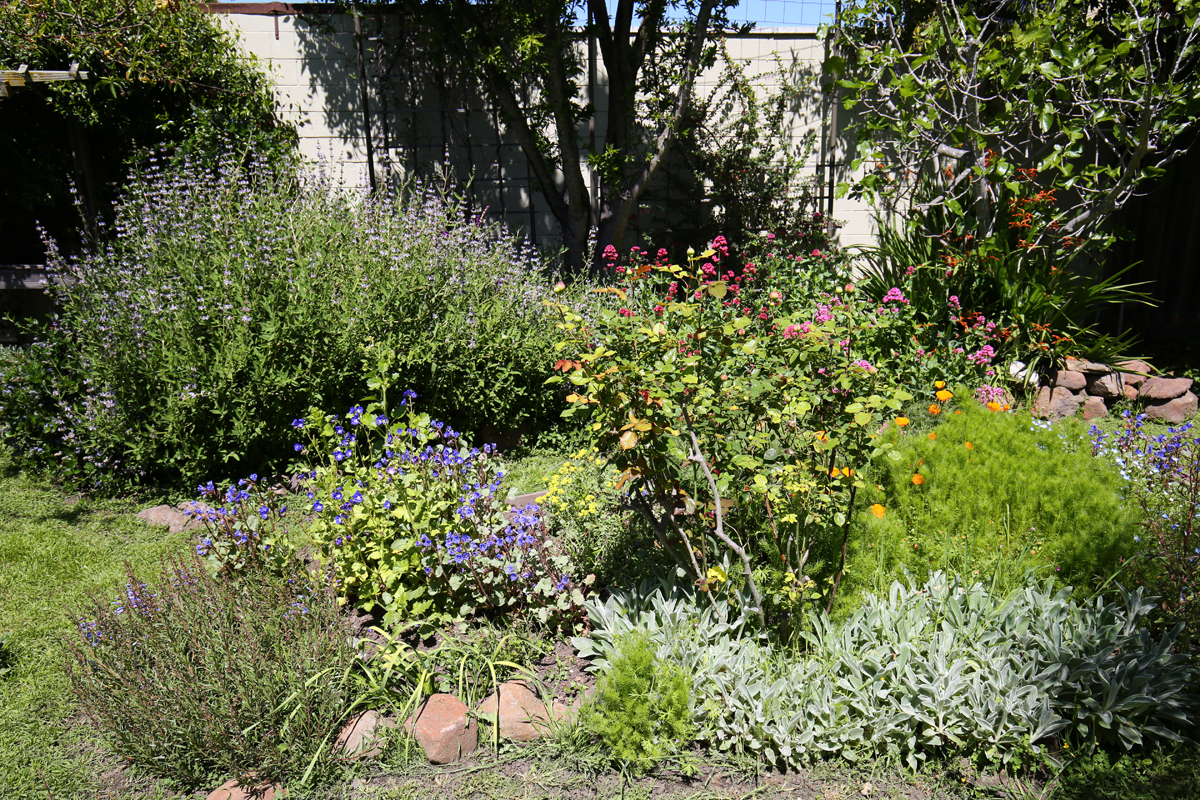
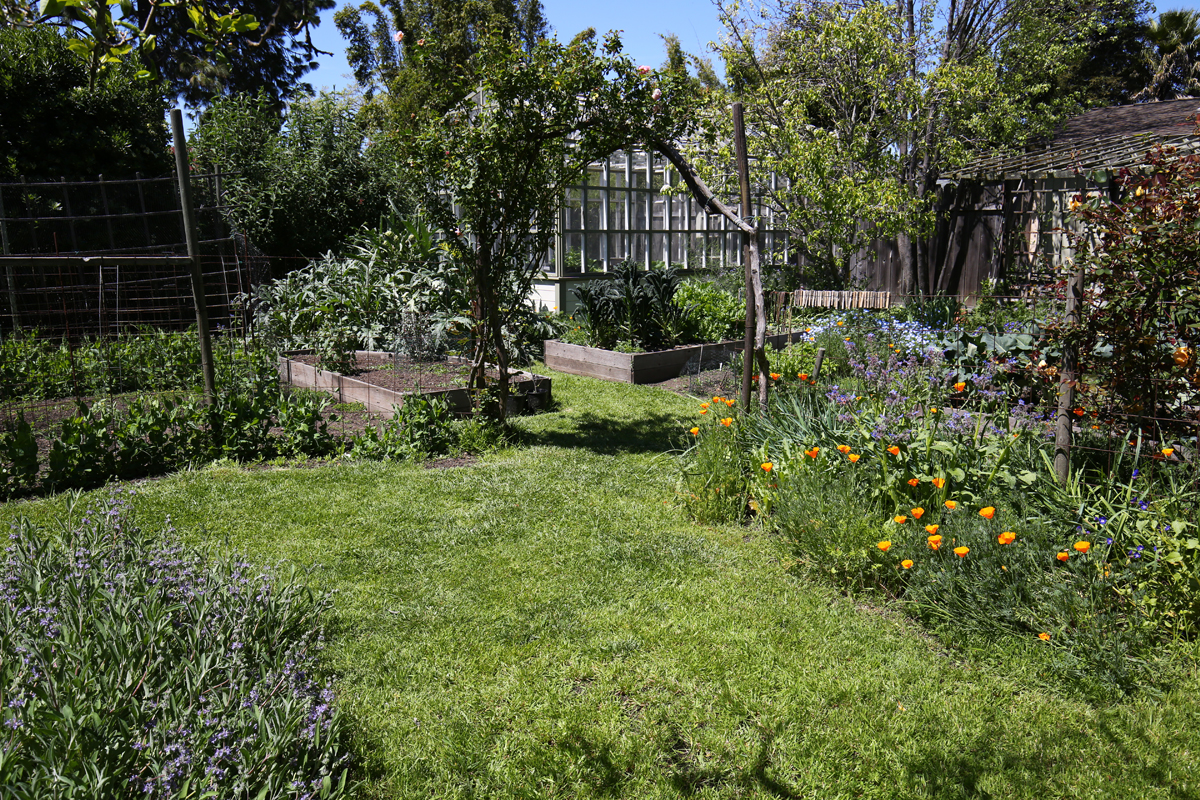
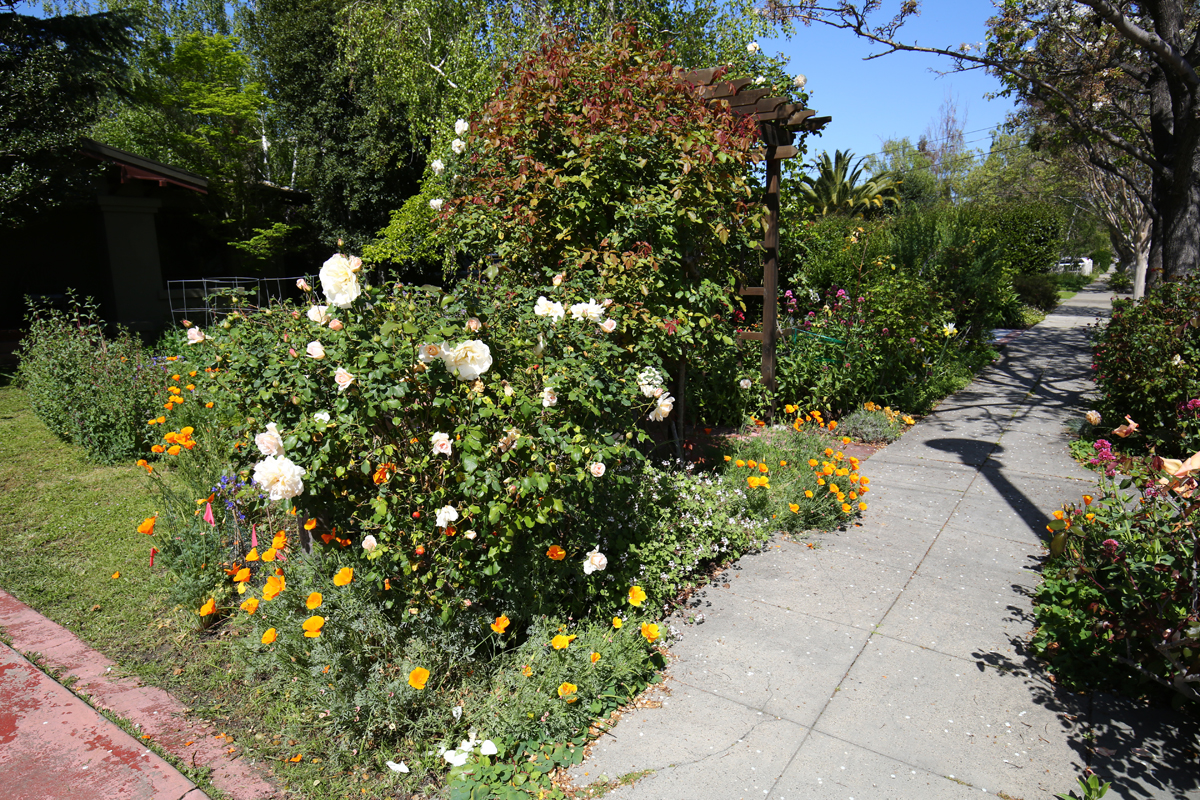
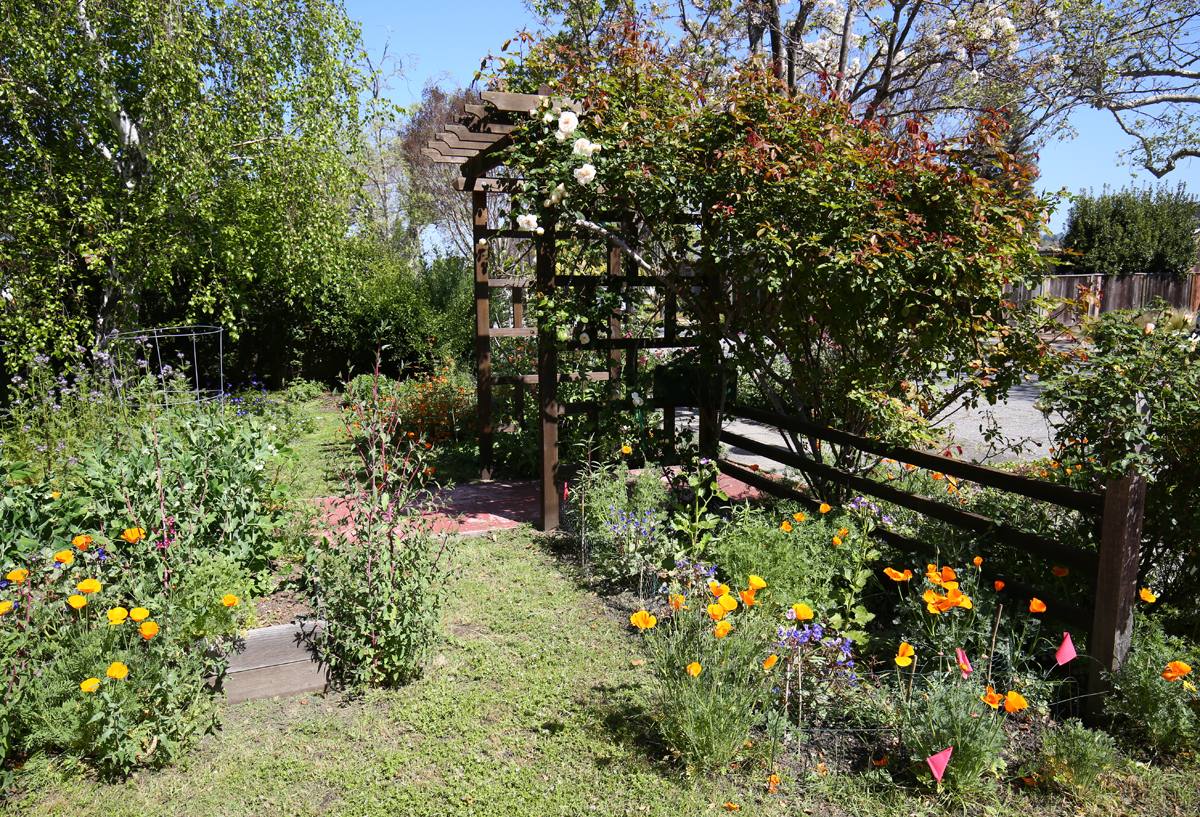
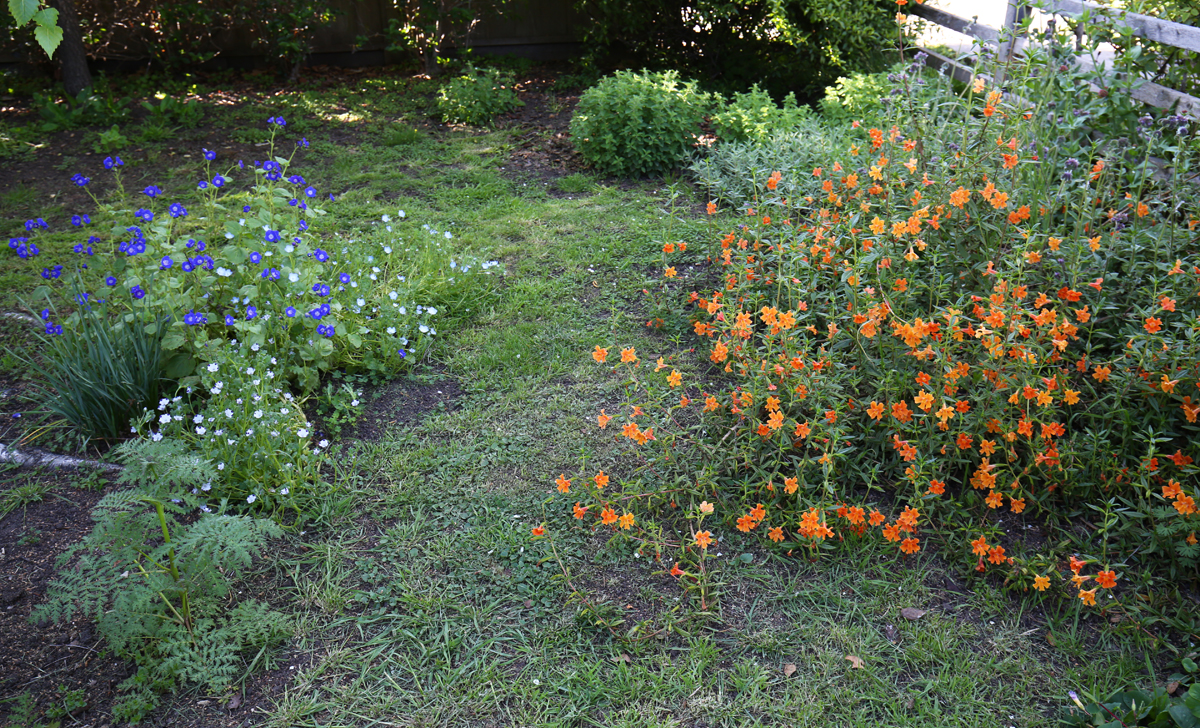
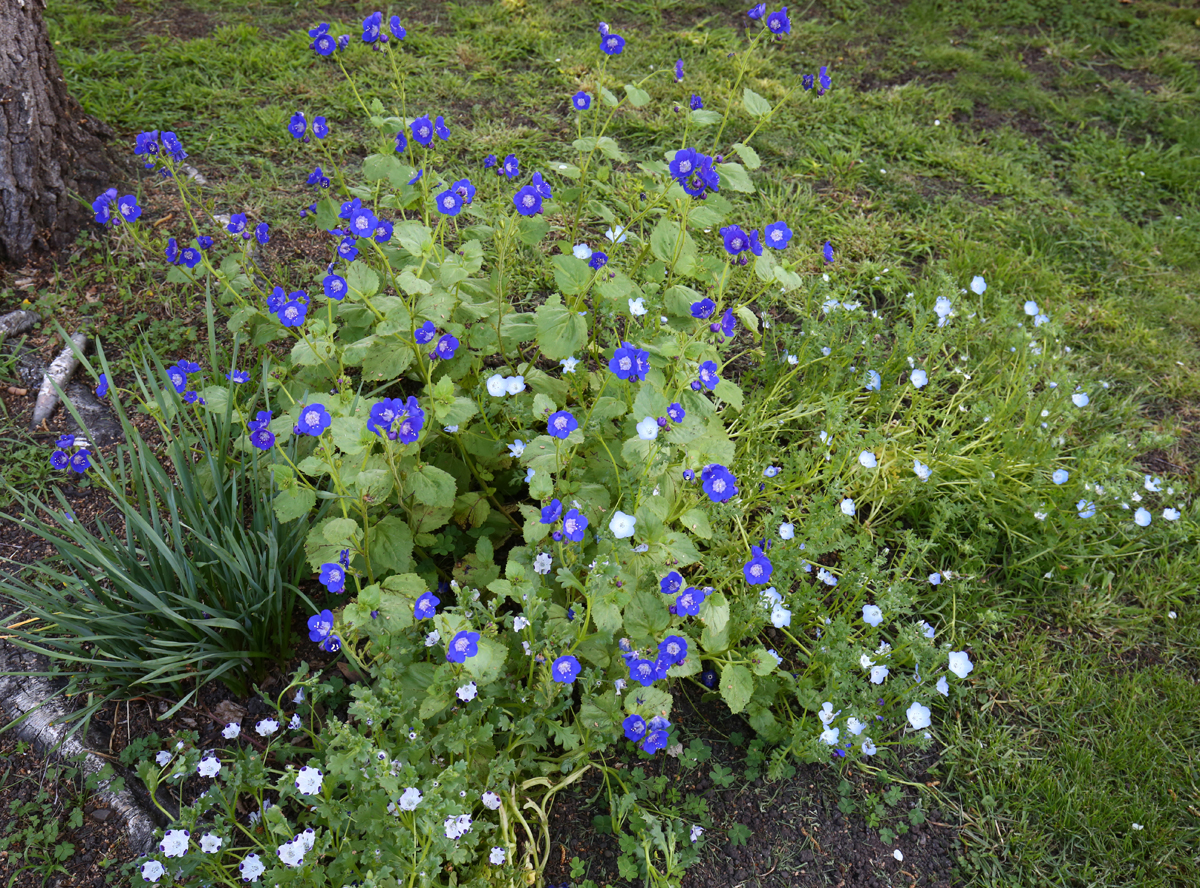
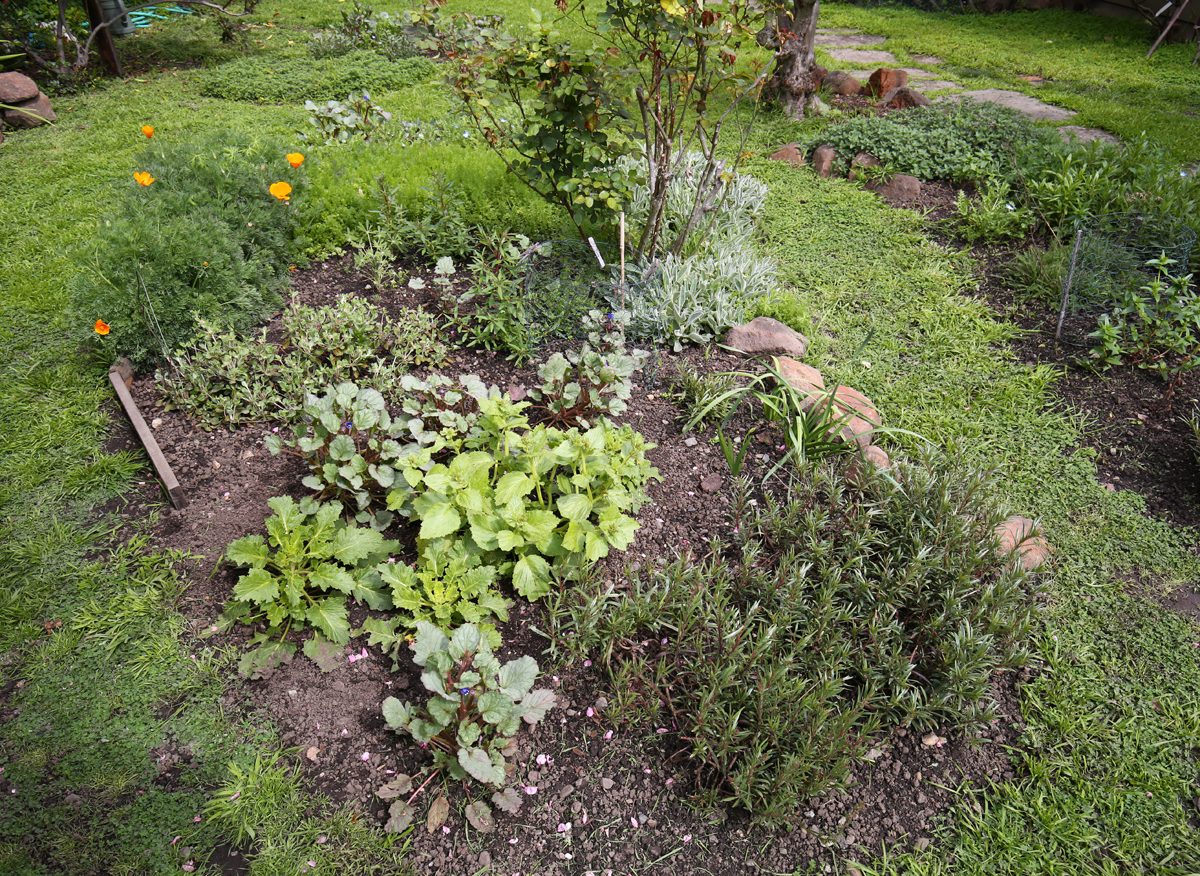
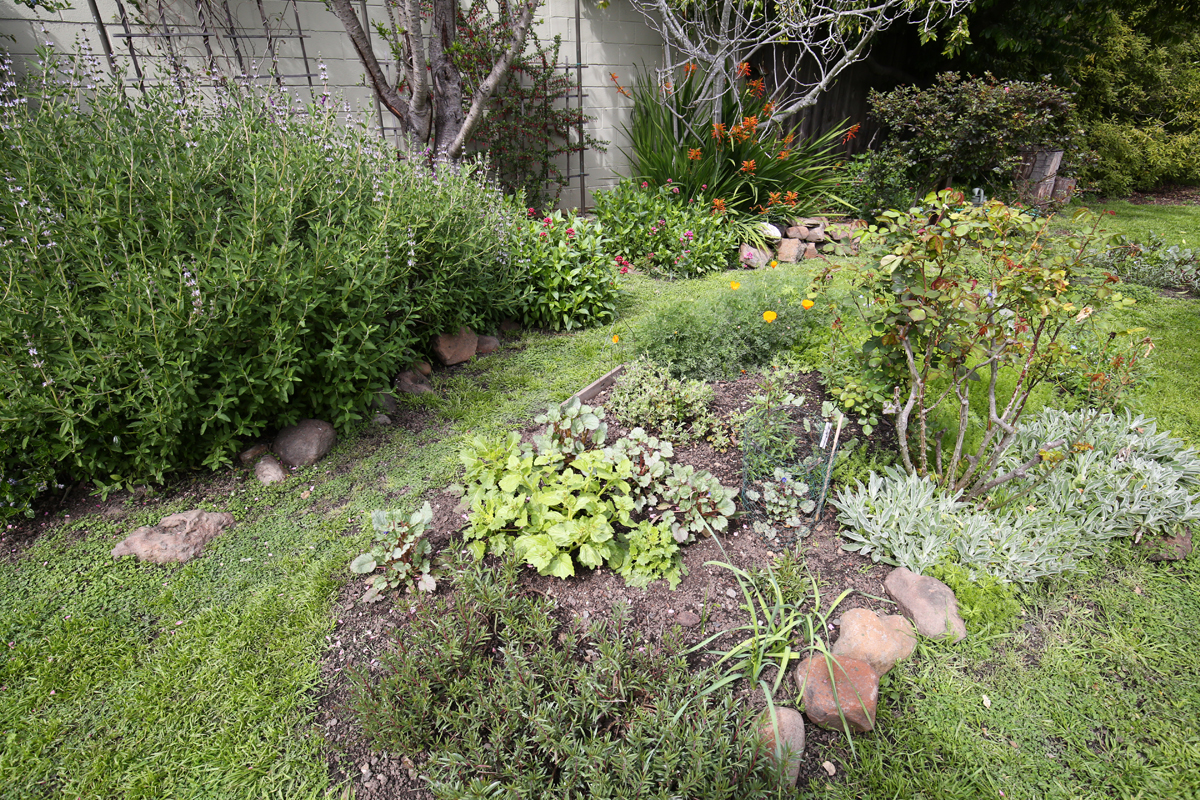
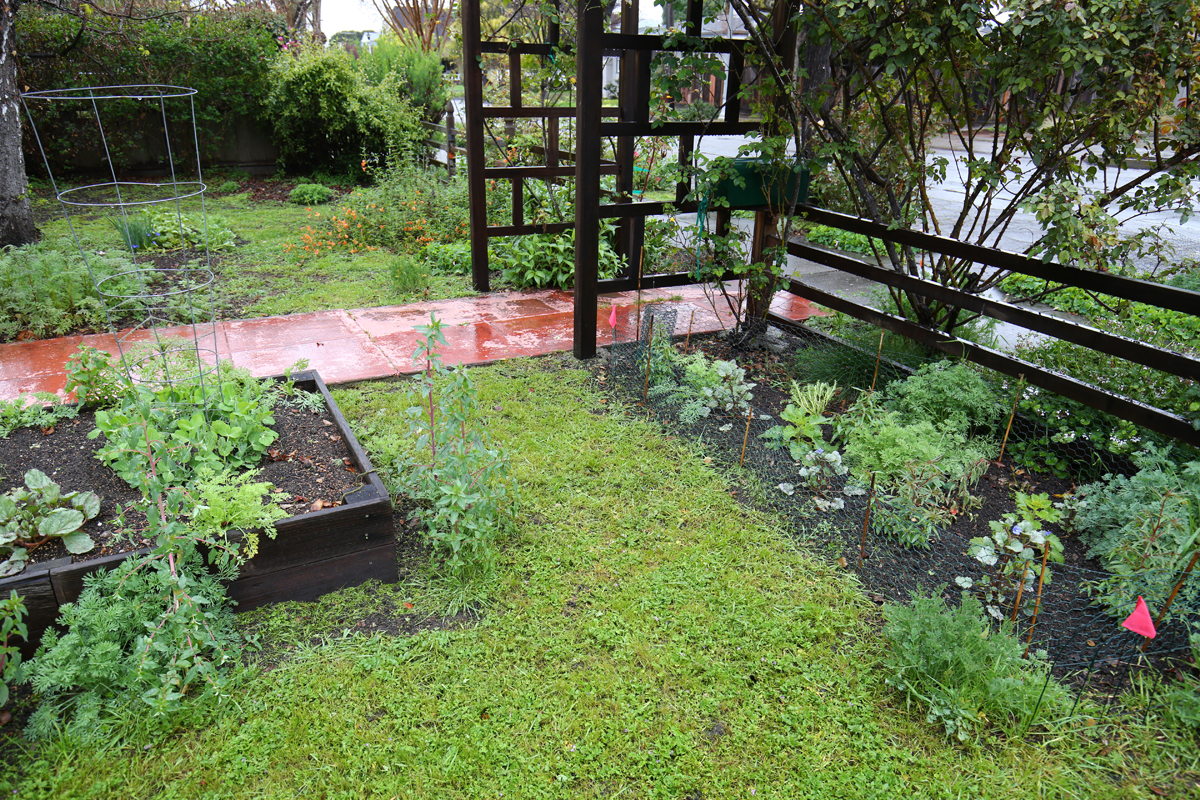
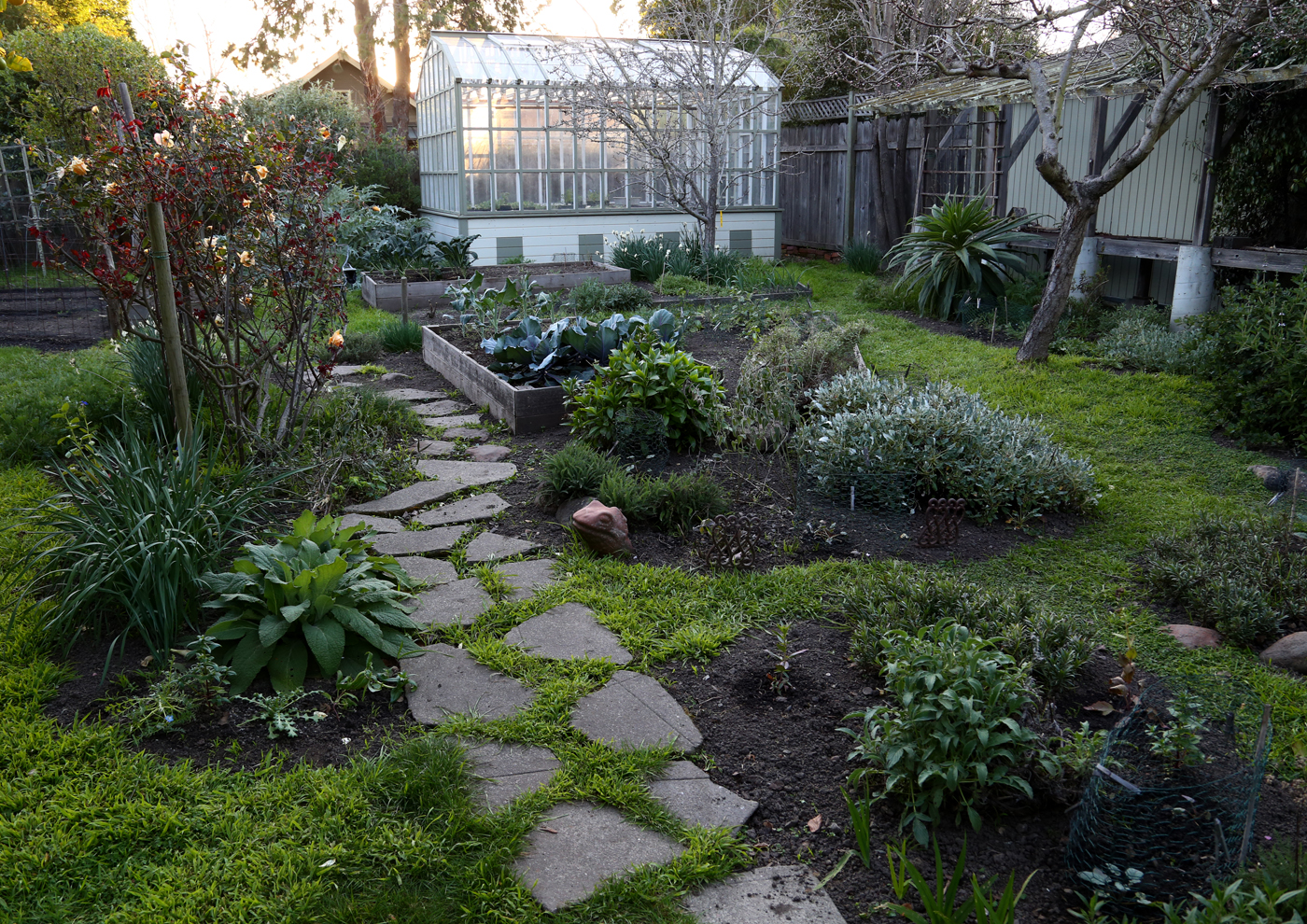
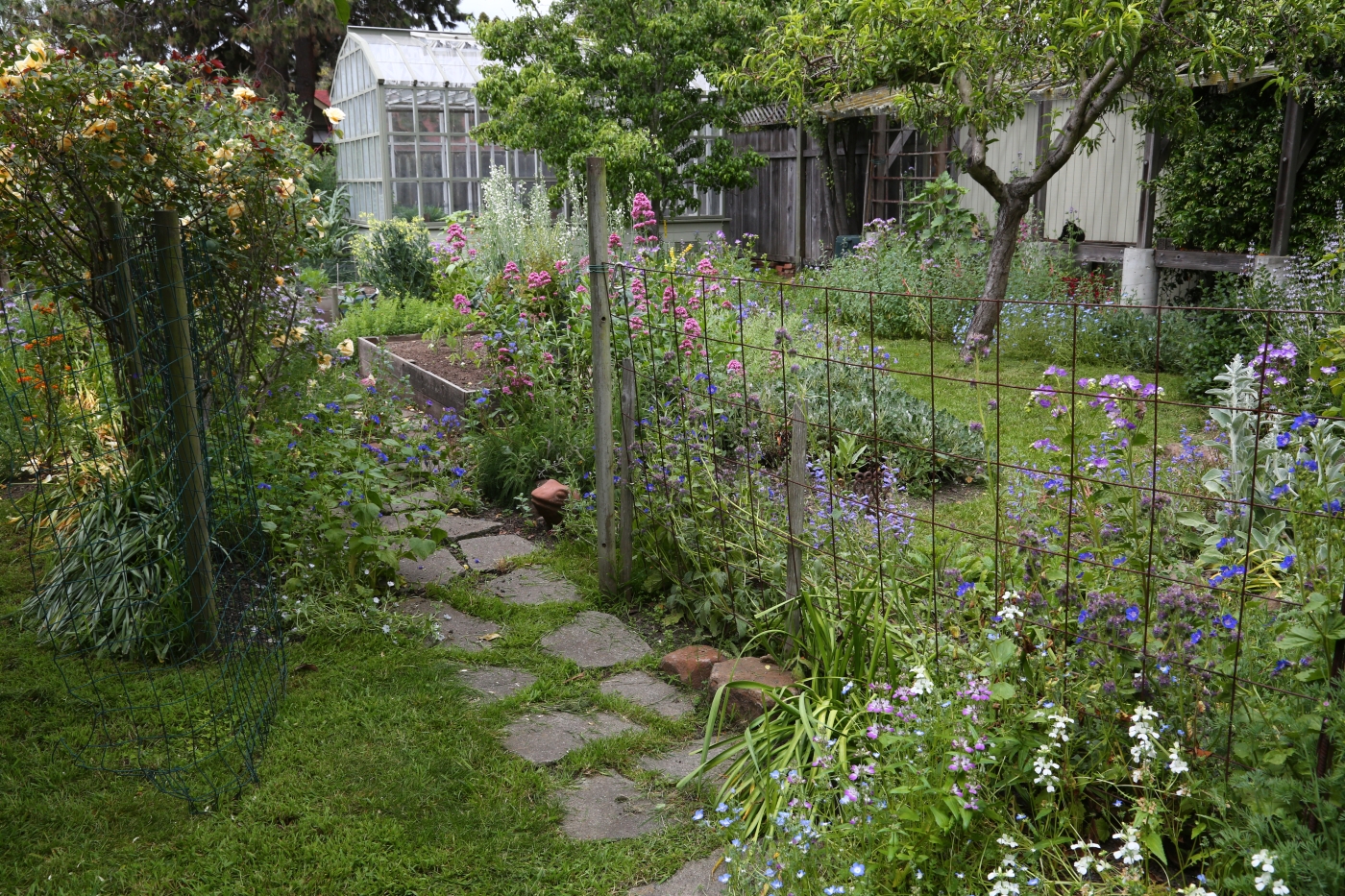
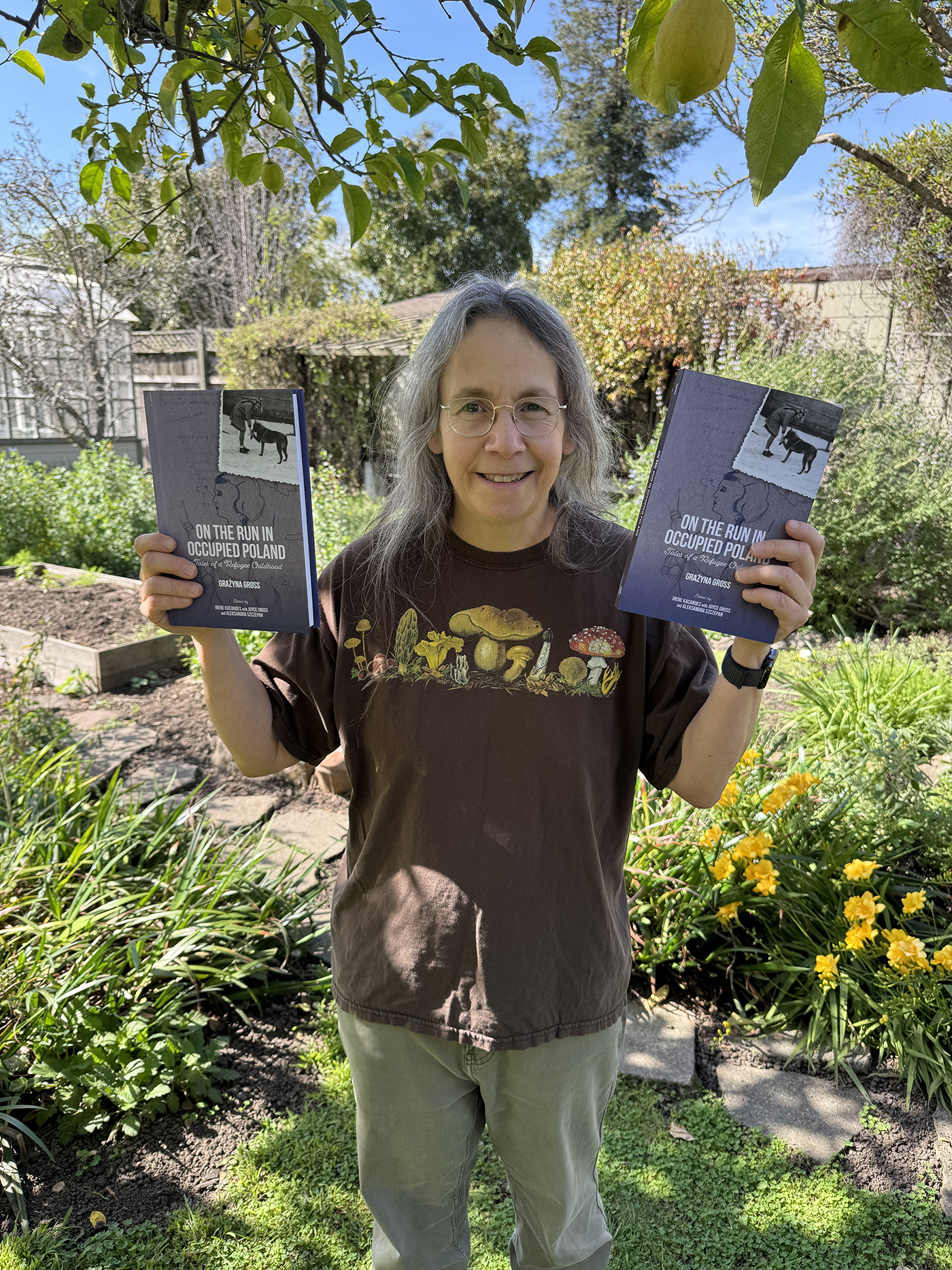
In the photo below, I’m holding an account of your years in eastern Europe — your “stories” as you preferred to call them — against the backdrop of my small backyard refuge in California. The spring flowers have started blooming.
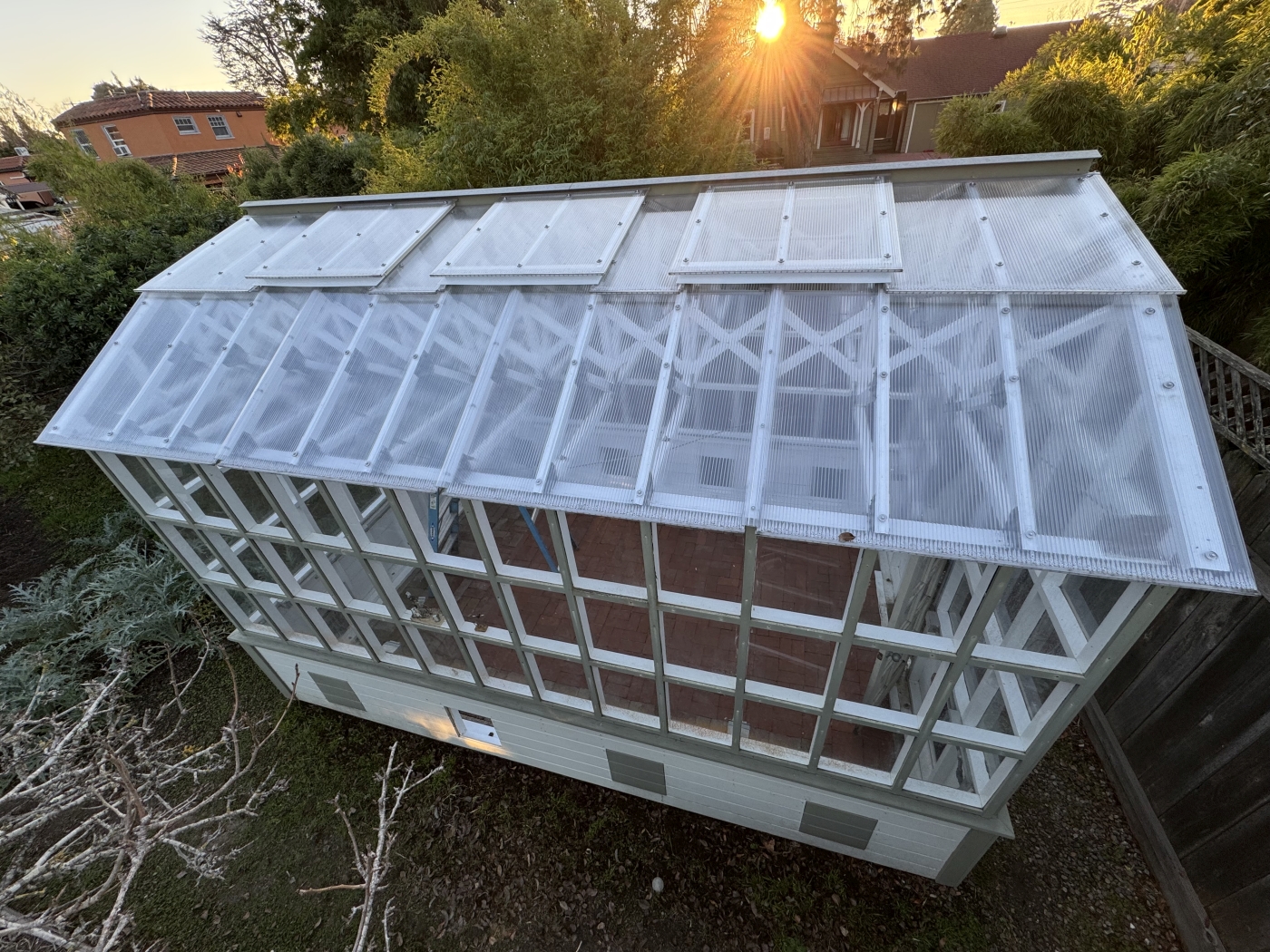
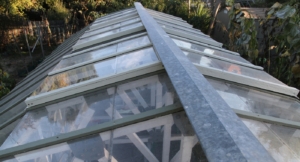
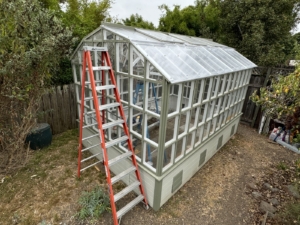
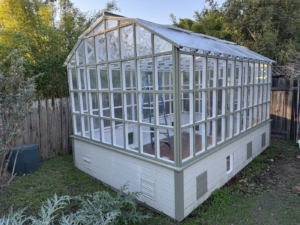
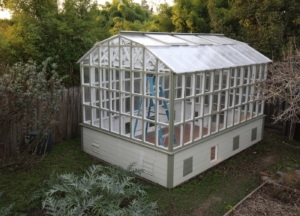
Greenhouse Roof Replacement 2024

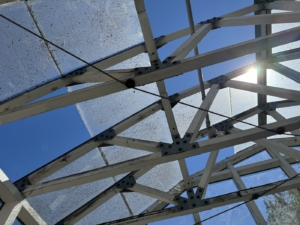
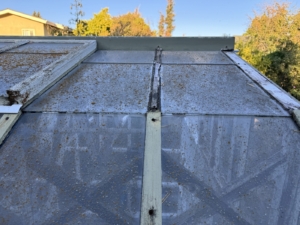
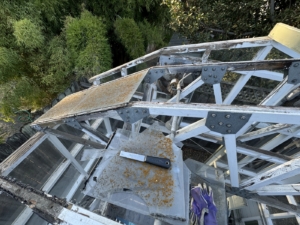
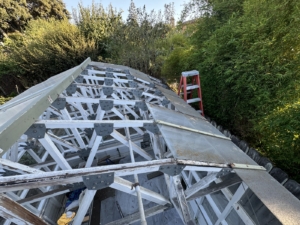
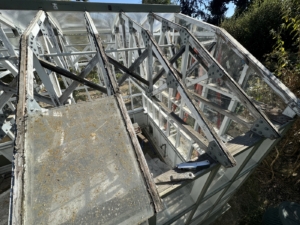
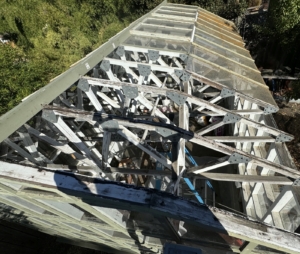
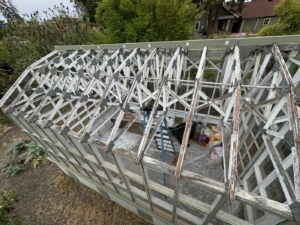
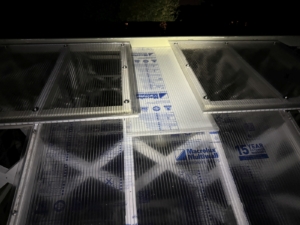
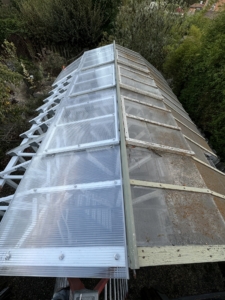
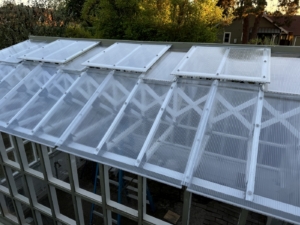
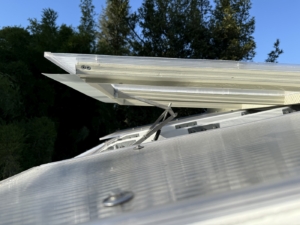
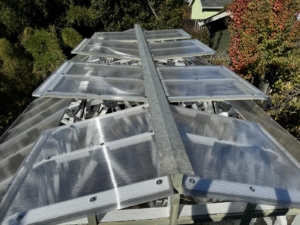
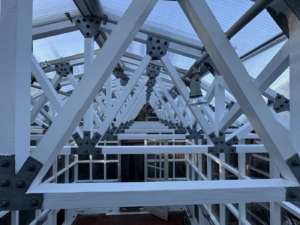
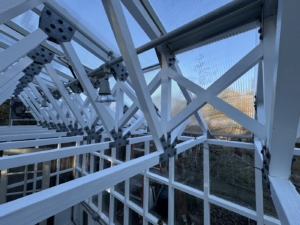
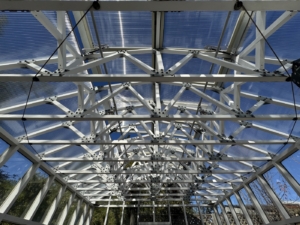
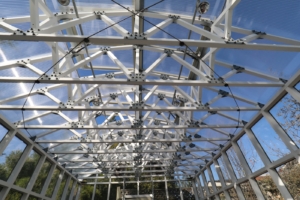
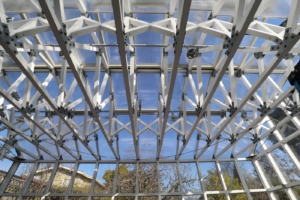
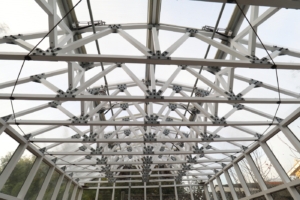
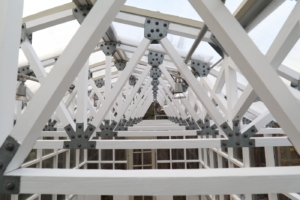
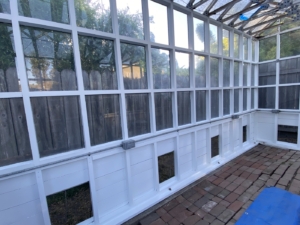
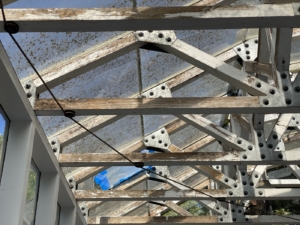
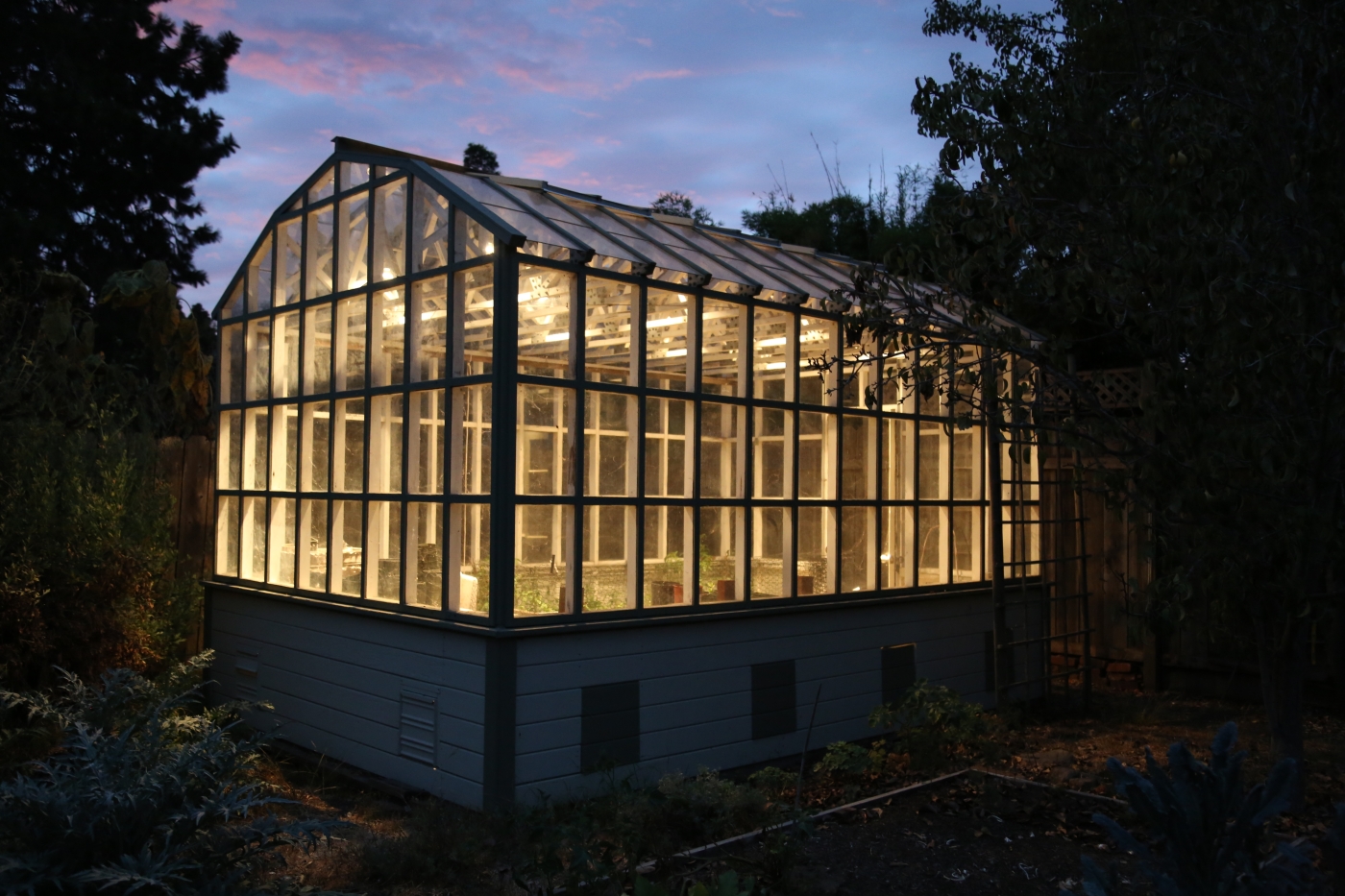
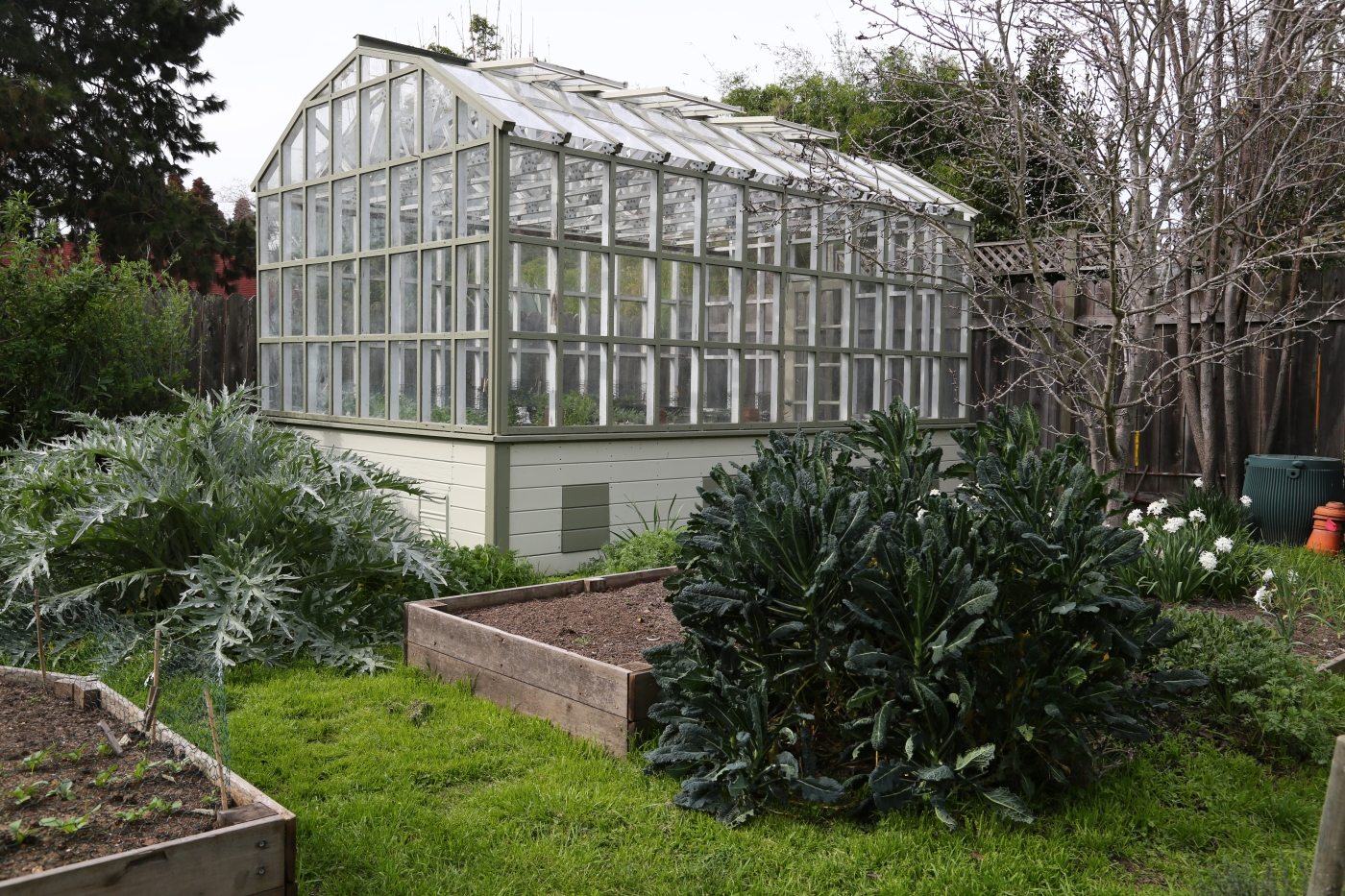
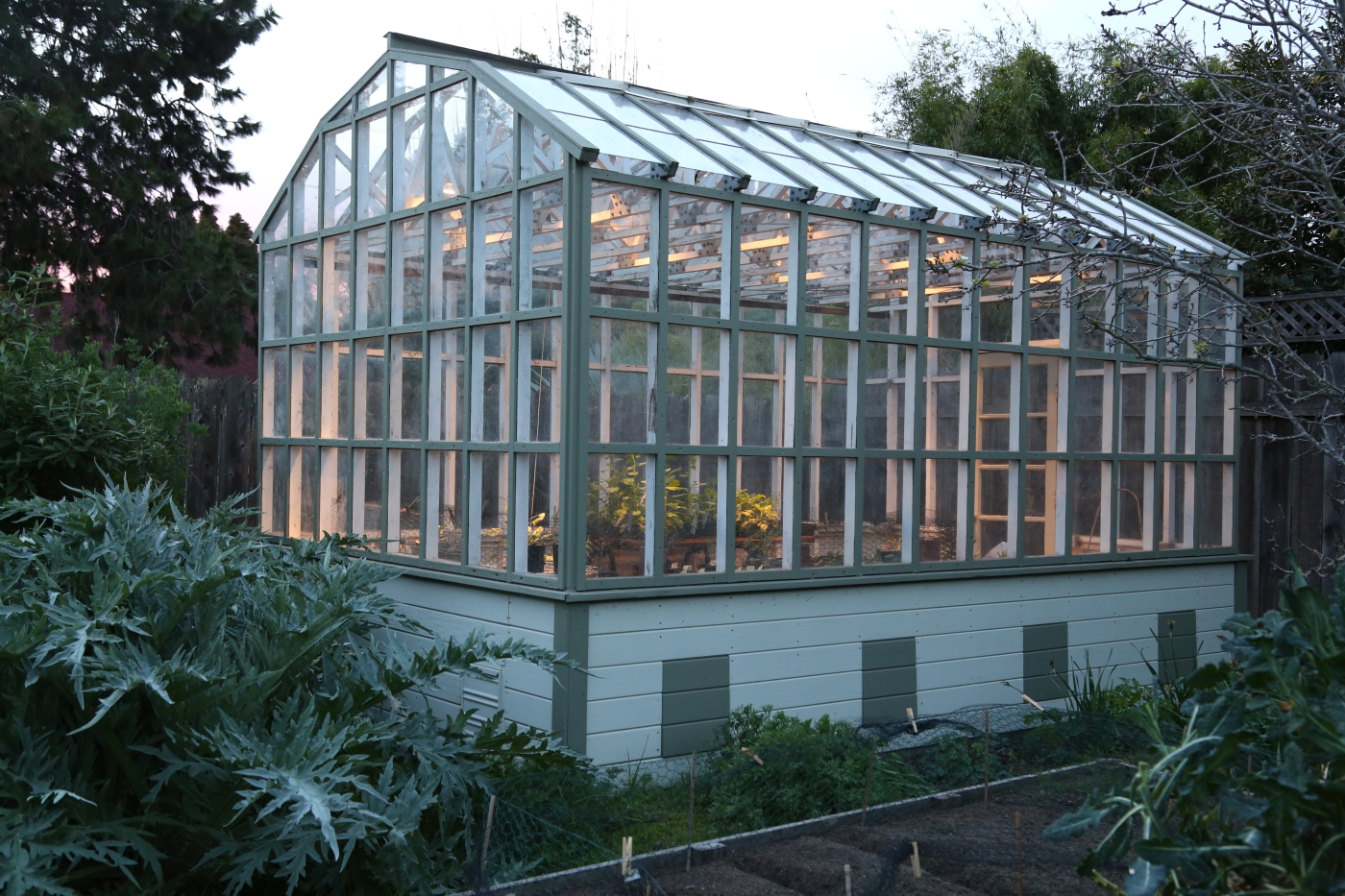
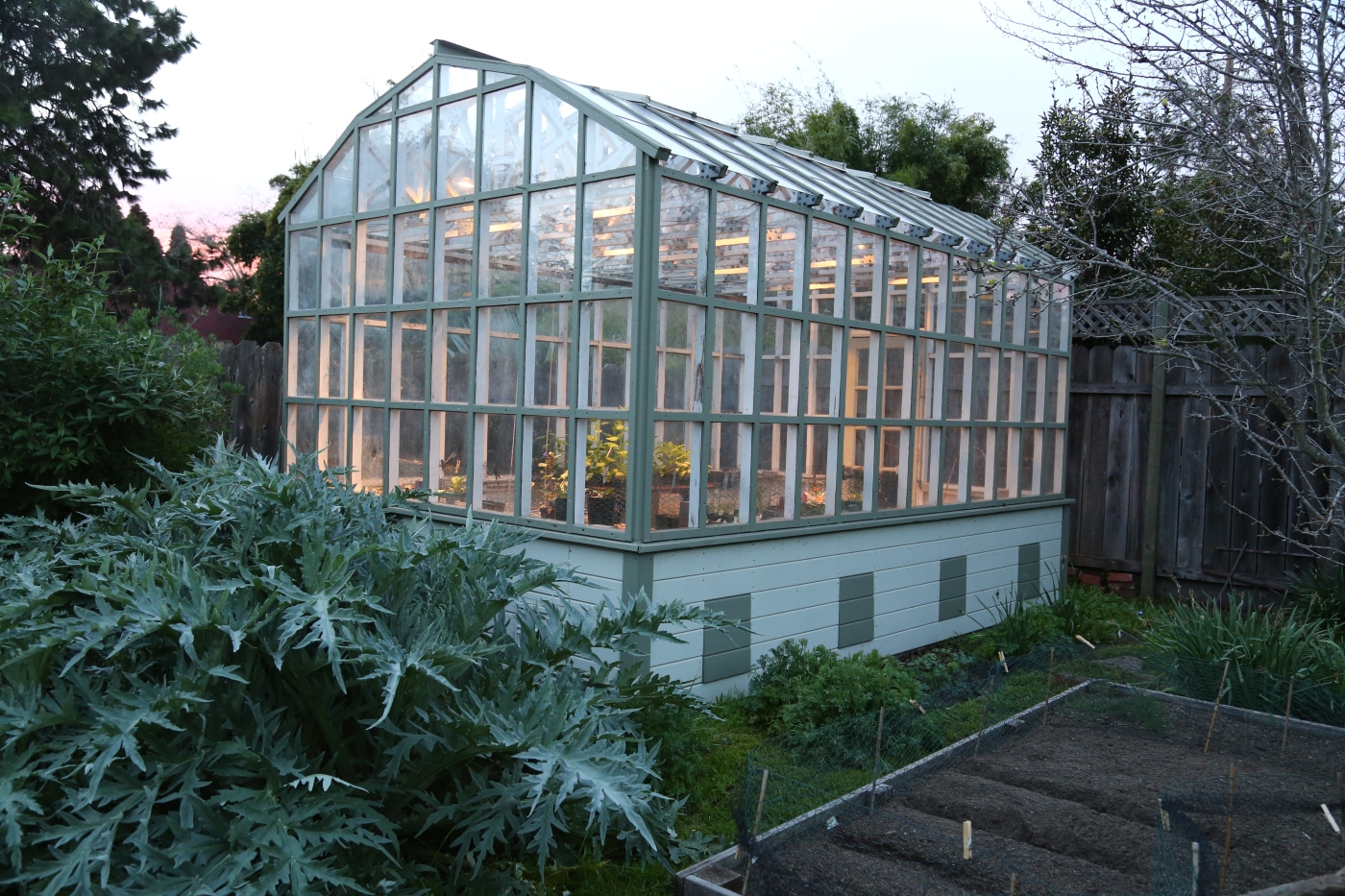
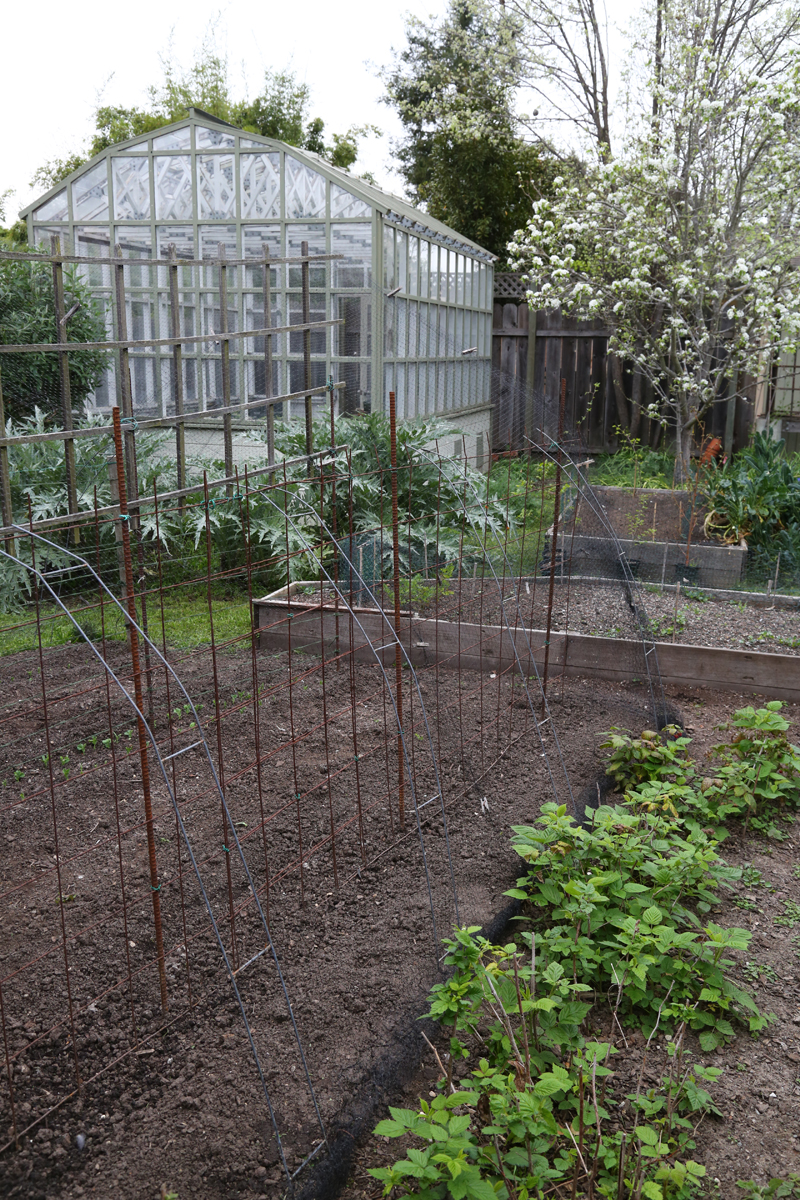
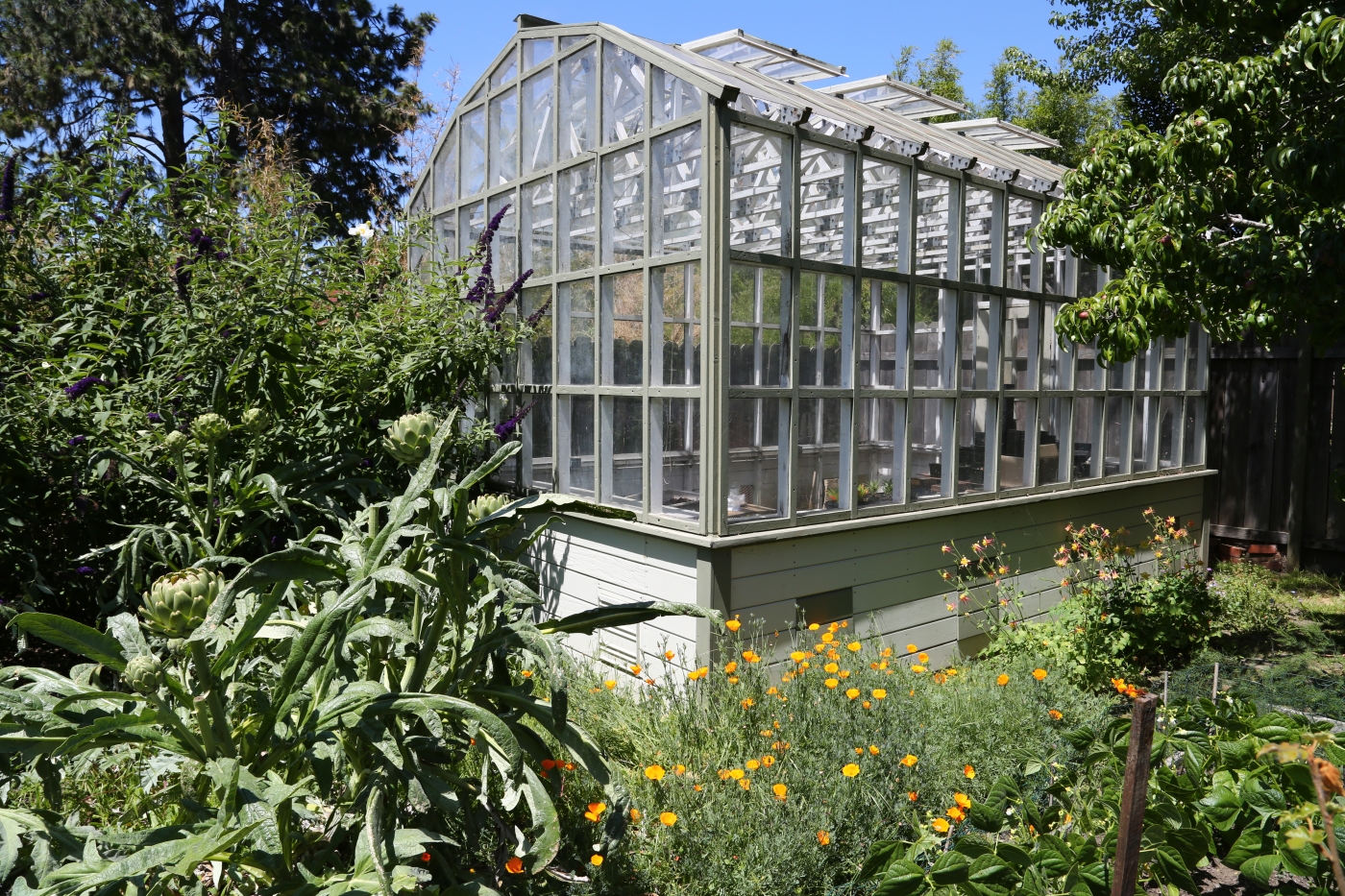
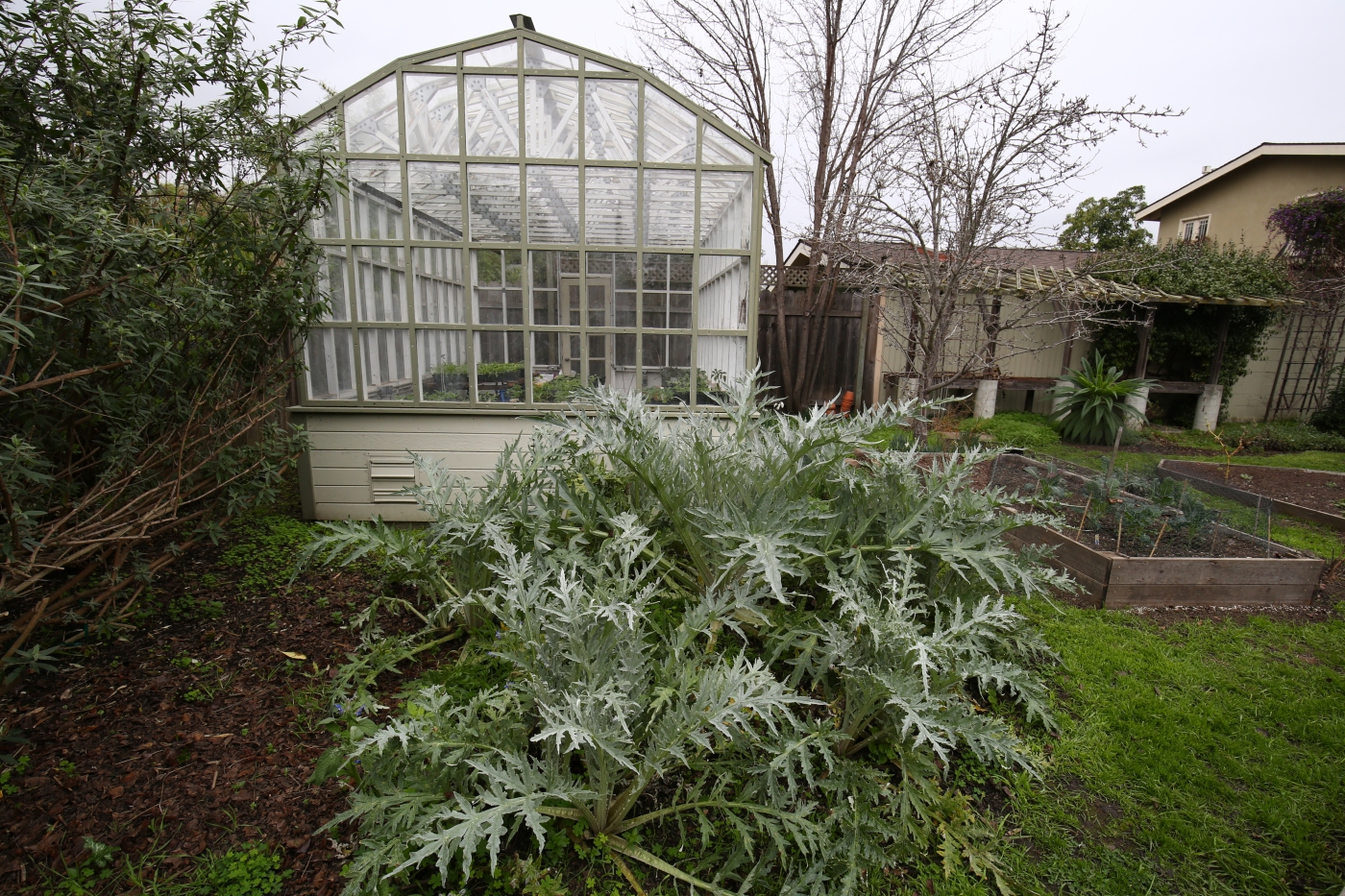
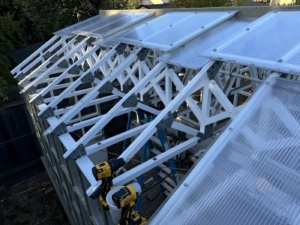
In the fall of 2024, after years of becoming increasingly leaky, the glass roof of the greenhouse was replaced with a twin wall polycarbonate roof. It took two months, not counting the years I spent figuring out how to actually do it (and wishing it were possible to keep the glass roof).

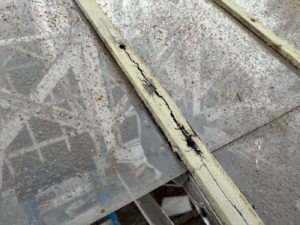
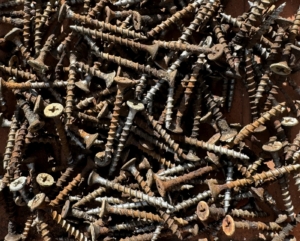
The caulk and butyl tape that kept the glass panes of the original roof in place made the roof difficult to maintain. The panes would slip a quarter of an inch, an inch, or a foot, leaving gaps for rain to pour into the greenhouse. To fix one slipped pane required unsealing and resealing not just one pane but between two and eight panes. One would think that if they are slipping it would be easy to get them off to reseal, but NO, that was not the case. While the caulk and butyl tape did lose their sealing powers after a few decades, it was only in a few spots. The rest of the caulk and tape stuck so well to the wood and glass that it was very hard to move the glass without breaking it. I decided that the only way to keep the greenhouse functional and prevent it from falling apart was to get rid of the glass roof.

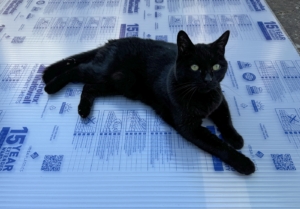
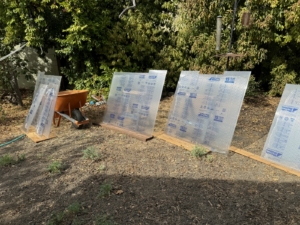
Twin wall polycarbonate panels are used often on greenhouses now. They do not require caulk and are long-lasting. (Too long, if you don’t want to be contributing to the world’s microplastic problem.) The trick for me was figuring out how exactly to cut the polycarbonate panels for my particular roof that had specifically been made to hold glass panes and that had two different slopes and also six large, openable windows.

The good news is that once the glass, caulk, and butyl tape were removed, the rest of the roof — the wood frame — was in nearly perfect condition and very sturdy. I’m sure the frame breathed a sigh of relief to have the much lighter-weight polycarbonate on it instead of the heavier glass panes.


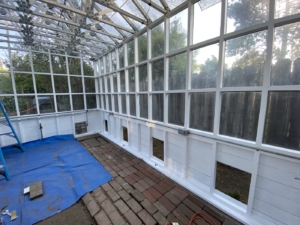
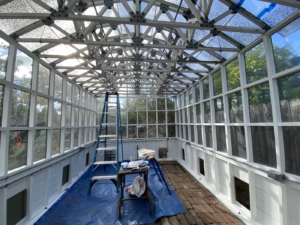
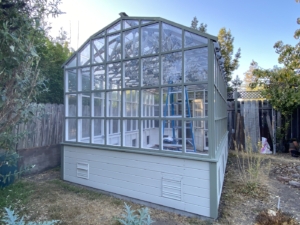
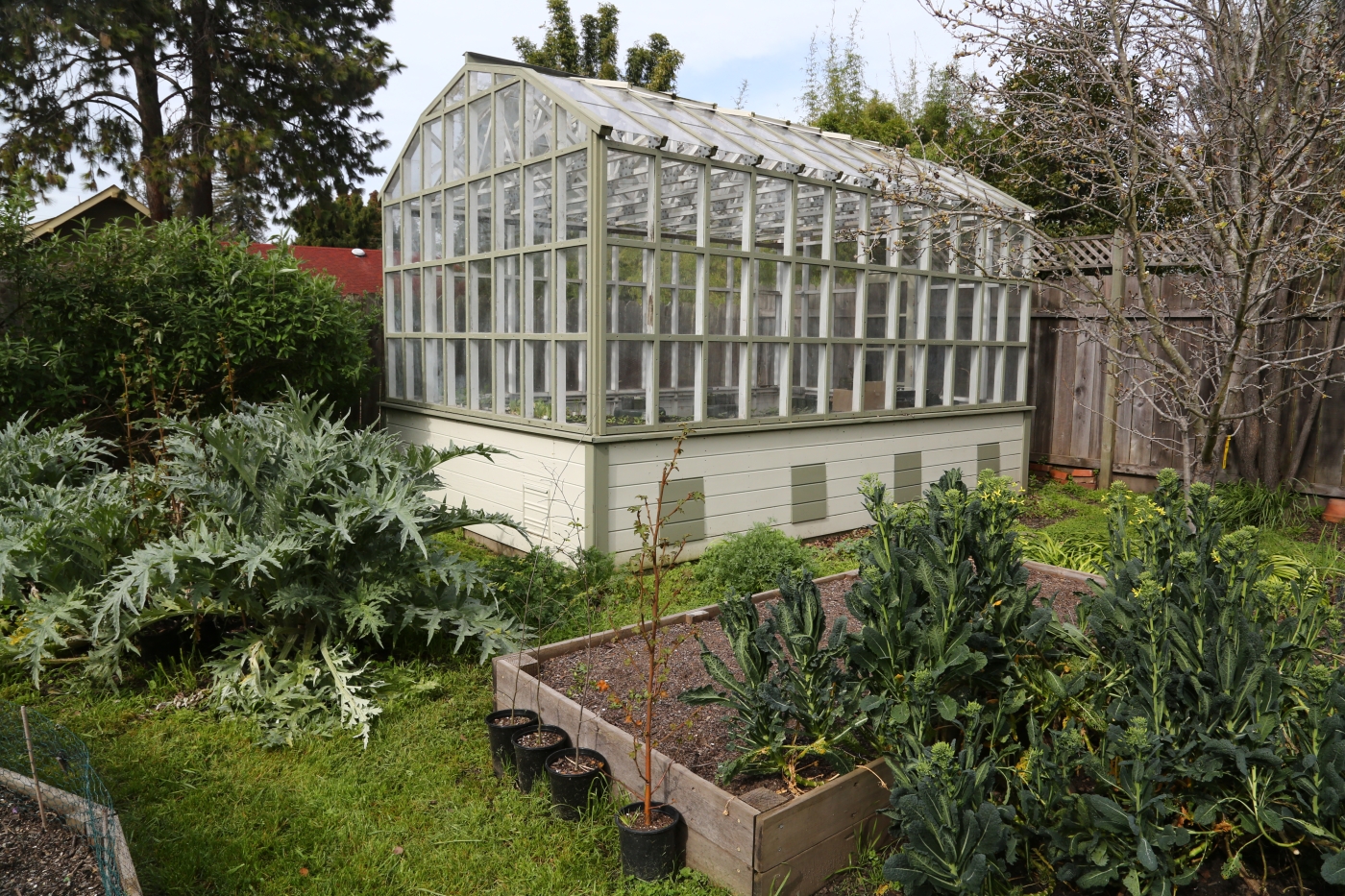
greenhouse with new polycarbonate roof

During most rains now, there are no leaks at all inside the greenhouse. It’s completely dry! During very heavy rains with wind, a small amount of water splashes into the greenhouse in a few places, not enough to be a problem. It is a greenhouse after all — I splash more water around when I water my plants.

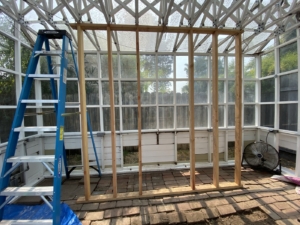
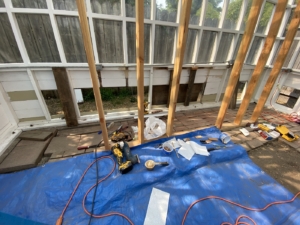
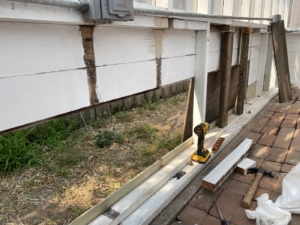
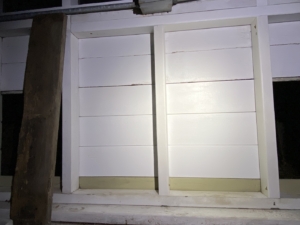
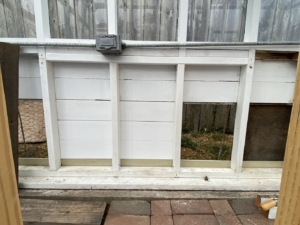
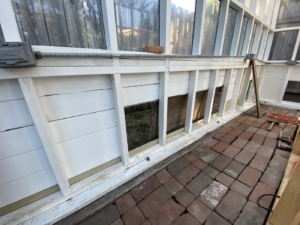
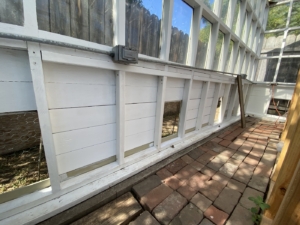
Here are photos from the roof work:

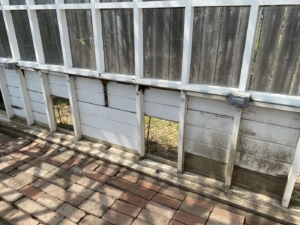
Greenhouse Wall Repair 2021

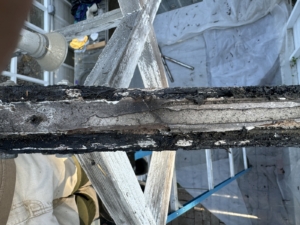
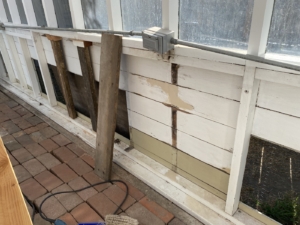
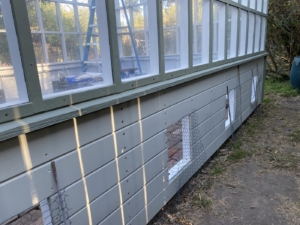
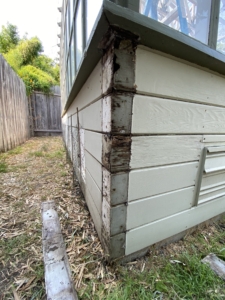
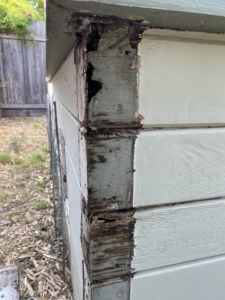
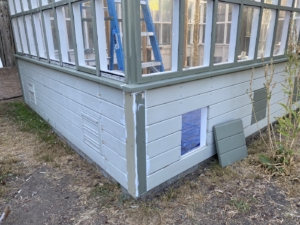
In the fall of 2021, I partially copied what Michael McGee did in 2014 to repair one side of the greenhouse. Seven years after his repairs, the wood on the other side, too, had a lot of rot.

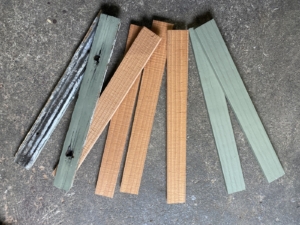
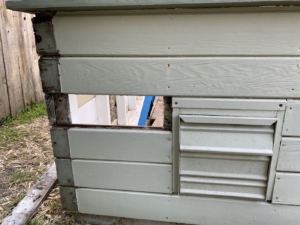
Between the two 4″x4″ corner posts on the long sides of the greenhouse, there are eleven vertical 2″x3″ supports that go from the ground to the roof. Six of these supports had bad rot and half of those six were no longer providing any support whatsoever to that wall.

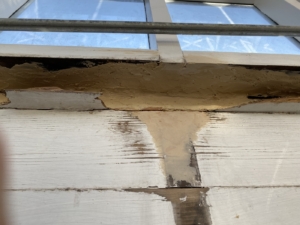
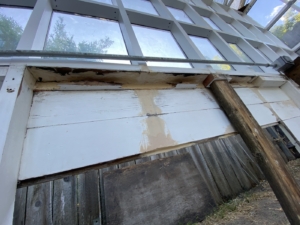
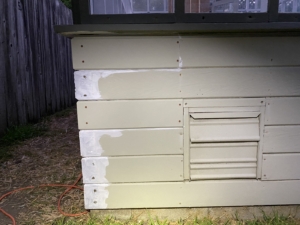
There were also rotted boards that needed replacing in various locations around the sides of the greenhouse.

To start, we built a 2″x4″ structure to help support the roof while I was doing the work. Whether it was needed or not I don’t know since some of the supports along that wall were still ok….

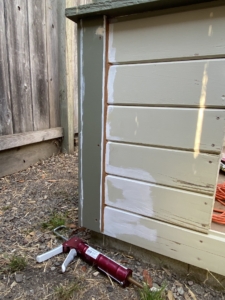
The most complicated and worrisome part of this project was that the 16′ x 2″ x 6″ board that goes all the way across the length of the greenhouse just below the glass windows was especially rotted. That board was cut very specifically for my greenhouse and it was impossible for me to replace. So my goal was 1) to replace the parts of the vertical supports that were rotted, and 2) to repair the 16′ board from the inside as much as possible, then cover the mess with new wood.

A third goal was to keep water out of that wall in the future. I’m still working on that. 🙁

Spring 2023

Mamusia, pamiętasz mnie?

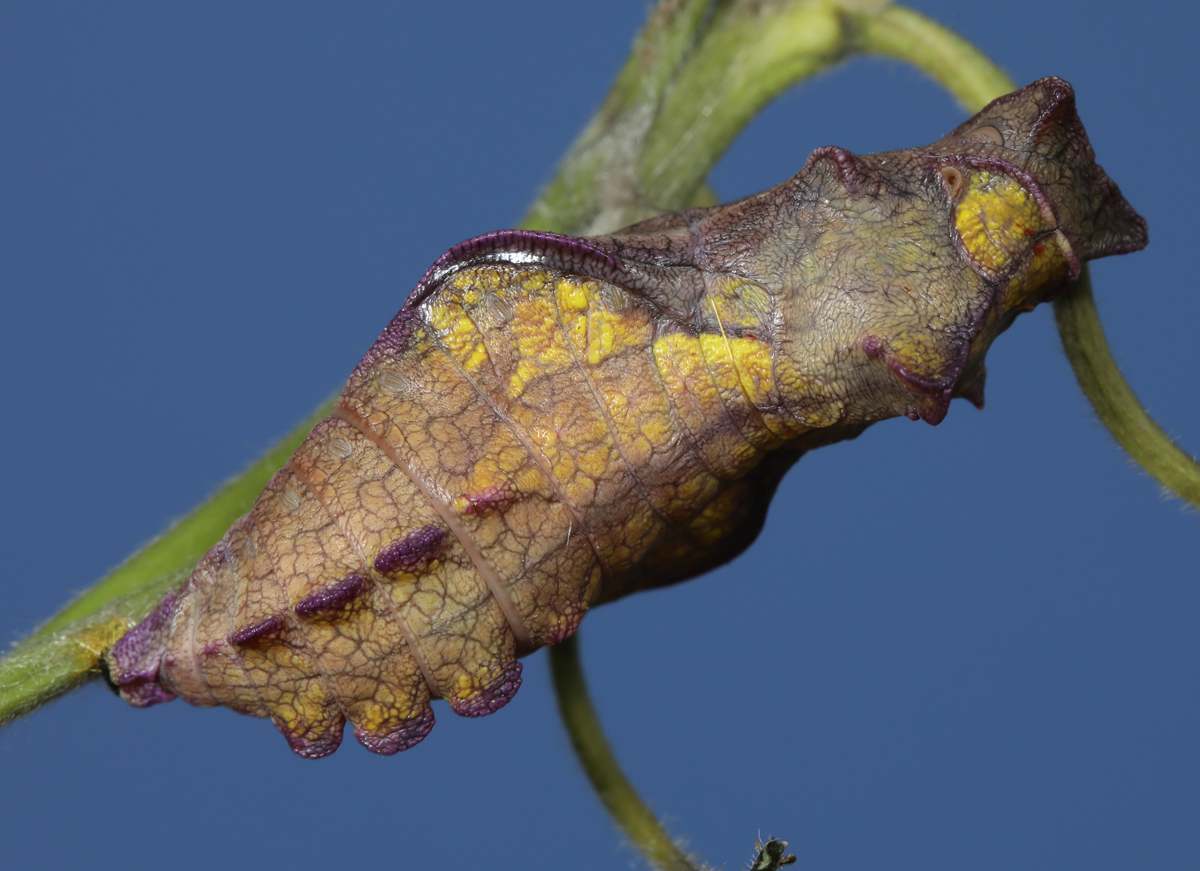
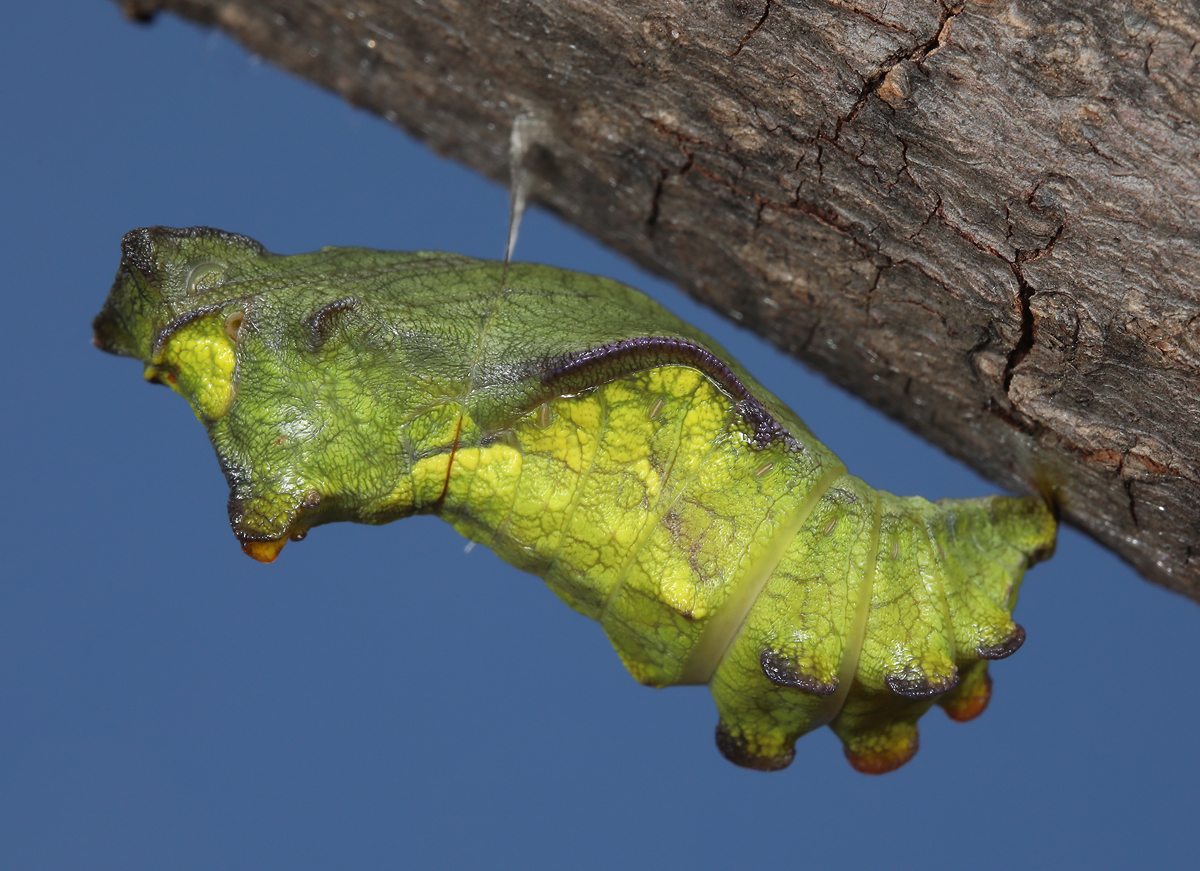
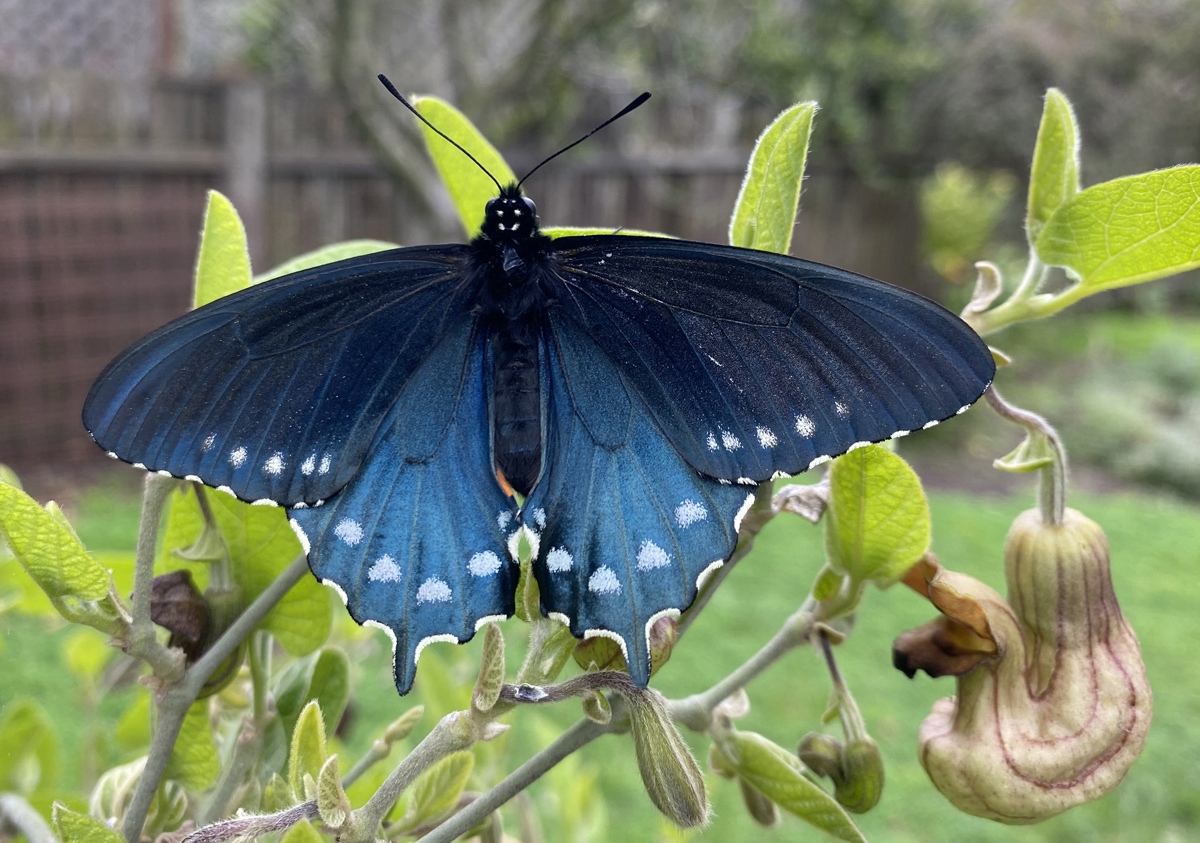
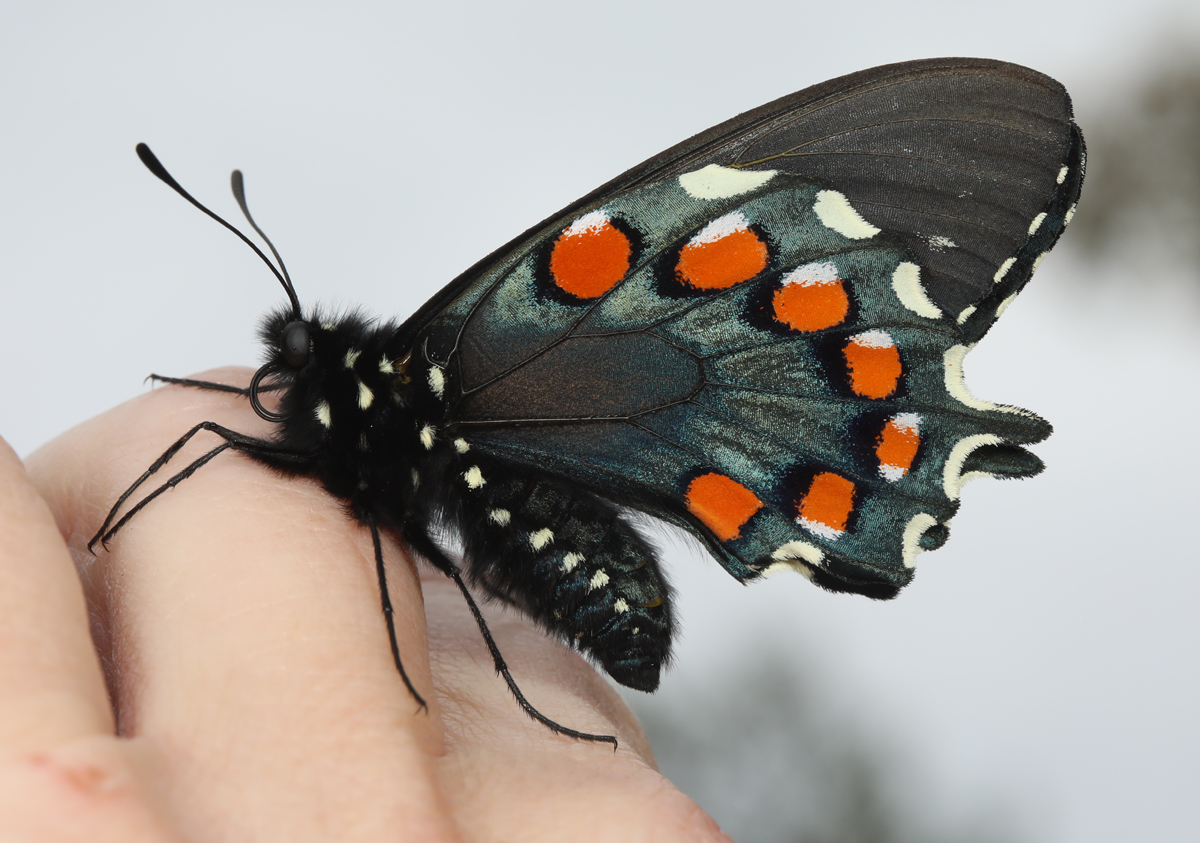
The pipevine swallowtails emerged from their chrysalises this spring. Can you see them?
Pipevine swallowtail chrysalis, 2022.

Pipevine swallowtail chrysalis, 2022. Green form.

Pipevine swallowtail butterfly, adult, 2023.
Pipevine swallowtail butterfly, 2023.

Pipevine swallowtail butterfly, adult, 2023.
Pipevine swallowtail butterfly, 2023.

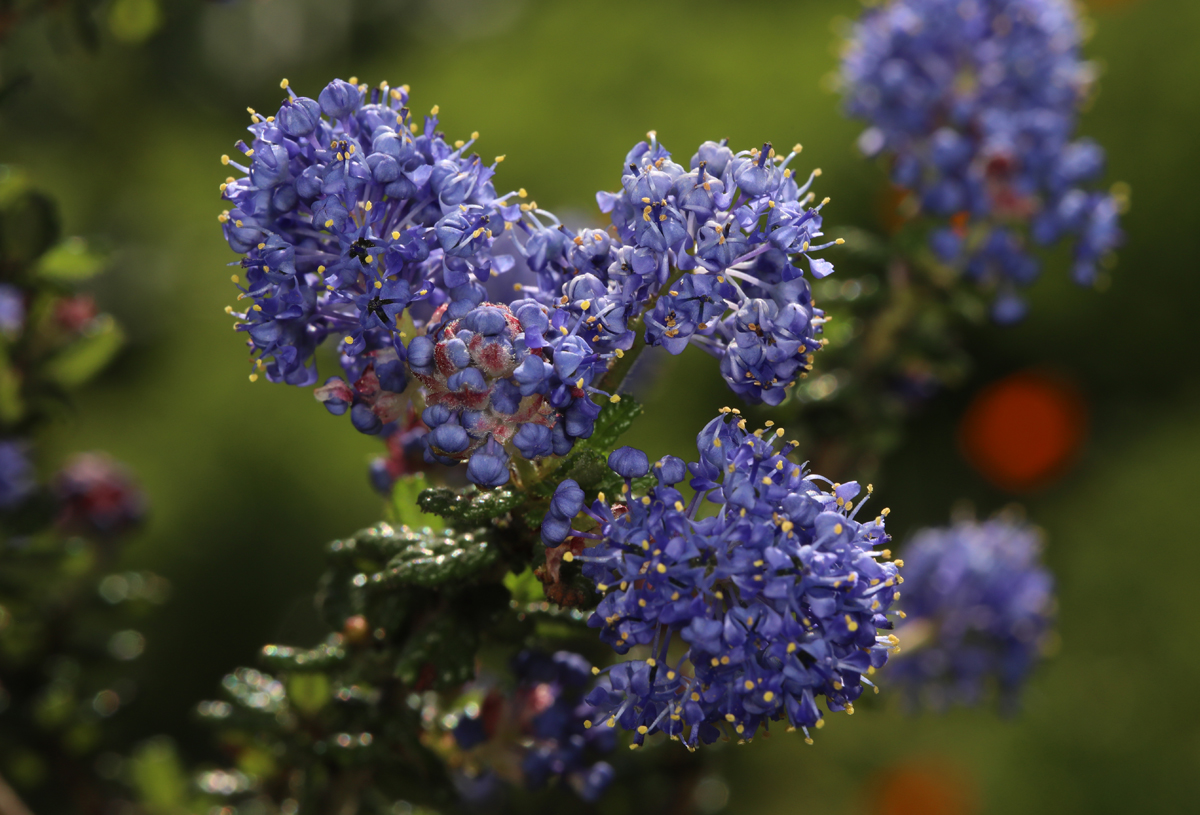
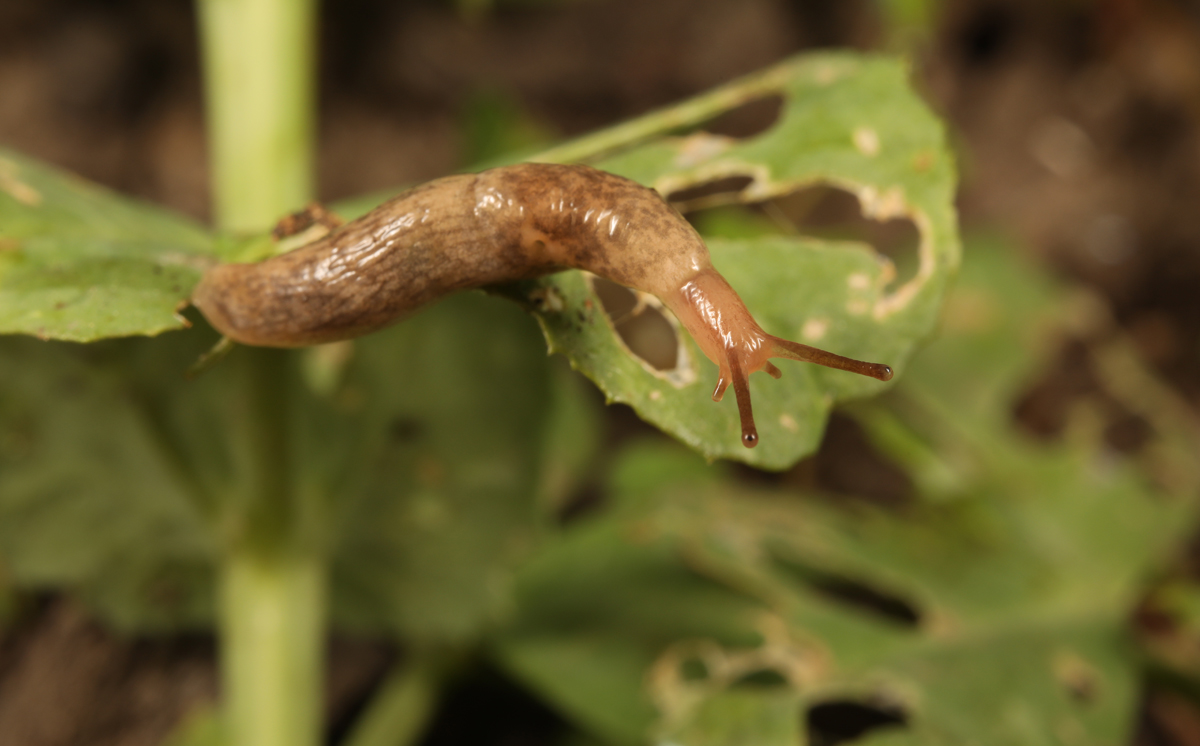
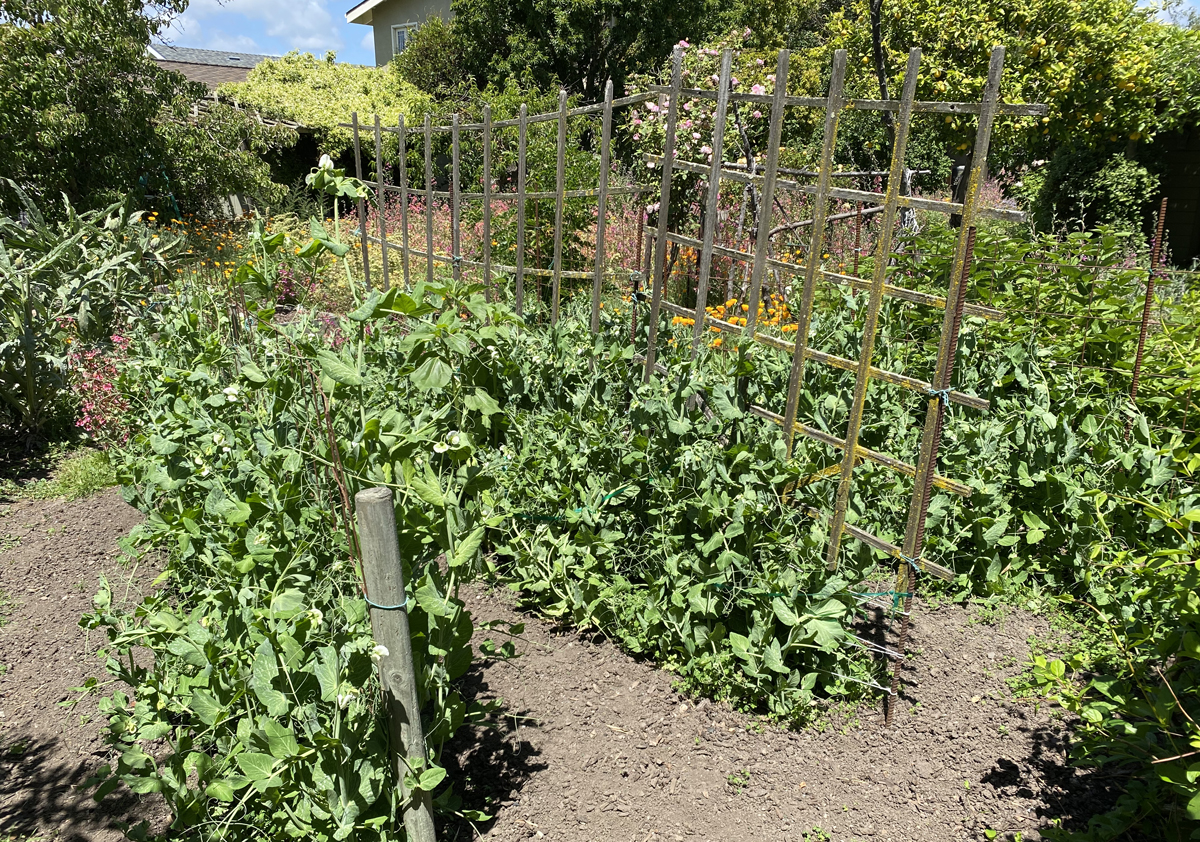
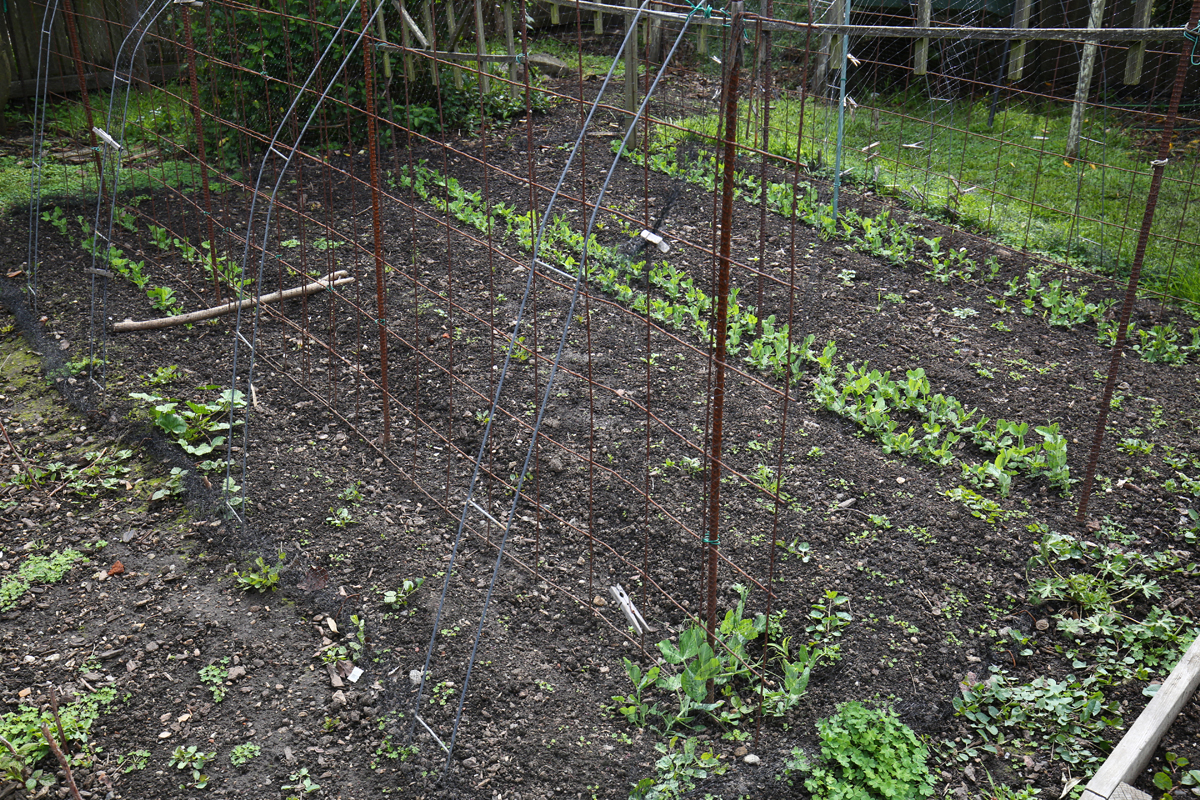
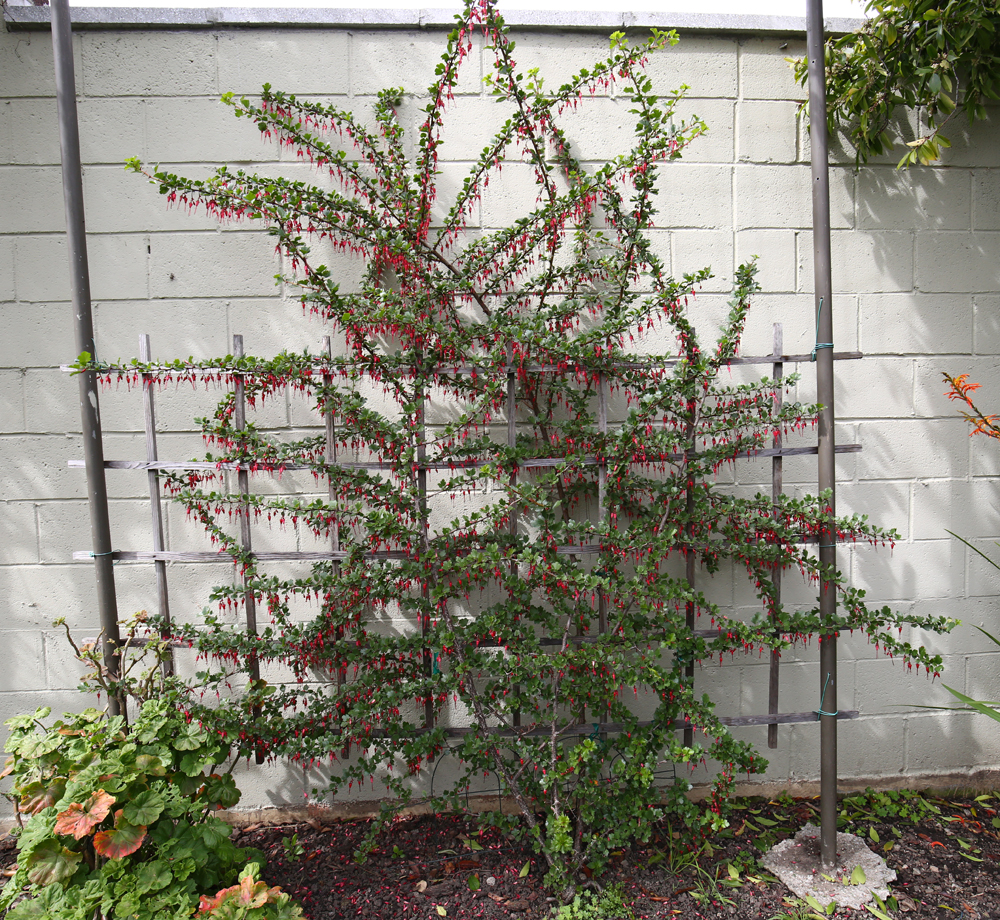
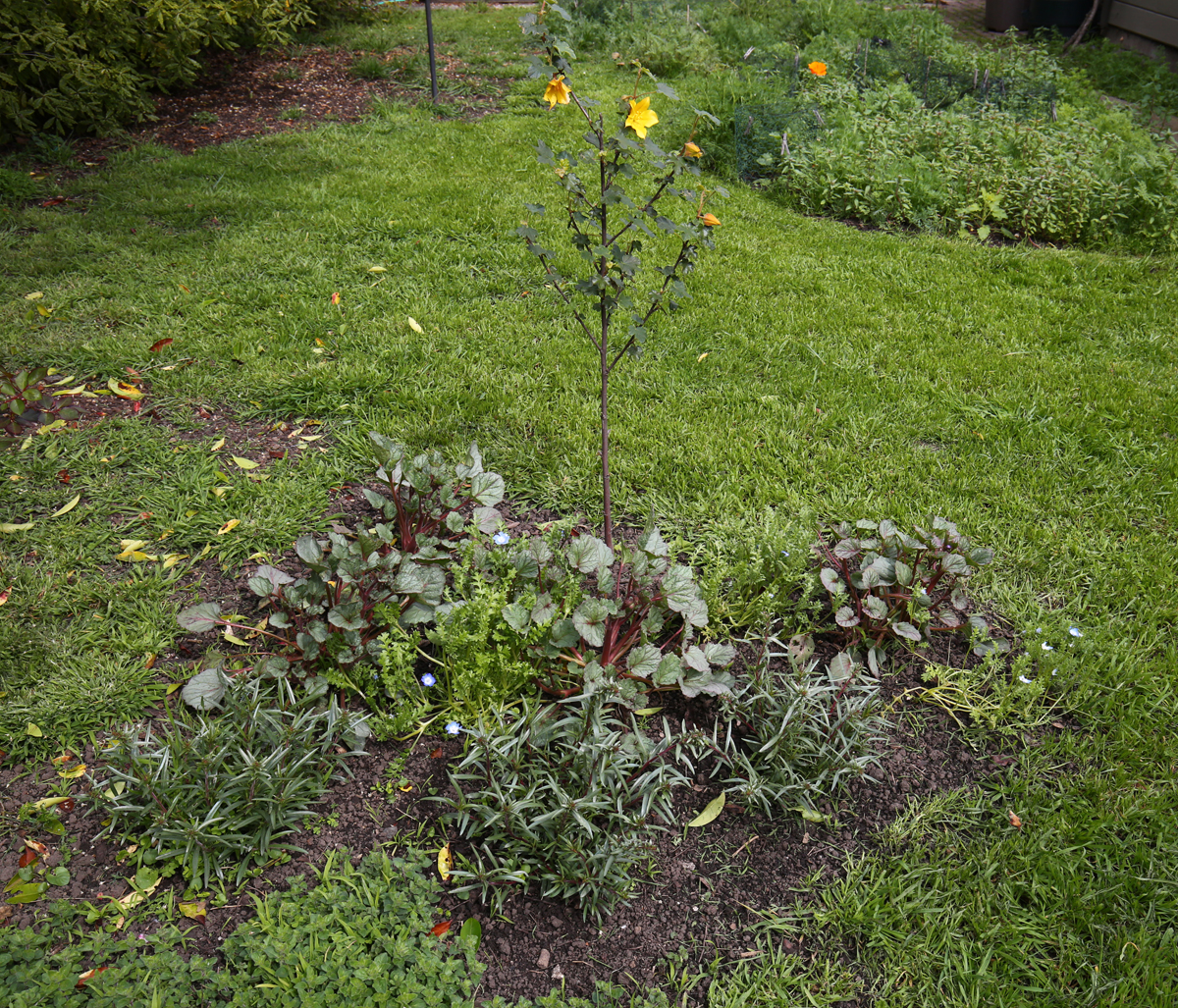
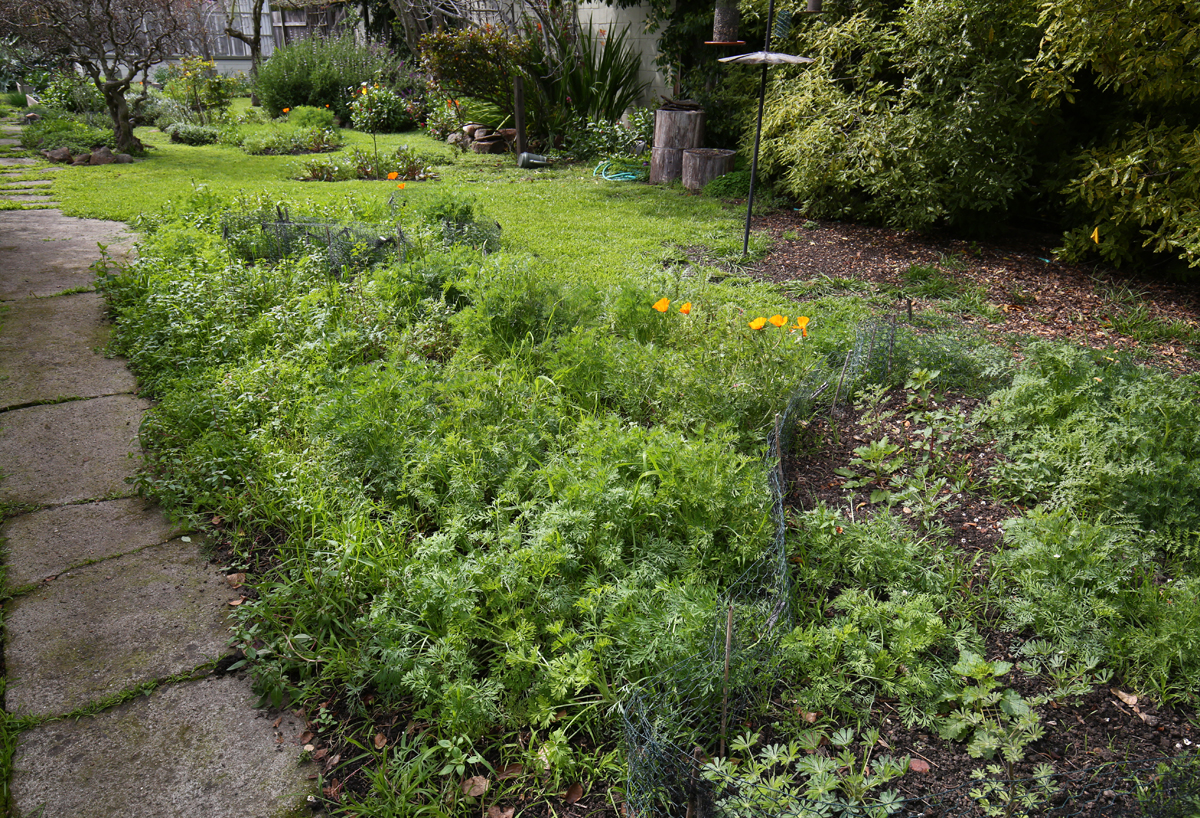
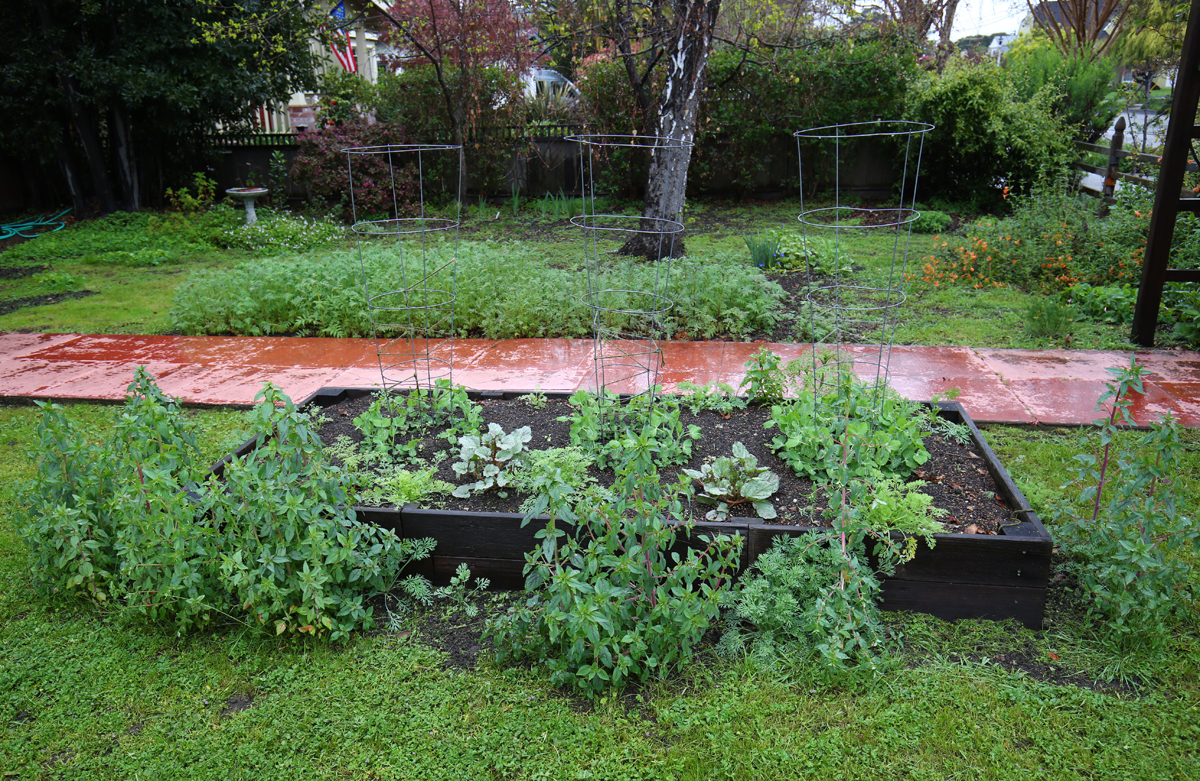
The poppies, Ceanothus, and Fremontodendron are blooming again. Do you know what a wet and cold winter we had in California? The weeds are growing like crazy; I can’t keep up with them. The slugs decimated a third of my pea crop. Compared to people who suffered from flooding and other storm damage, I’m lucky to suffer only from weeds and slugs.

Ceanothus sp.
Ceanothus sp.

Slug eating a pea plant.
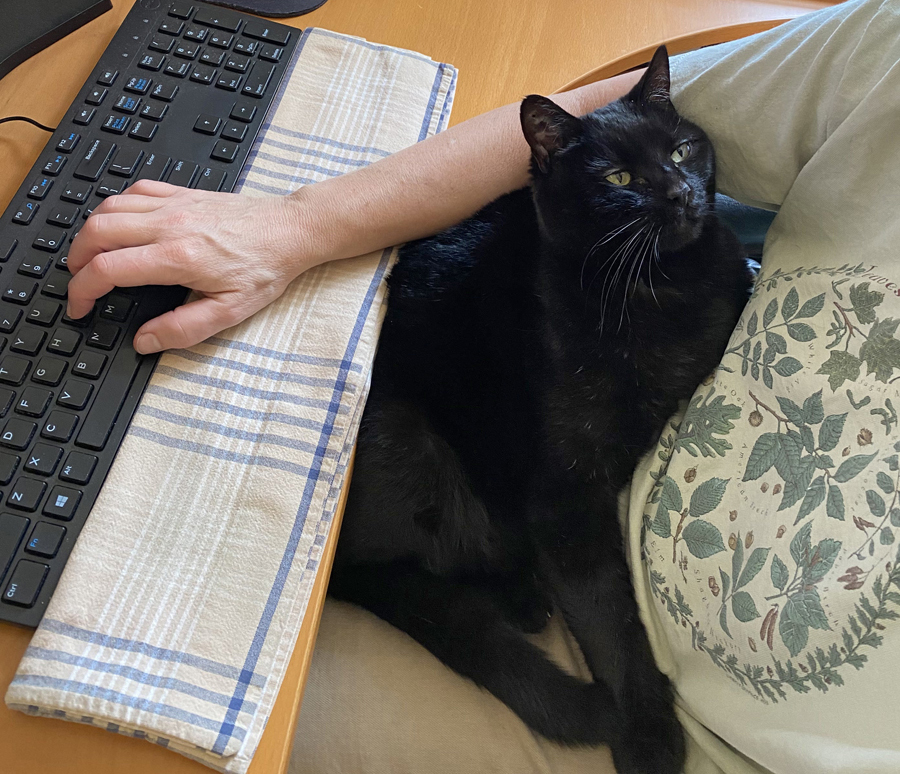
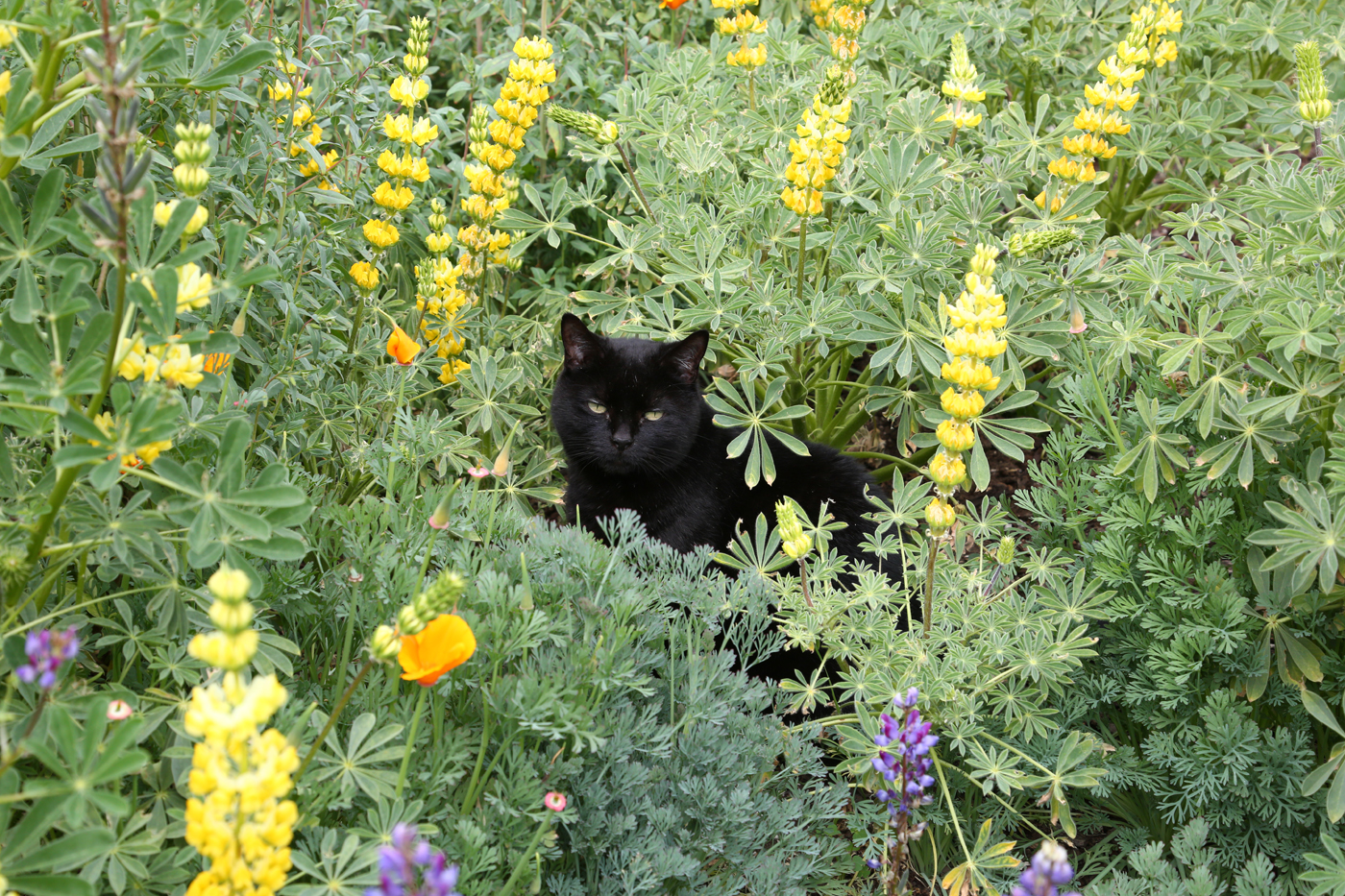
The cat.
The cat.

The cat tried to die last month. Five days of not eating or drinking, then twenty-four hours on IV fluids at the vet’s. Now she’s fine. She used one of her nine lives on the anniversary of your death, trying to steal the thunder. Oddly, the cat has become more affectionate during the last year. Now I wonder if not only a part of my dog Volpo (1999 – 2011) is inside her, following me around and watching me, but a part of you, too. A part of you that you tended not to express.

I see another hidden side of you now in your beautiful writing. Did you really think it would not interest me?

I’ve been trying to sort out your early life and place it in the context of history. While I documented bits and pieces over the decades, now I can dwell on it with no one to discourage me. I’m grateful for the trail of details you left, some that you shared with me and others that you didn’t. Attempting to fill gaping holes in my knowledge of eastern European history, I’ve been listening to history books while pulling weeds, replastering the kitchen ceiling, and painting exterior house trim – some of my favorite ways to multitask.
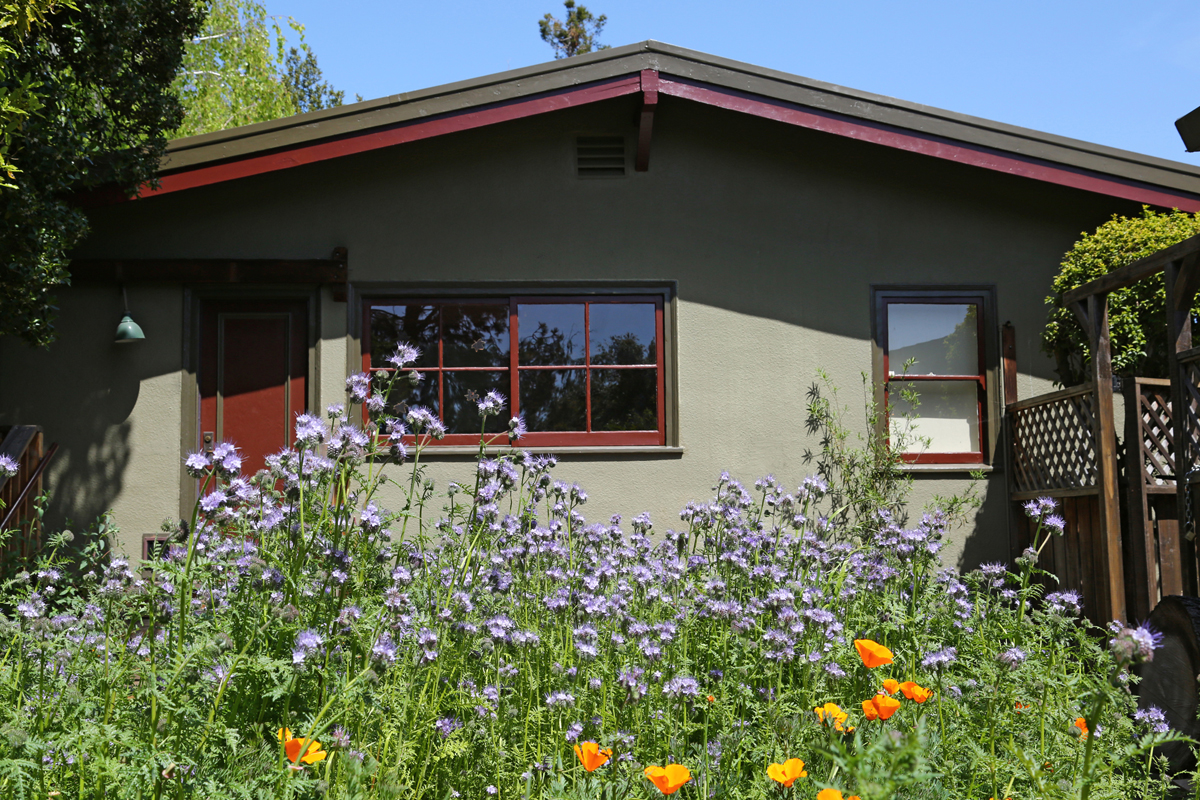
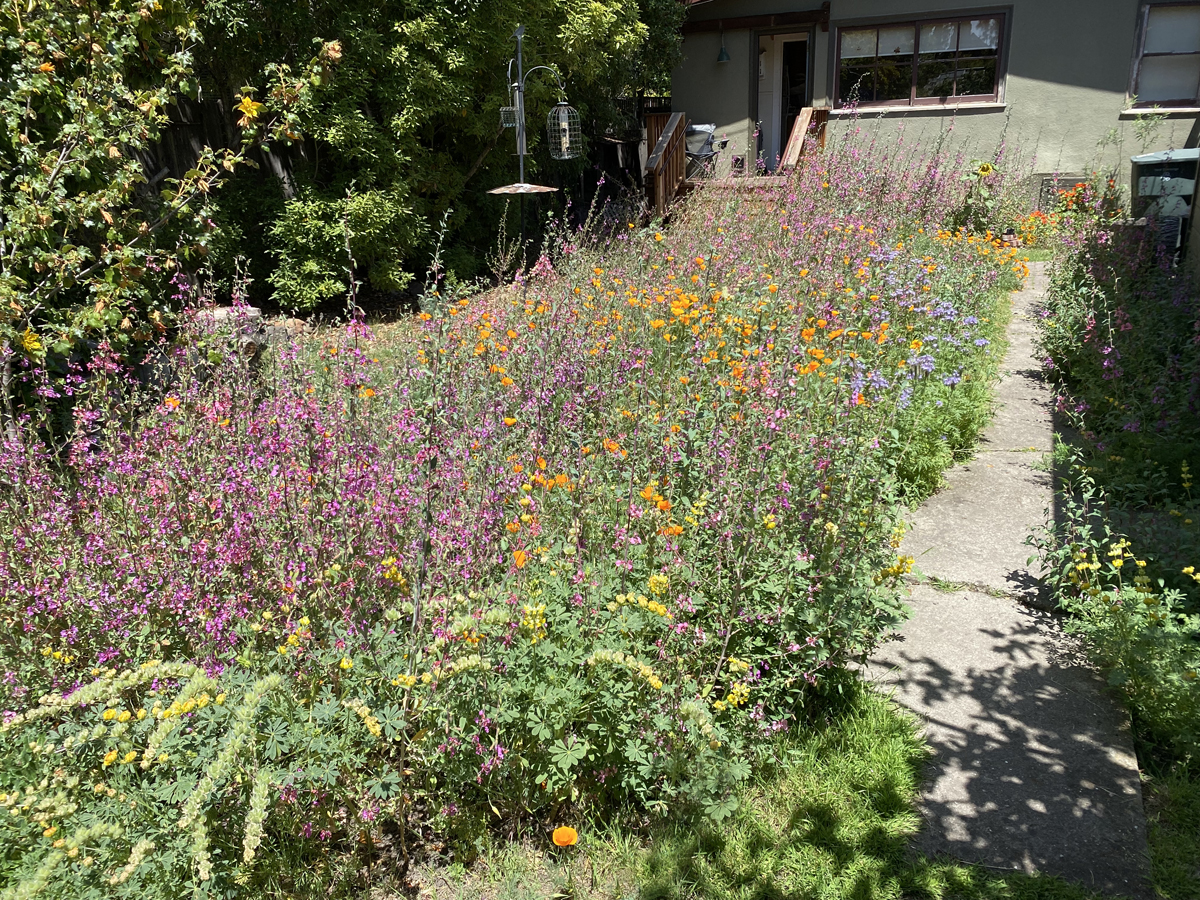
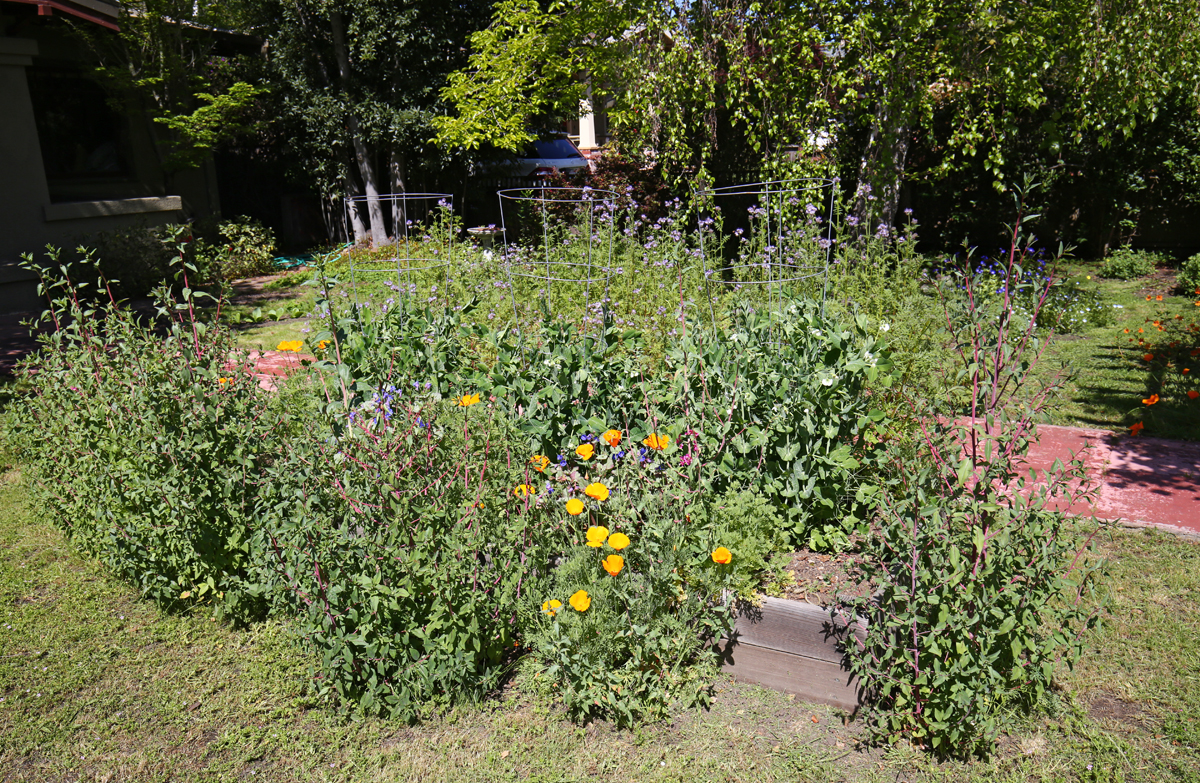
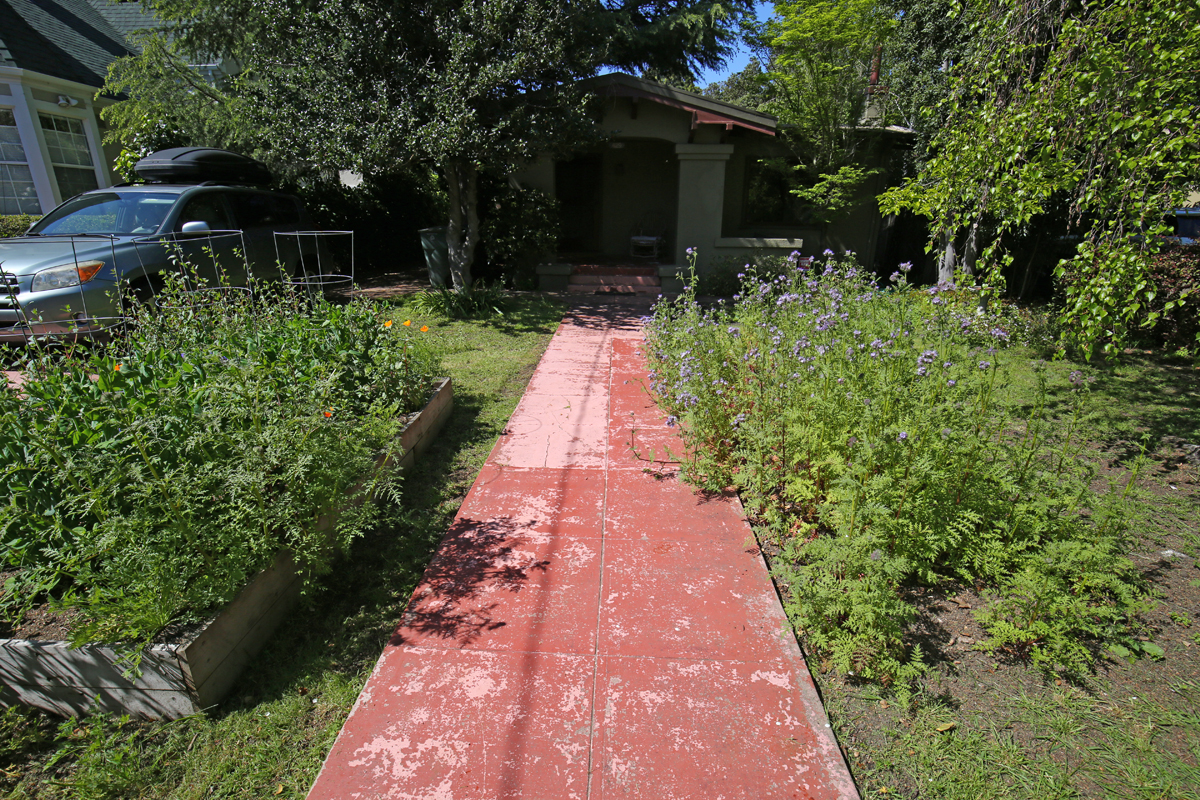
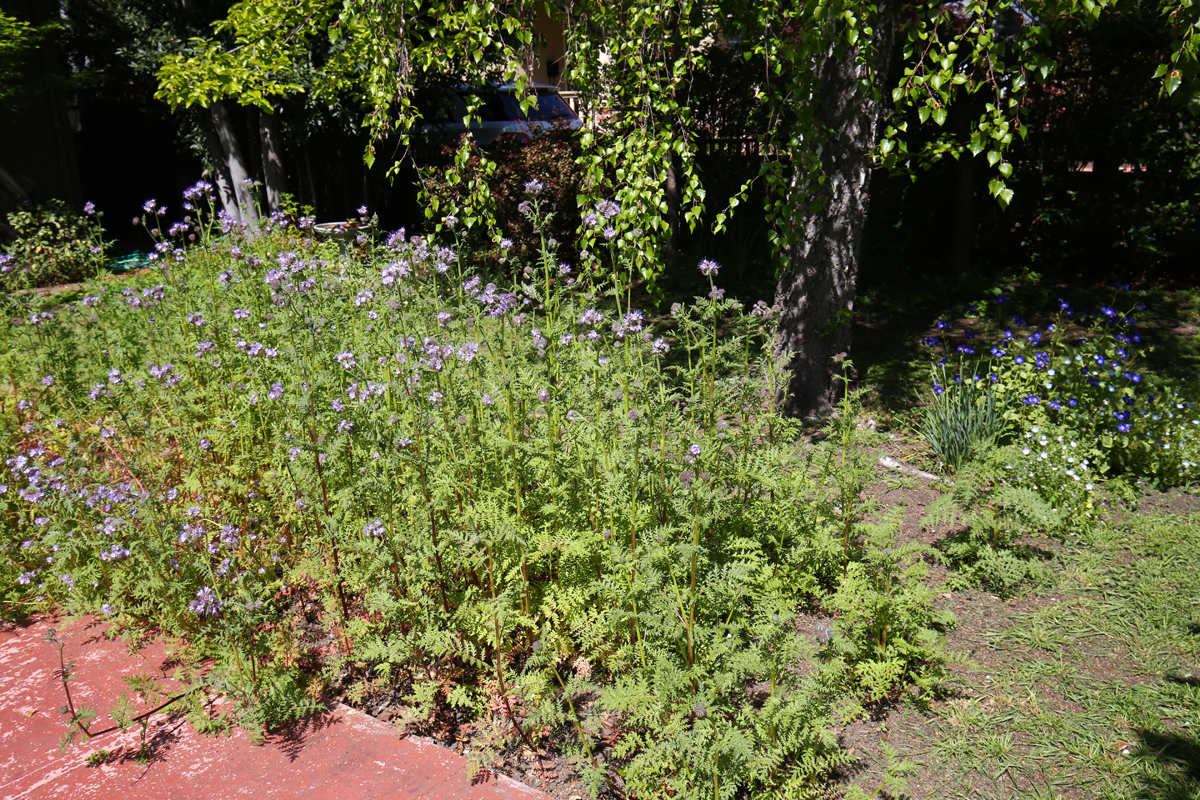
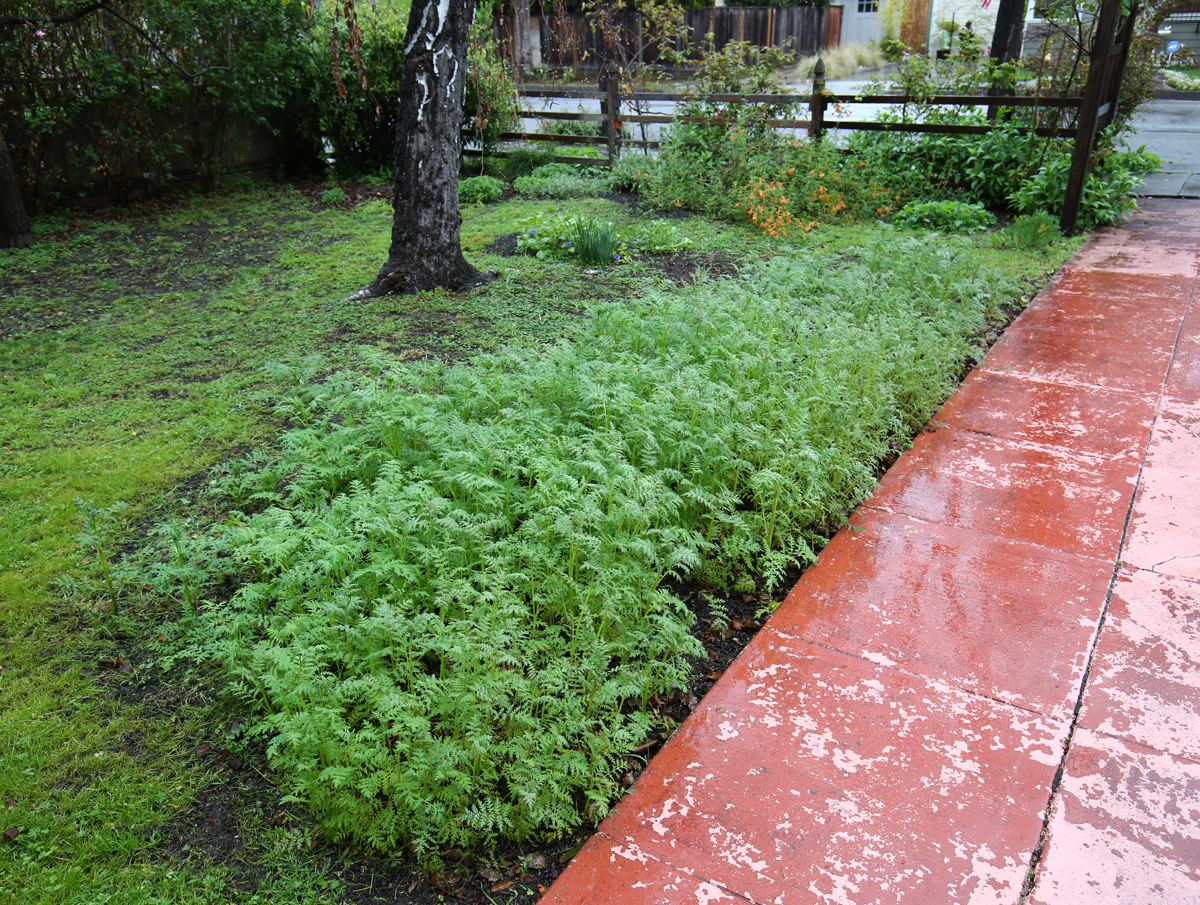
Tansy phacelias (Phaceila tanacetifolia) behind the house, with newly painted fascia, eaves, and windows.

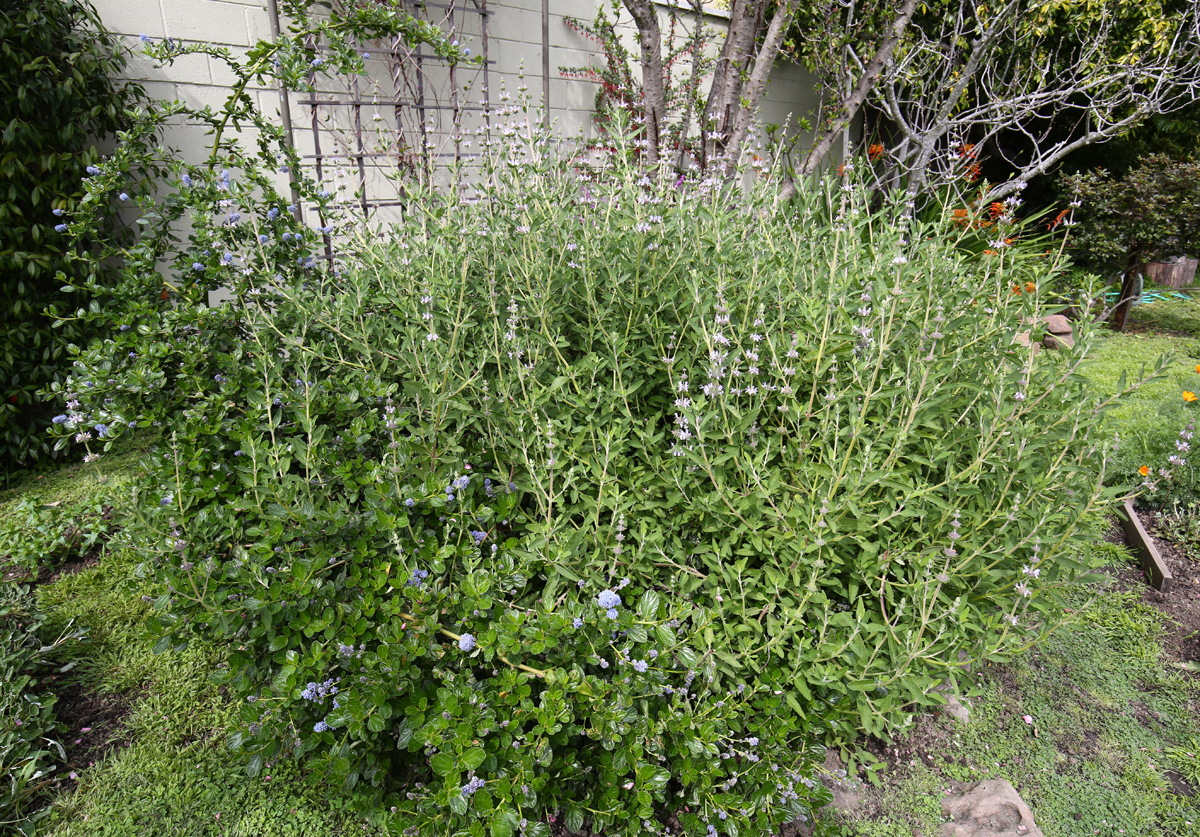
The windows in the image above I painted last summer, the fascia along the roof edge just this month. The spring annuals are tall now near the back of my house. You remember the tansy Phacelia (Phacelia tanacetifolia), right? Bees love it, and it can cause a skin rash on humans. Some of my other plants that flower only after dark and later in the summer I never got around to showing you.

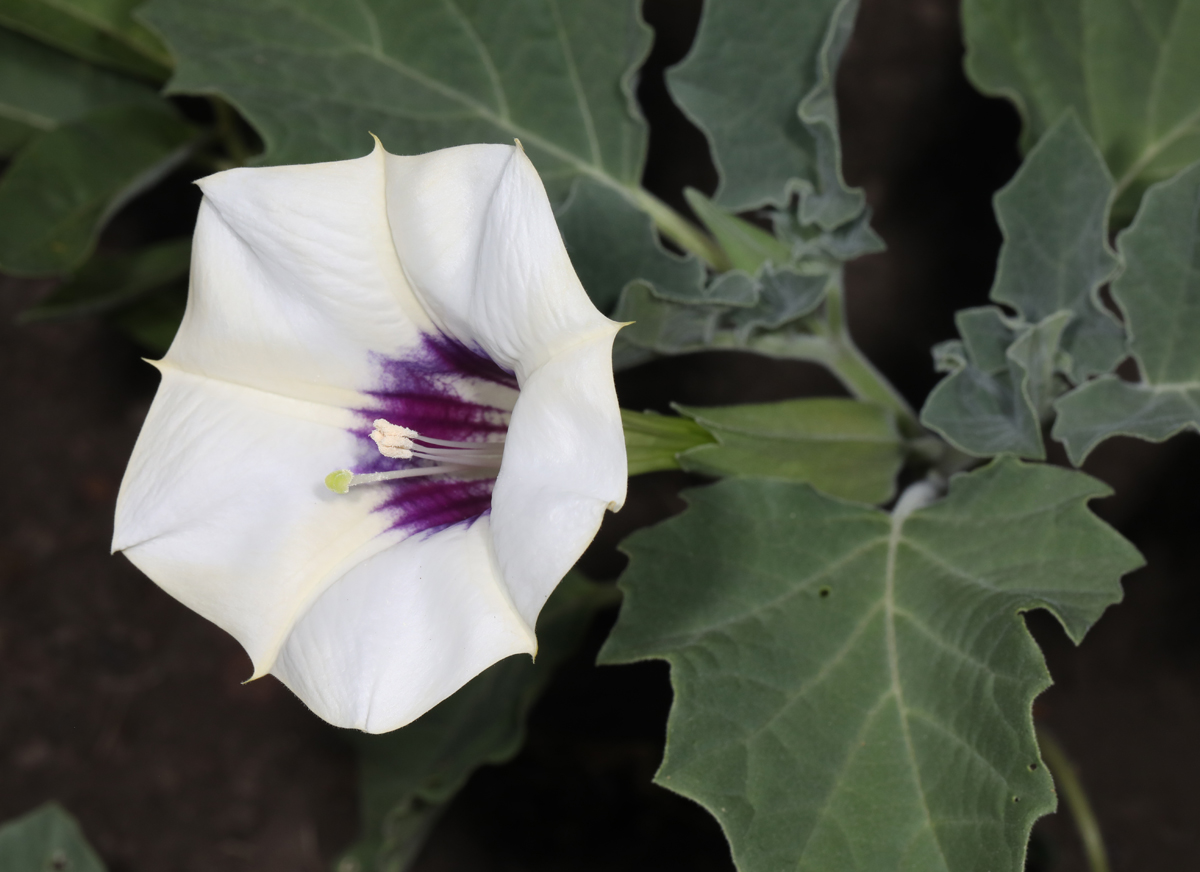
Datura discolor (desert thornapple). Flowers open at night.

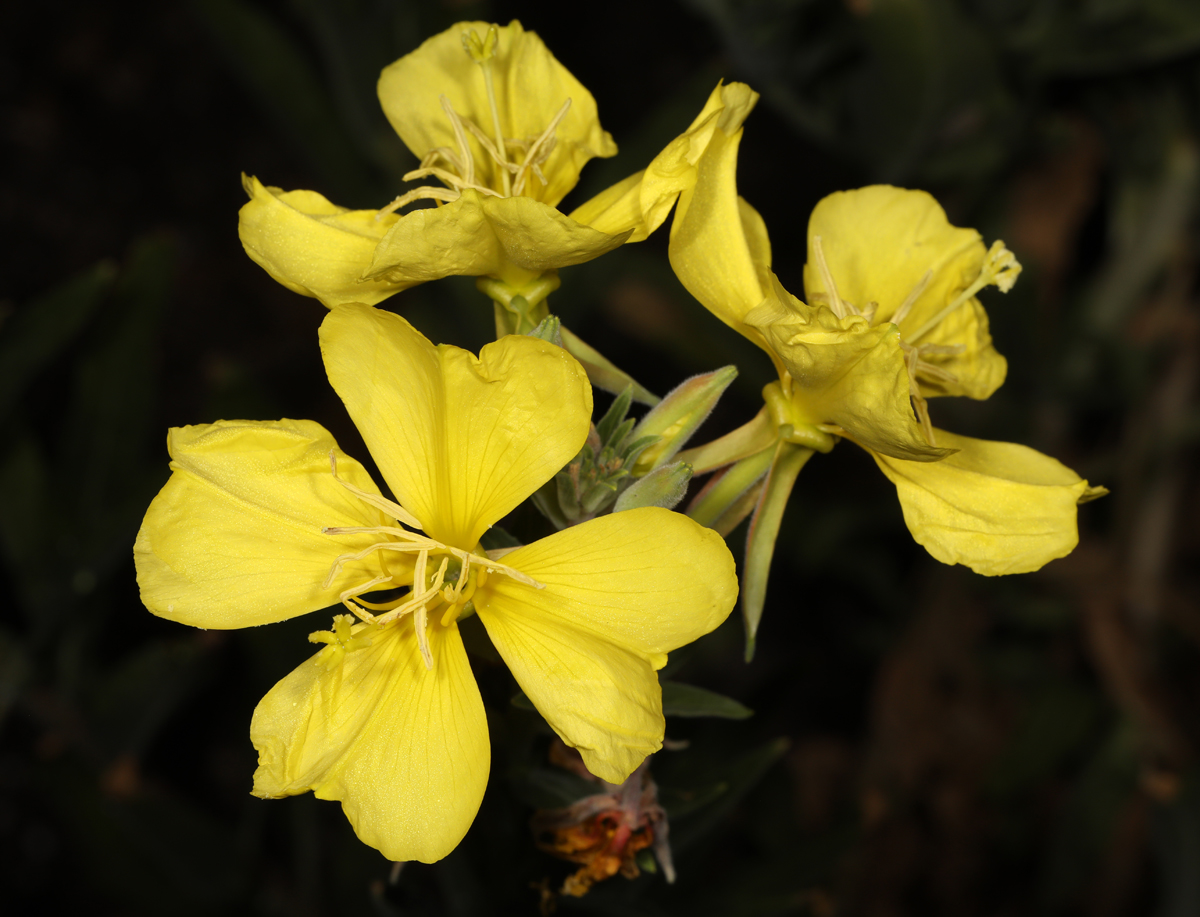
Oenothera biennis (evening primrose). Flowers open in the evening.
In June last year I brought back with me books from your Ithaca cottage. I built new shelves for them and am comforted to see the books lining the wall when I’m reading or resting.

Do you know that I’m grateful to you for giving me a stable life when I was growing up? It may not have been the best choice for you. Or maybe, after all that happened when you were young, it was. I try to imagine what other paths your life might have taken.
Are you aware that the Russia-Ukraine war is still going on, in addition to fighting in Palestine and other parts of the world? Of course you would not be surprised. What went wrong in the evolution of Homo sapiens that a diagnostic character of the species is its ability to commit atrocious acts of mass violence towards each other, killing, displacing, and wreaking havoc for generations of families?

Your awareness of the propaganda, hypocrisy, and cruelty of politicians and the people who blindly follow them were never far from your thoughts even while you pursued activities you loved. Is this why I, too, feel the strongest sense of calmness when I’m outdoors? There is something reassuring that the sun rises each day and the plants, even the weeds, rise out of the soil each spring. This still happens now, whether or not you are here to see it. (So far.)

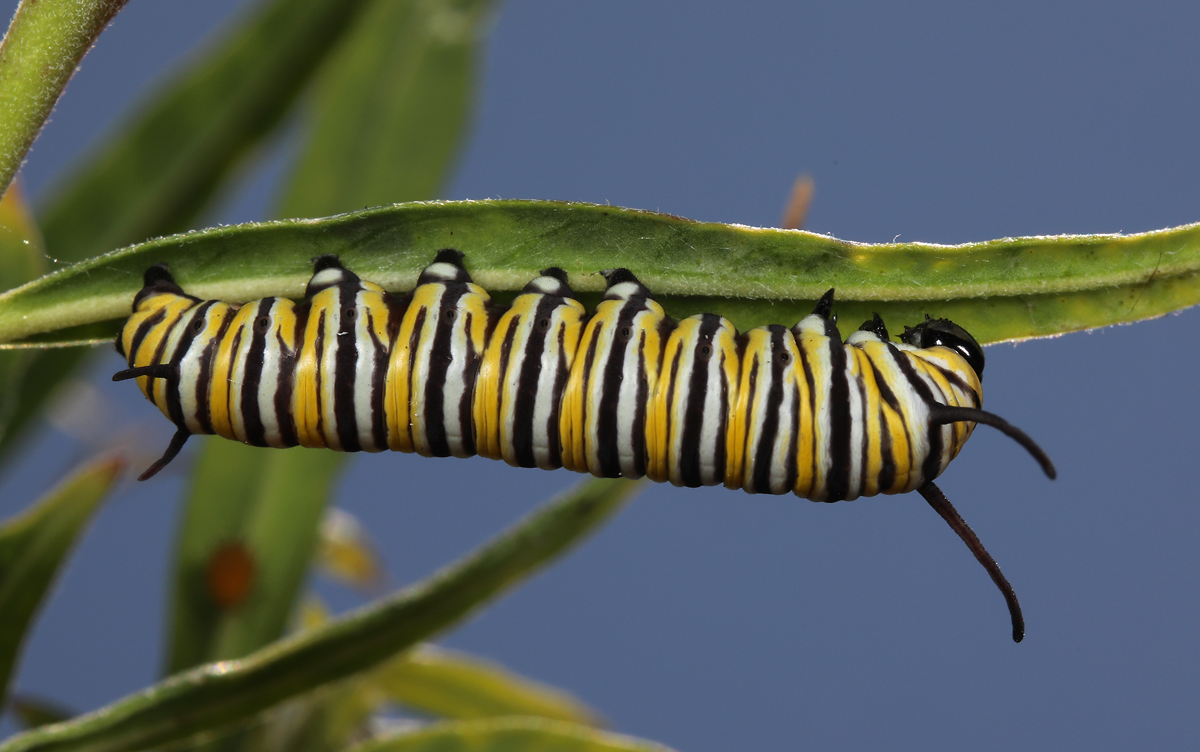
Monarch caterpillar. (2022)
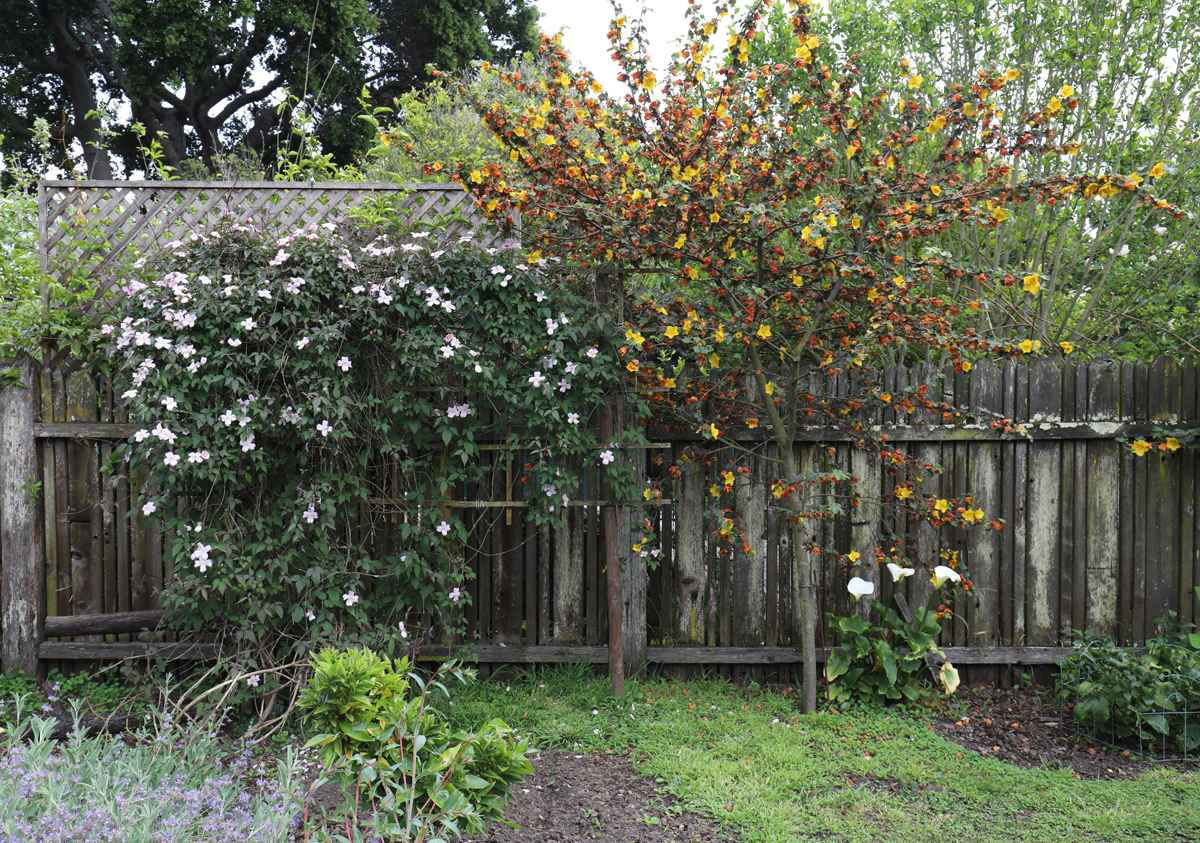
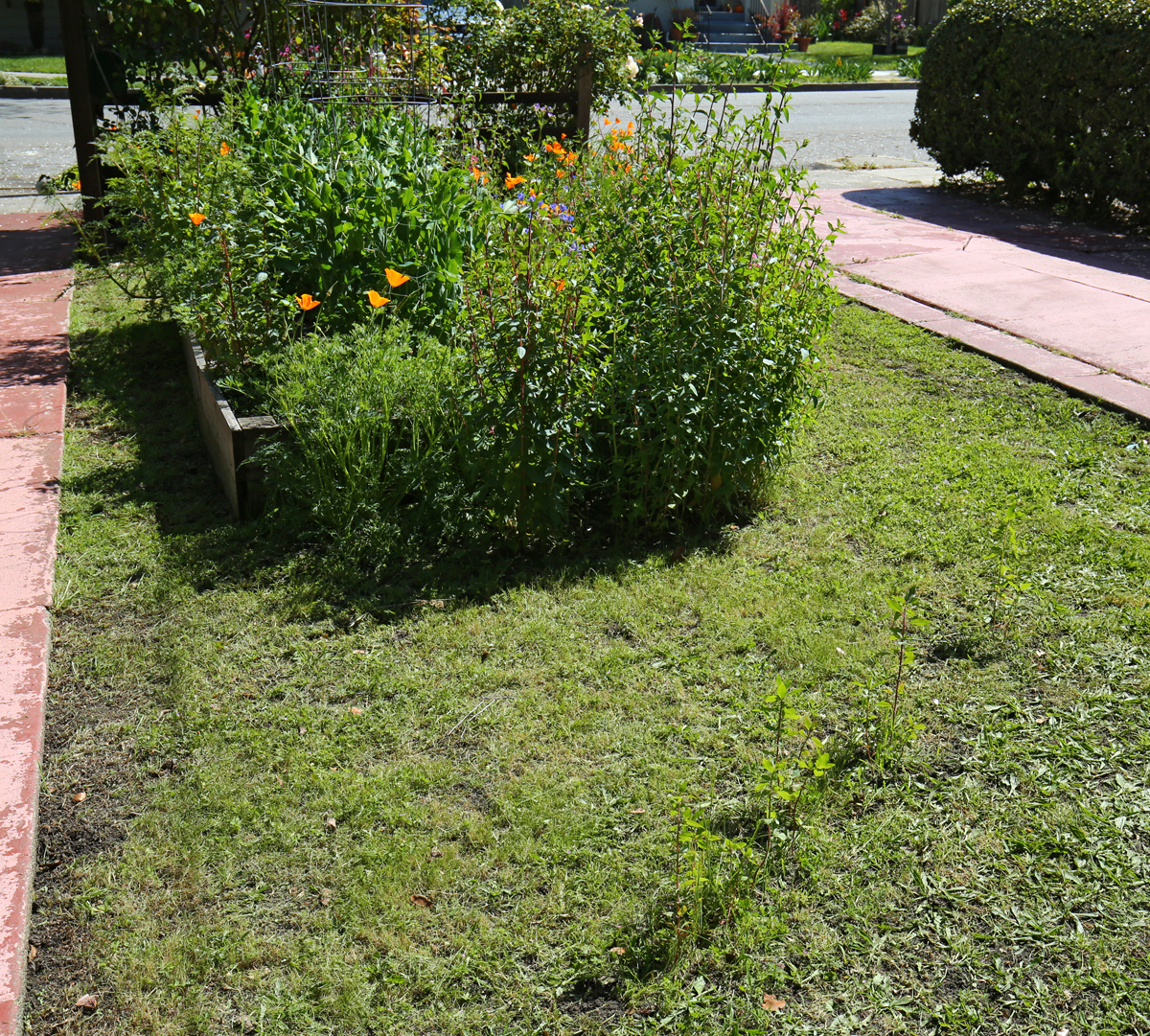
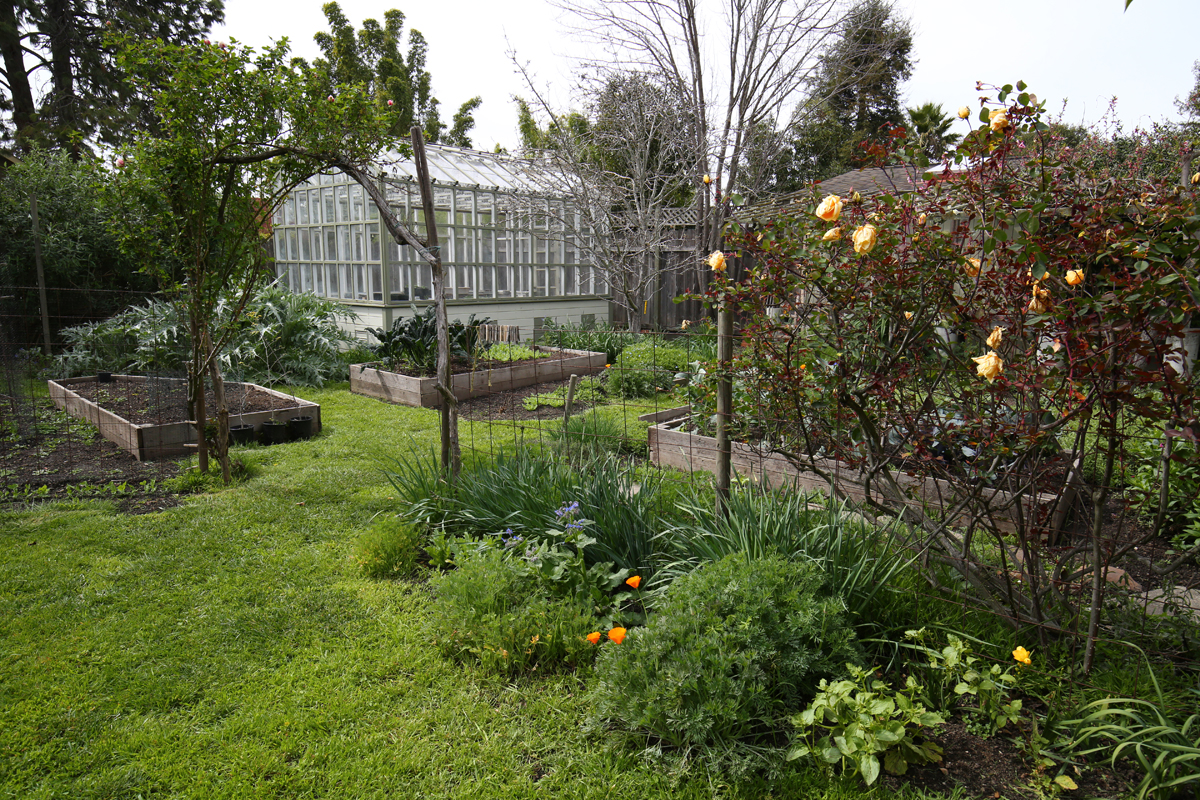
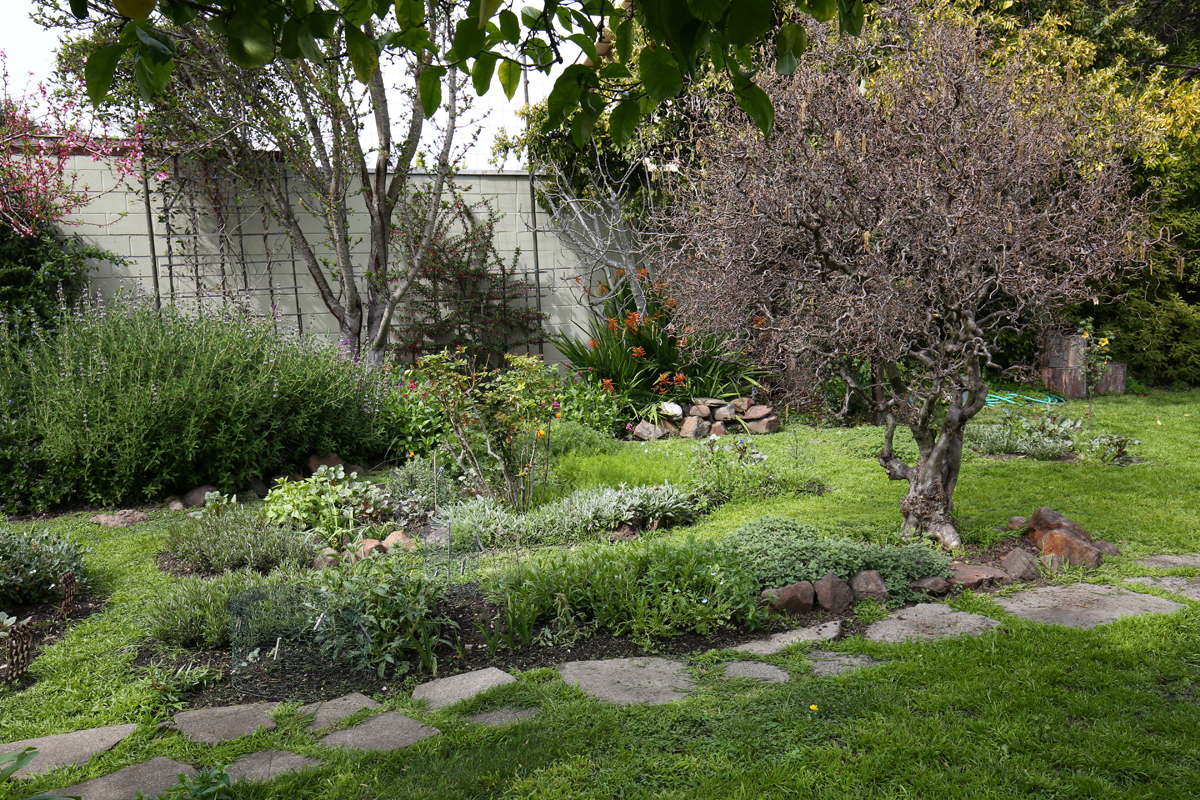
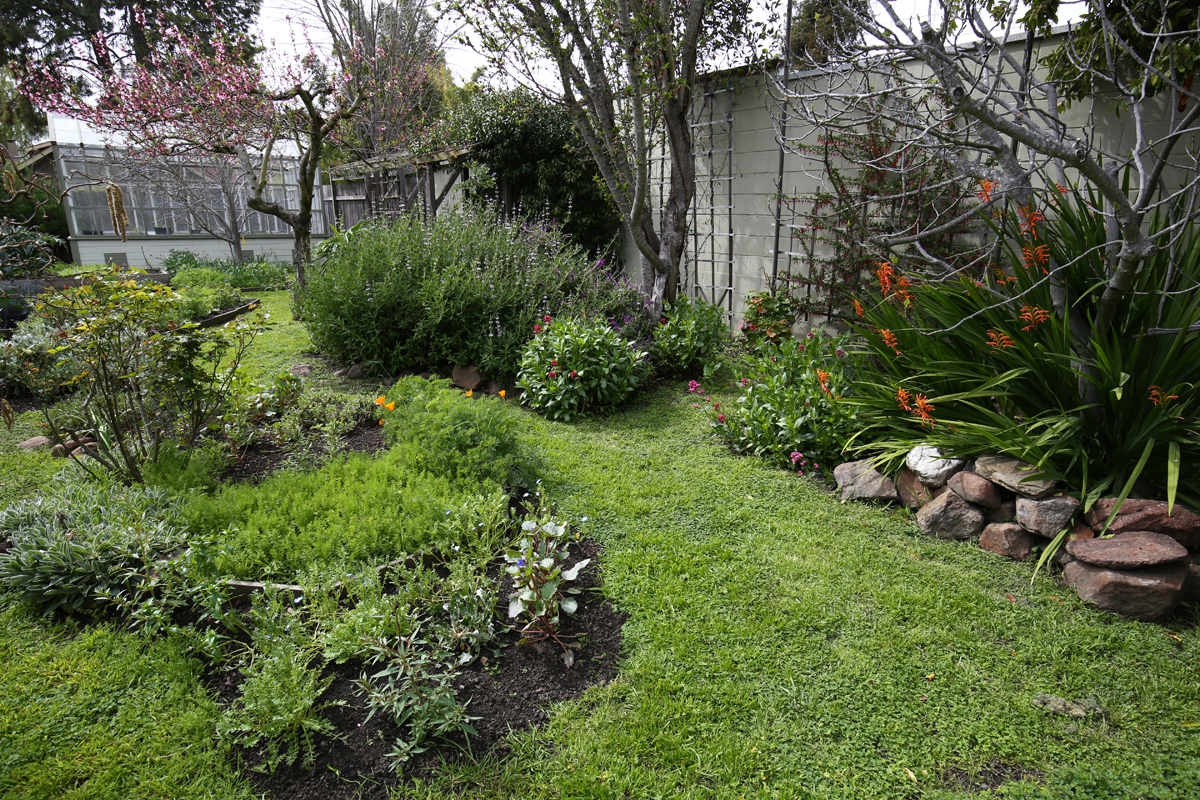
The back yard, April 2023.

Grazyna, January 1, 1931 – March 25, 2022

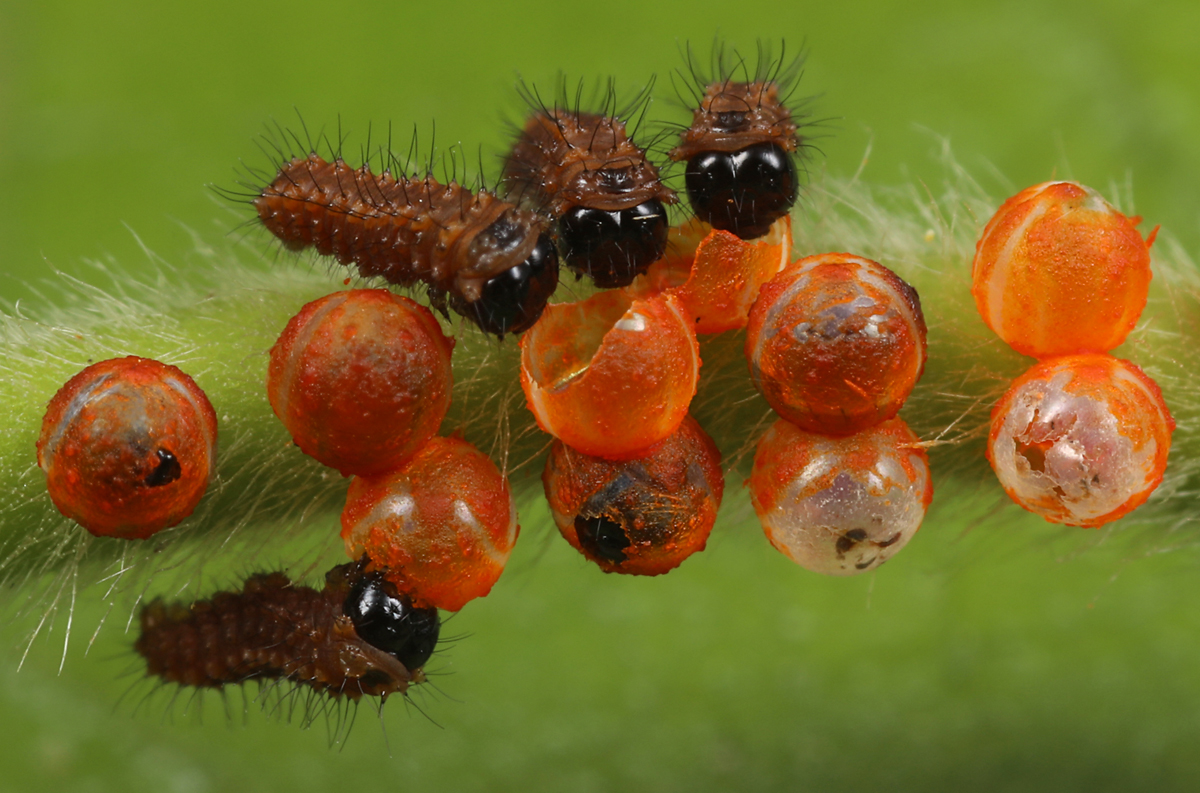
Pipevine swallowtail caterpillars just hatched. (2022)


This post is about my mother, Grazyna, who died on March 25, 2022, in Ithaca, NY. My garden is 3,000 miles away from where she lived for the last 62 years and from where I grew up. She hasn’t visited in 20 years, except via Skype. Yet she is here. She is also in Europe, in Poland and Germany especially, places in many ways she never really left. She is also, I hope, in her own former yard in Ellis Hollow, Ithaca, tending to her plants and watching her dogs romp across the lawns.

The caterpillars in my yard remind me of her. I’m rearing pipevine swallowtail butterflies on my pipevine plants this year. She told me many times she hated caterpillars and thought they all should be squished. I told her that many caterpillars turn into beautiful butterflies. Did she hate the butterflies too? No, she said. But she definitely still hated the caterpillars.

Monarch caterpillar. (2022)

Last year she found monarch caterpillars on her two milkweed plants in her Kendal yard. They ate almost all her milkweed leaves. The caterpillars got large. She enjoyed looking for them every day. I waited for her to tell me how she wanted to kill them – or had already killed them — but Grazyna was always full of contradictions. The caterpillars survived and finally wandered away from the plants to pupate. She looked for their chrysalises but couldn’t find any. She was disappointed not to know exactly where they went, and she worried about them. She looked at her neighbors’ milkweeds to see if they had the same leaf damage as her milkweeds. They didn’t. When she saw adult monarchs flying a few weeks after the caterpillars disappeared, she was sure they were the same ones that had been on her plants. She felt honored they’d chosen her milkweeds even though there were so many others nearby. [See footnote below.]

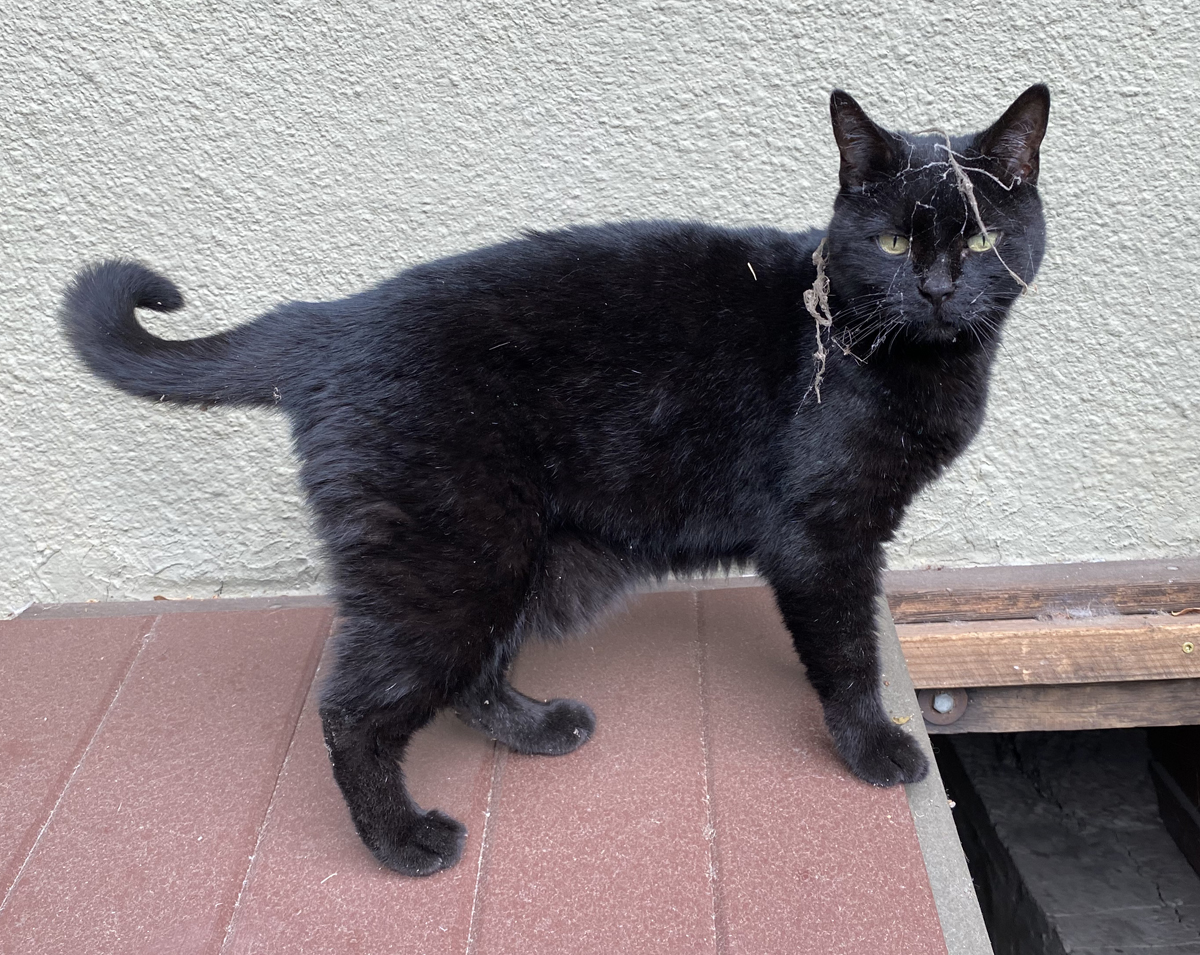
The evil cat. (2021)

Grazyna hated cats. We did not have any when I was growing up – we had dogs, which she loved. Yet she always wanted to see my cat when we Skyped. And the cat would usually put in an appearance, contrary as my cat is and not always friendly. My cat has personality, Grazyna would say. She also said my cat is “nasty” – but with a smile, as if she understood perfectly. Grazyna was not one to pretend that she liked you if she didn’t. There were a lot of people she didn’t like, or at least never opened up to enough for them to see her kind side.

Who, me? (2022)
Who, me? (2022)


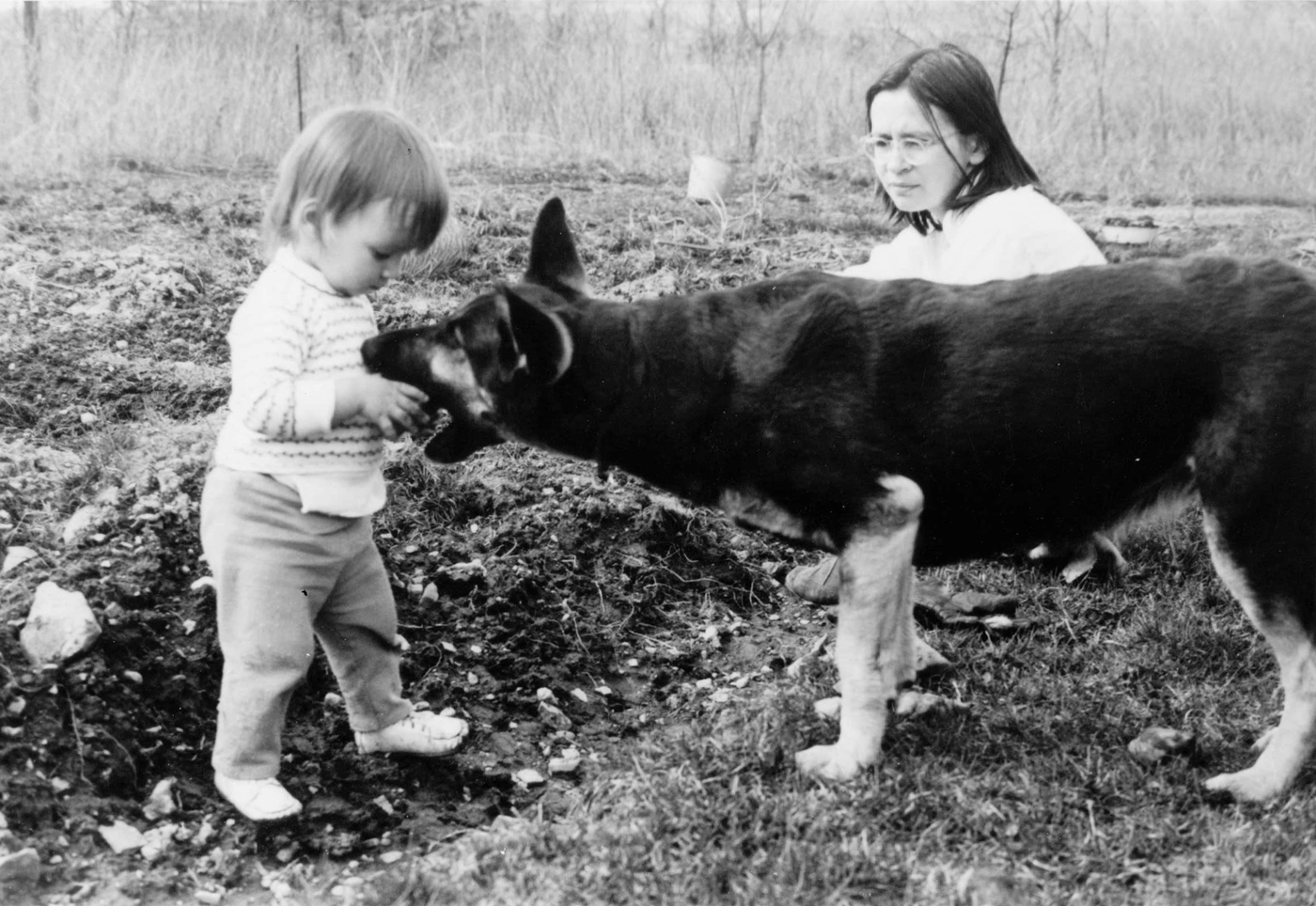
Joyce, dog, and Grazyna.
Joyce, Mica, and Grazyna. (1964 or 1965)

My yard has a memorial to my German shepherd Volpo: a punctured basketball and small plastic squeaky balls with painted-on smiley faces, his favorites that would light up his eyes. I got Volpo as a puppy from my mother in 1999 near the end of the many decades that she raised German shepherds. Over the course of her life in Ithaca, she whelped 25 litters, each puppy individually cared for and documented, put to the best of her ability into good and loving homes. Some of the people who got puppies from her became her lifelong friends. Grazyna would usually keep one dog from each litter with which she would do obedience training, agility, and tracking. I did the same training with Volpo. We talked all the time during those years about dog training. While I was in California and she was in Ithaca, she taught me over the phone to train Volpo to track – to follow the scent of a person a couple of hours after they had walked through a field or woods, finding objects the person dropped along the way. When I finally met some Bay Area people who tracked, they were astounded that Volpo and I knew how to track only from phone calls and the rest from having laid tracks for my mother when I was growing up.

I would usually try not to point the camera towards Volpo’s memorial in my yard on our Skype calls, because it was too sad for both of us. Volpo was my closest pal, handsome, noble, and kind. I still feel as if his soul is here at my house, perhaps inside the cat who showed up in my yard after Volpo died and who follows me around the way Volpo did. Grazyna greatly missed all her dogs, especially after the last one died in 2018 and she didn’t want to have any more, in preparation for her eventual death. The dogs had been a huge part of her life while I was growing up. I hope she’s once again with Zoonie, Yoshy, Wisla, Visnia, Uta, and all the dogs that preceded them, giving them her special baked liver treats and watching them race happily through the woods and over green Ithaca lawns. Preferably lawns and woods the way they were during the early part of our lives in Ellis Hollow: not yet infested with deer ticks carrying Lyme-disease causing bacteria.

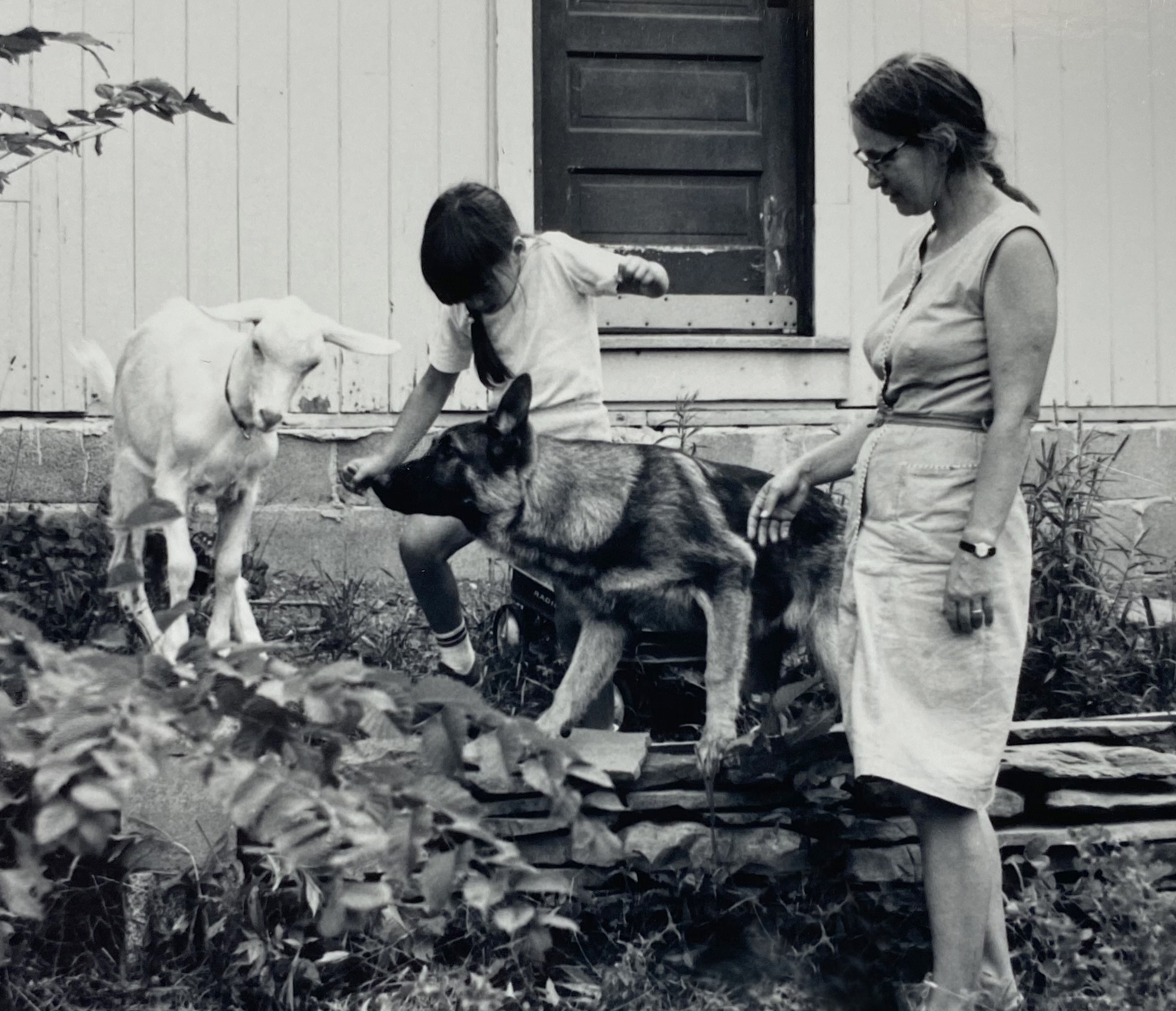
Nancy, Joyce, Afra, and Grazyna (1971)

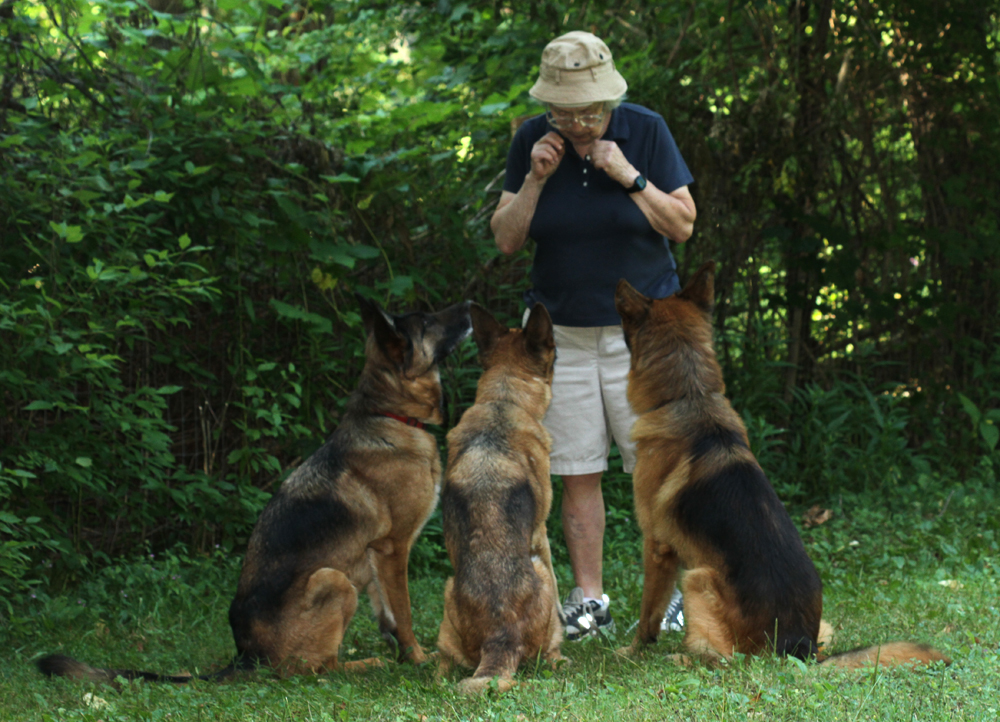
Grazyna with three of her dogs. (2012)

Grazyna and Zoonie in Ellis Hollow. (2018)

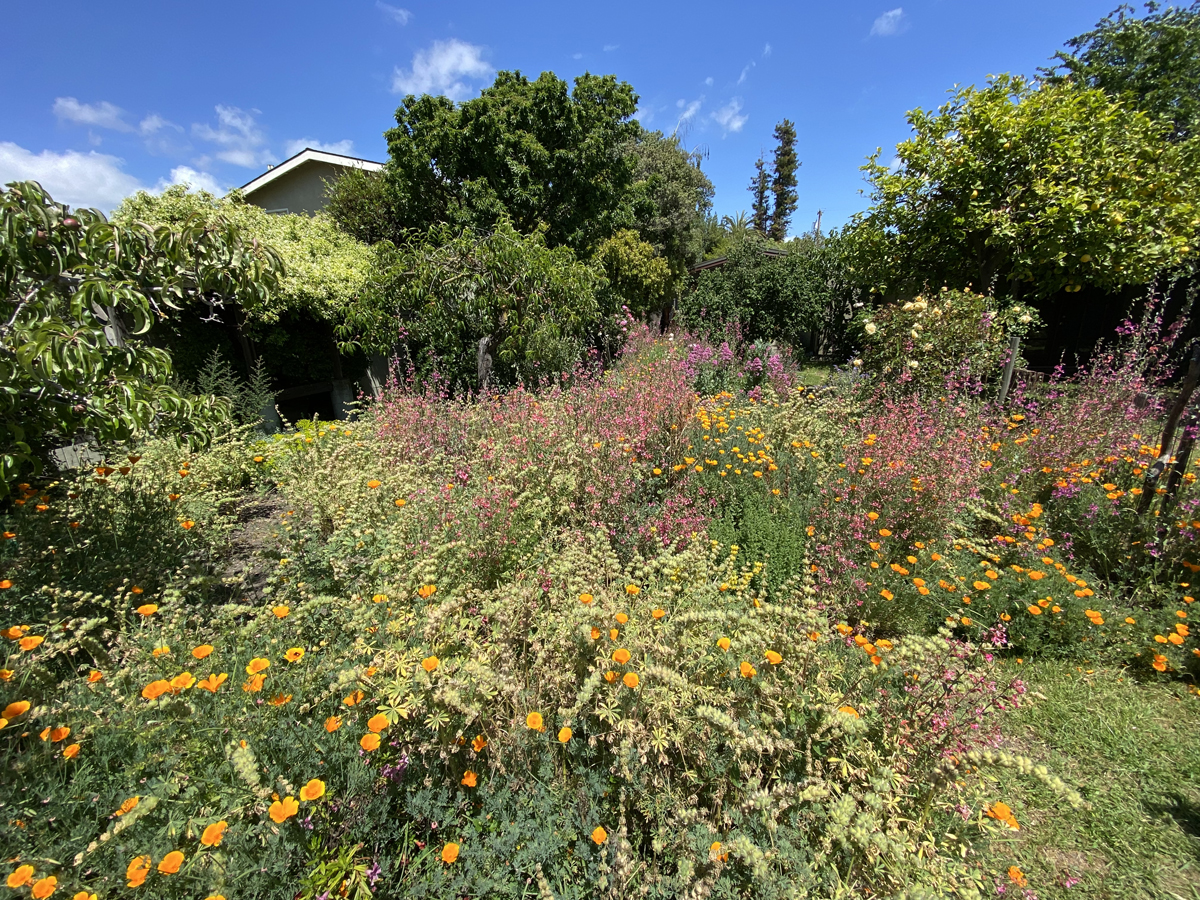
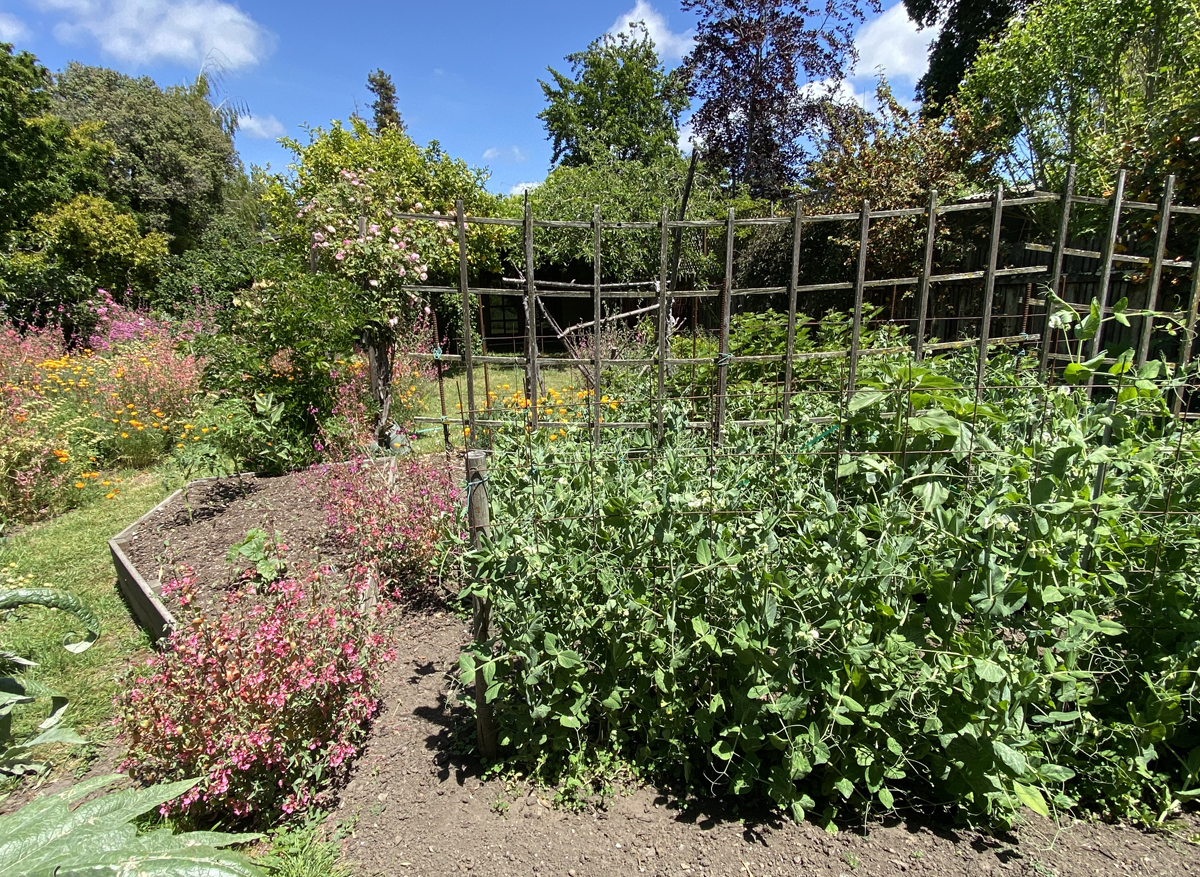
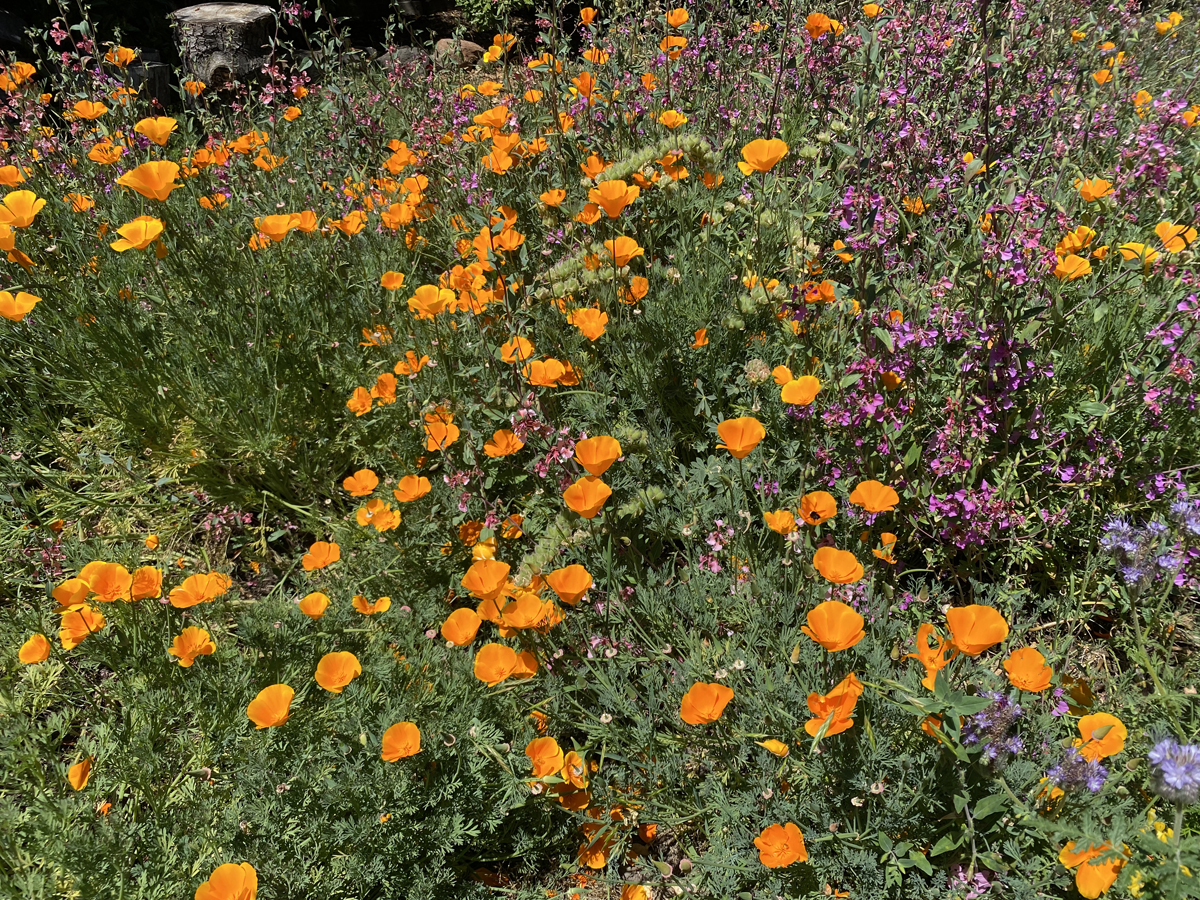
As Grazyna got older, she gardened more. She doted on her plants in Ellis Hollow, knew the quirks and needs of each one. I’ve added gardening to my list of hobbies, too. I wish I could show my mother how my shelling peas are coming along, and how the yard is filled with flowers now because it’s the height of spring in California. Can she see my yellow lupines and orange poppies from where she is?

While digging the endless bindweed (Convolvulus arvensis) from the soil around my plants, before it wraps itself around everything and is much harder to extract, I wonder if my mother has read the latest issue of Harper’s magazine and is keeping up with events better than I am while pulling bindweed. If anyone can read after she is dead it would be her. Wherever she is now, has she been able to find news sources covering world events that she doesn’t consider propaganda and leave her seething mad?

Grazyna. Photo by Jane Walker.

I’ve been fortunate never (yet) to experience war. War and escaping from it defined her life. While growing up, I listened to phonograph records she played of Polish war songs, bombs going off in the background of the songs. Being happy was a sign of being an American – which unfortunately I was. It could be confusing for me.

Grazyna was born in Poland in 1931, her parents from Catholic families. Her father became a judge after his family was chased off their Moldova estate during the Russian Revolution. During Grazyna’s first eight years she lived in various towns where her father worked or went to school: Sarny (in Poland then; now in Ukraine); Wołożyn and Oszmiana (both in Poland then; now in Belarus), and Vilnius (in Poland then; now in Lithuania). She ended up back in Vilnius right before the start of World War II. Her one sibling, brother Henryk, died before the war began from scarlet fever after coming down with strep throat. To escape the Russian front, Grazyna and her parents fled to Warsaw. Soon after, they fled to Krakow, where my mother spent most of the wartime years. Her father joined the Polish Resistance and eventually was captured by the Nazis. He died in Nazi concentration camp Bergen-Belson in January 1945.

As the Russian soldiers spread west, Grazyna and her mother continued to flee, first briefly to Prague then to Germany at the end of the war. They lived in a refugee camp in Regensburg for two months, then in the nearby town of Fürth im Wald for the remaining time of Grazyna’s stay in Europe. She attended German high school in Cham and learned German, along with catching up with all the years of school she had missed during the war. She was pulled out of high school in April, 1949, just before graduating, when her mother decided to emigrate to the United States. They ended up in Bismarck, North Dakota, where, Grazyna always pointed out, the state tree is a telephone pole and there were no bookstores. Despite the disruptions to her schooling and having to learn yet another language (English), Grazyna earned a master’s degree in mathematics from the University of Chicago.

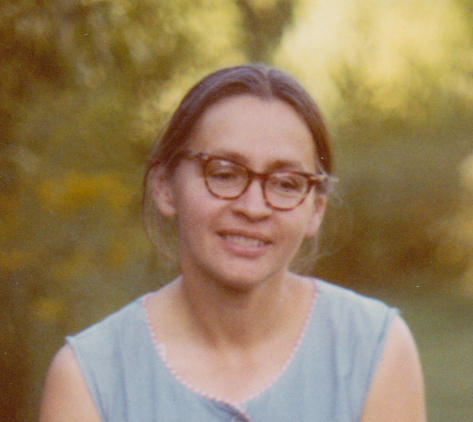
Grazyna (1971)
Grazyna (1971)

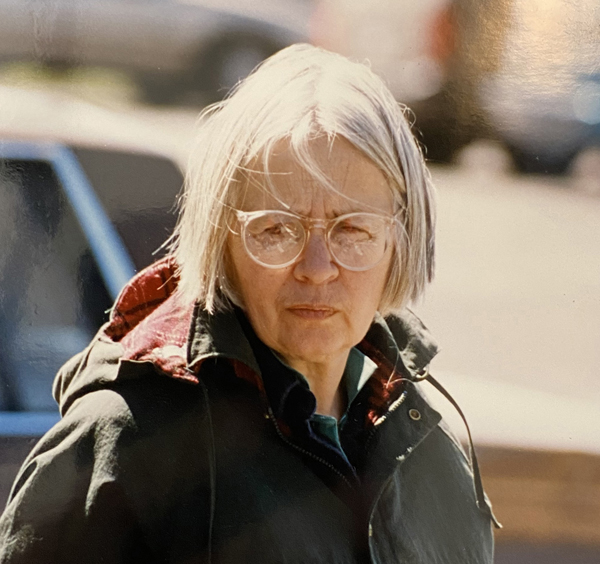
Grazyna (1993)
Grazyna (1993)

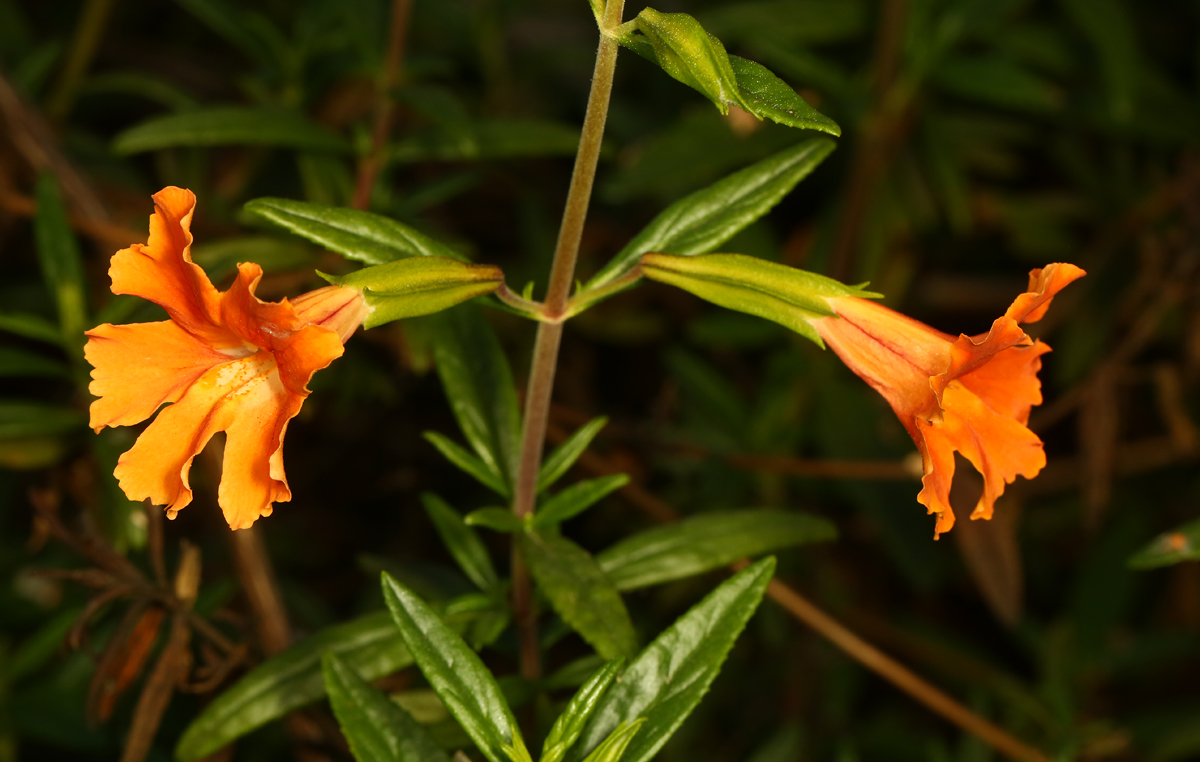
My garden is testament that not all of America is like Bismarck, North Dakota. For one thing, it has trees. My neighborhood is culturally and ethnically diverse. Yet as I carefully unwrap the bindweed vines from the peas and the monkeyflowers, I know my piece of America is very different from where she grew up, the places whose histories span not only centuries of great art and important scientific discoveries but also terrible wars that shifted country borders and displaced or killed millions of people. I like to think that she is back in all the places she loved, with the people and places she lost at too young an age. And her dogs are with her and no bombs are falling.

My mother would hate that I’ve written about her, but as she has said many times, she doesn’t give a shit what happens after she dies. I miss her.

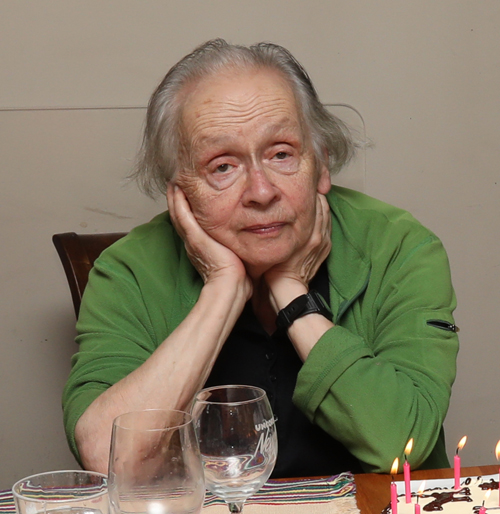
Grazyna (2018)
Grazyna (2018)


Footnote: Ironically, there’s a huge population explosion this year in the Ithaca area of gypsy moths (Lymantria dispar dispar). These are non-native moths whose caterpillars (immature stage) can be very destructive, defoliating many kinds of trees. After a couple of trips to the woods I wanted to kill them all. Sometimes my mother was right. The trick is knowing which caterpillars are to blame.